
The complete guide
How To Choose A Kids Teepee Tent That Actually Gets Used
The problem with "somewhere to play"
Most homes do not have a spare room for children. What they have is a corner of a bedroom, a strip of the lounge, or a patch of carpet that is a toy zone in the morning and a walkway by the evening. Children notice that. They can tell the difference between being allowed to play somewhere and actually having somewhere.
A teepee fixes that gap cheaply and without building work. It marks out a space with walls and a door, and the child understands immediately that the inside belongs to them. You do not have to explain it. They crawl in, they turn around, they ask for a blanket, and that is the whole concept understood in about ninety seconds.
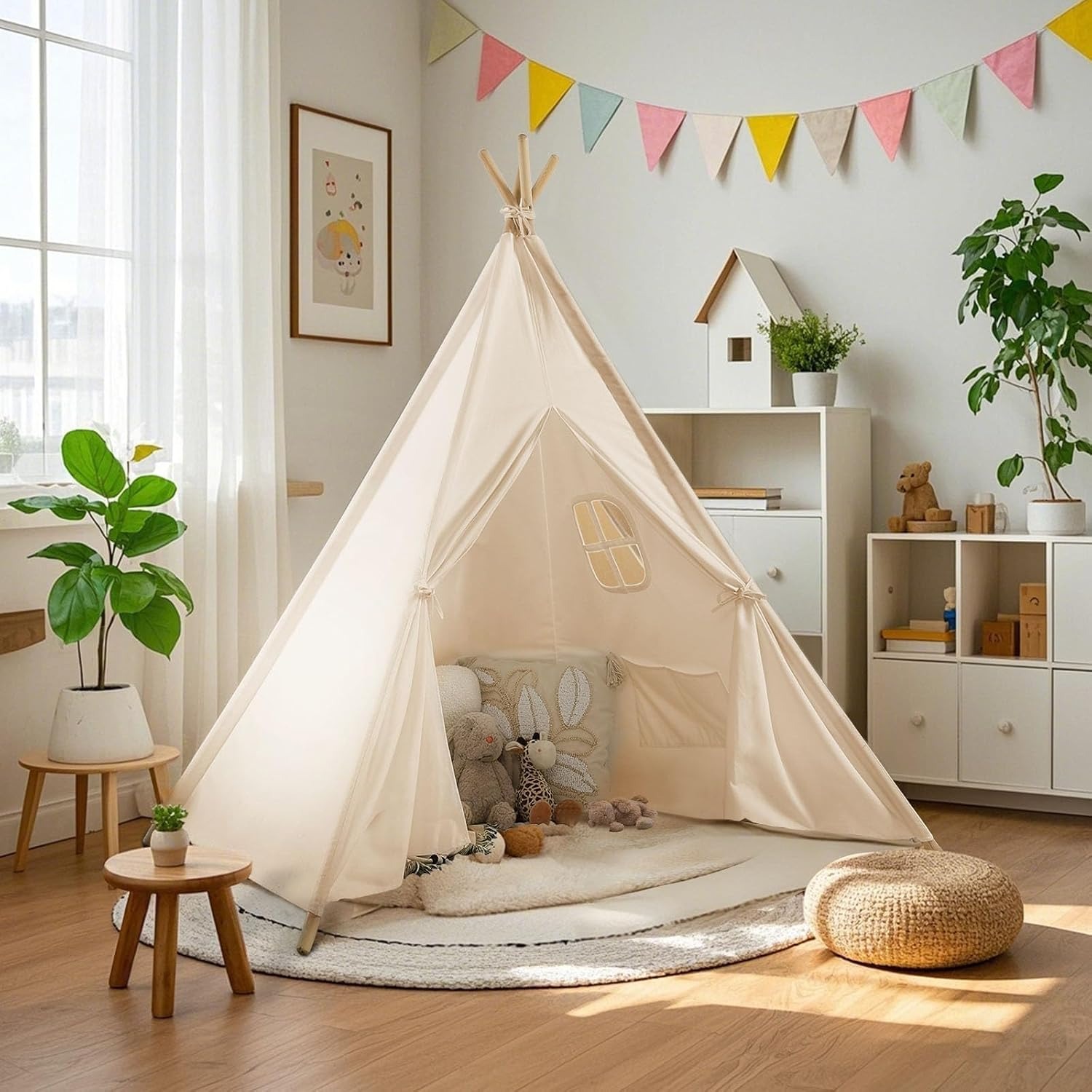
The white canvas teepee tent does this job in the plainest way possible. No cartoon print, no theme, no sound effects. Four pine poles, polycotton walls, and a front flap that closes. Everything else, the cushions, the books, the fairy lights, the stuffed animals that live in there permanently, is supplied by the child.
How a teepee actually works
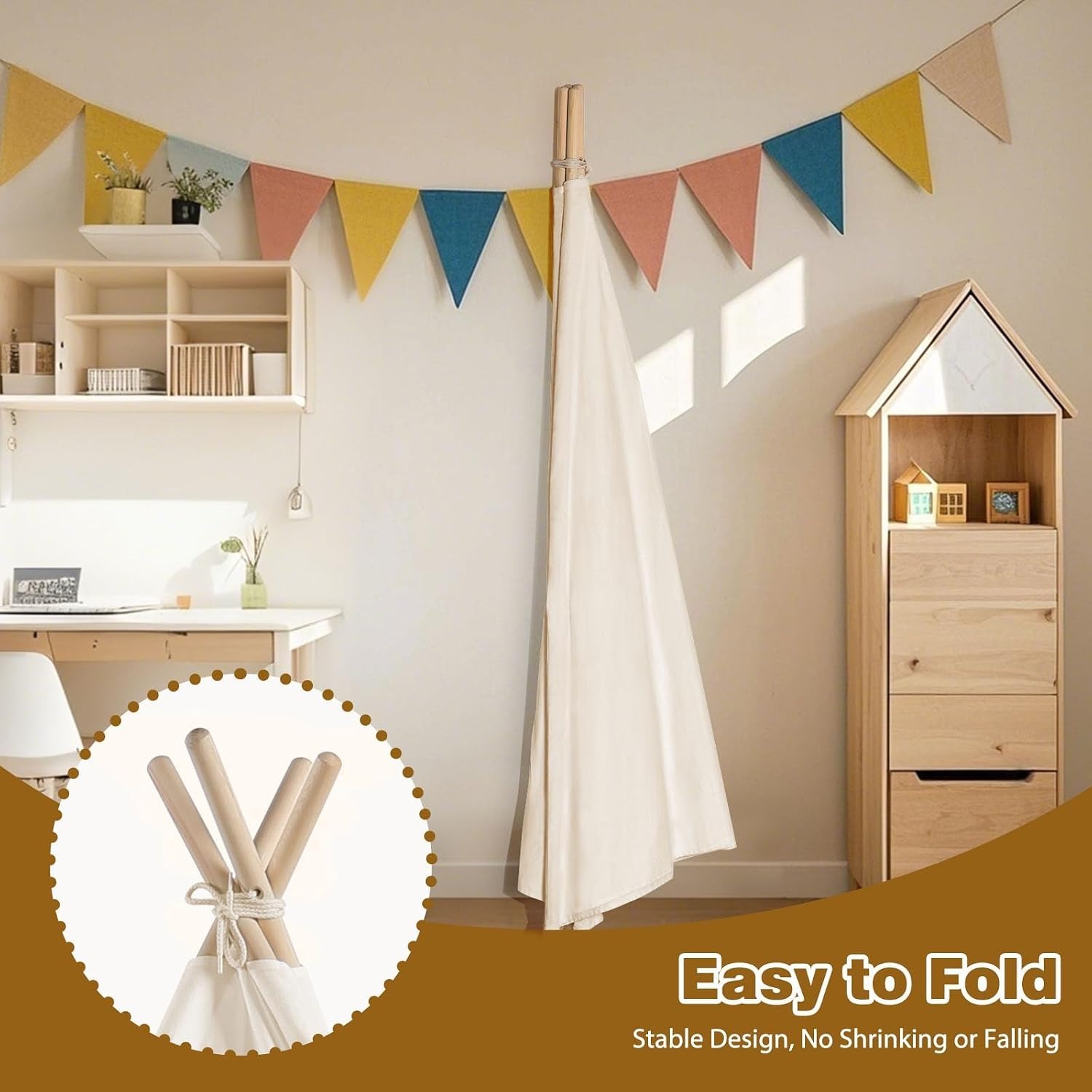
The structure is simple. Pine wood poles cross near the top and splay out at the bottom, and the fabric panels wrap around them to form the cone. Gravity and the angle of the poles do most of the work of keeping it upright, which is why a teepee stays standing without pegs, guy ropes or anything screwed into the floor.
Pine is a good choice for the frame. It is light, which keeps the overall weight down to 2.05 kilograms, but it is rigid enough not to flex and lean when a child leans on the inside wall. Heavier hardwood would be more solid and far more annoying to move. Plastic poles would be lighter still but tend to feel cheap and bow over time.
The fabric matters too. Polycotton blends cotton's soft hand and breathability with polyester's resistance to creasing and wear. A pure cotton tent feels lovely and wrinkles the moment you look at it. Pure polyester is tougher but can feel plasticky indoors. The blend sits between the two, which is why so many play tents use it.
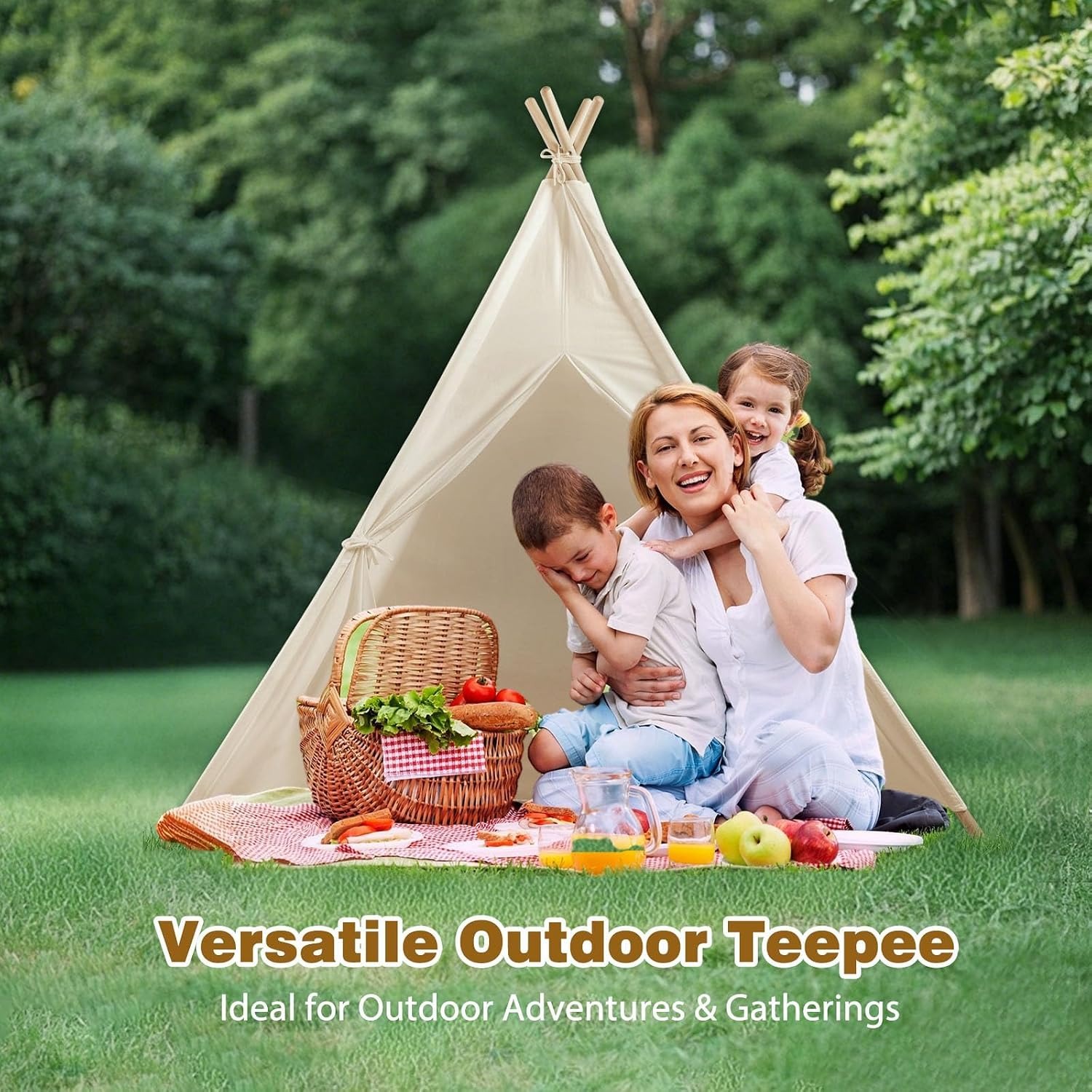
One thing worth understanding: this is a play tent, not camping equipment. It gives shade and a sense of enclosure. It does not shed rain or block wind. Use it indoors, or outdoors on a dry day, and bring it in afterwards.
Who this suits
The manufacturer recommends ages 3 and up, with the age range described as young child. That is a sensible starting point. Around three is when children begin inventing games with rules, assigning roles, and wanting a base to run back to. A teepee lands perfectly into that stage.
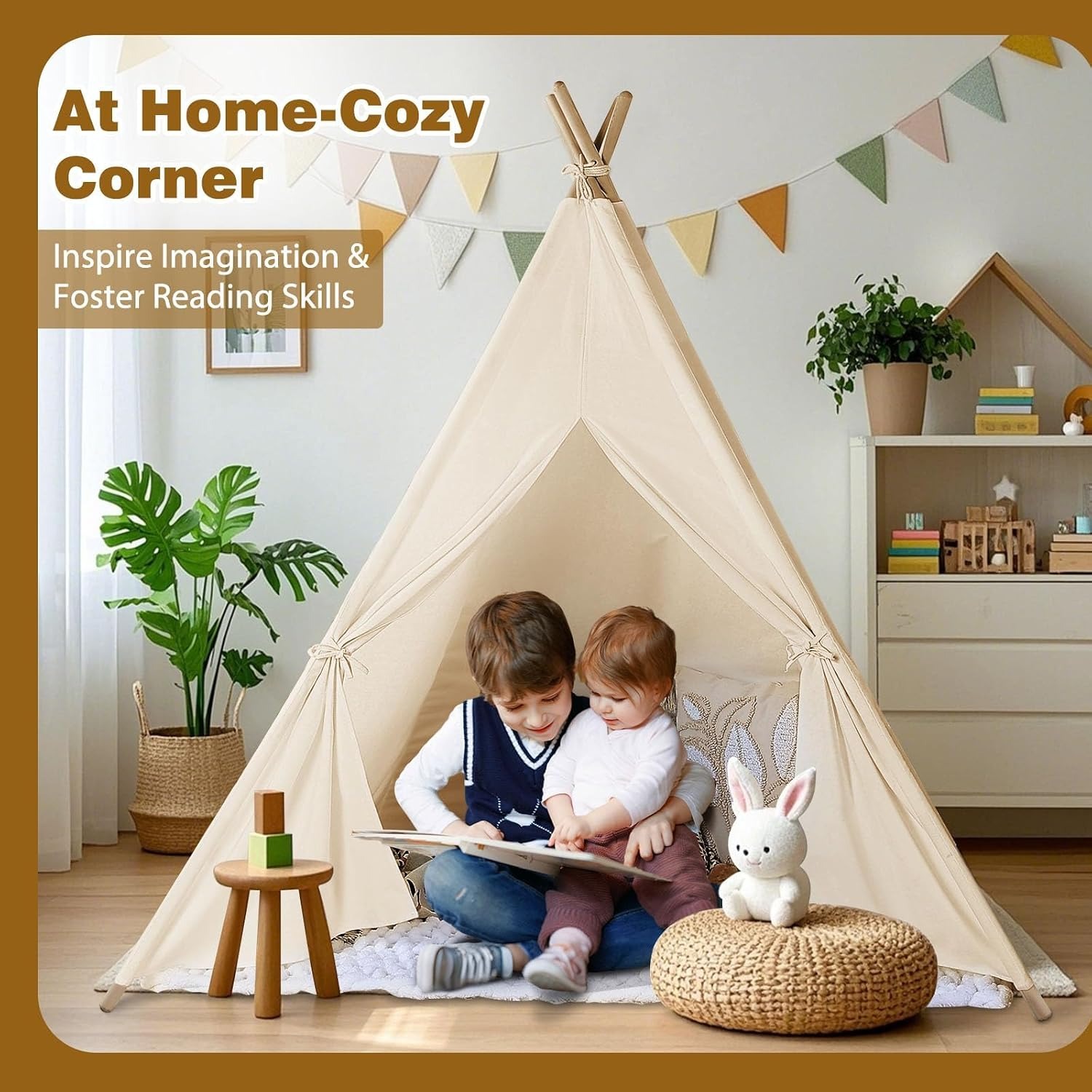
It suits quiet children and loud ones for different reasons. A child who likes to read will use it as a nest, pull the flaps shut and disappear for half an hour. A child who never stops moving will use it as a shop, a spaceship, a cave and a hospital in the space of a single afternoon. Both are getting their money's worth.
It also suits parents who want to reclaim a bit of visual calm. A plain white tent reads as furniture rather than as another toy. In a room already carrying bright plastic in every corner, that neutrality is a relief. This is one of the best teepees for bedrooms shared by siblings, because one child can shut the door without leaving the room.
Where it suits less well is a household with a very young young child who is not yet steady on their feet. Poles and fabric at head height need supervision. Follow the age guidance and keep an adult nearby.
Choosing the right size for your space
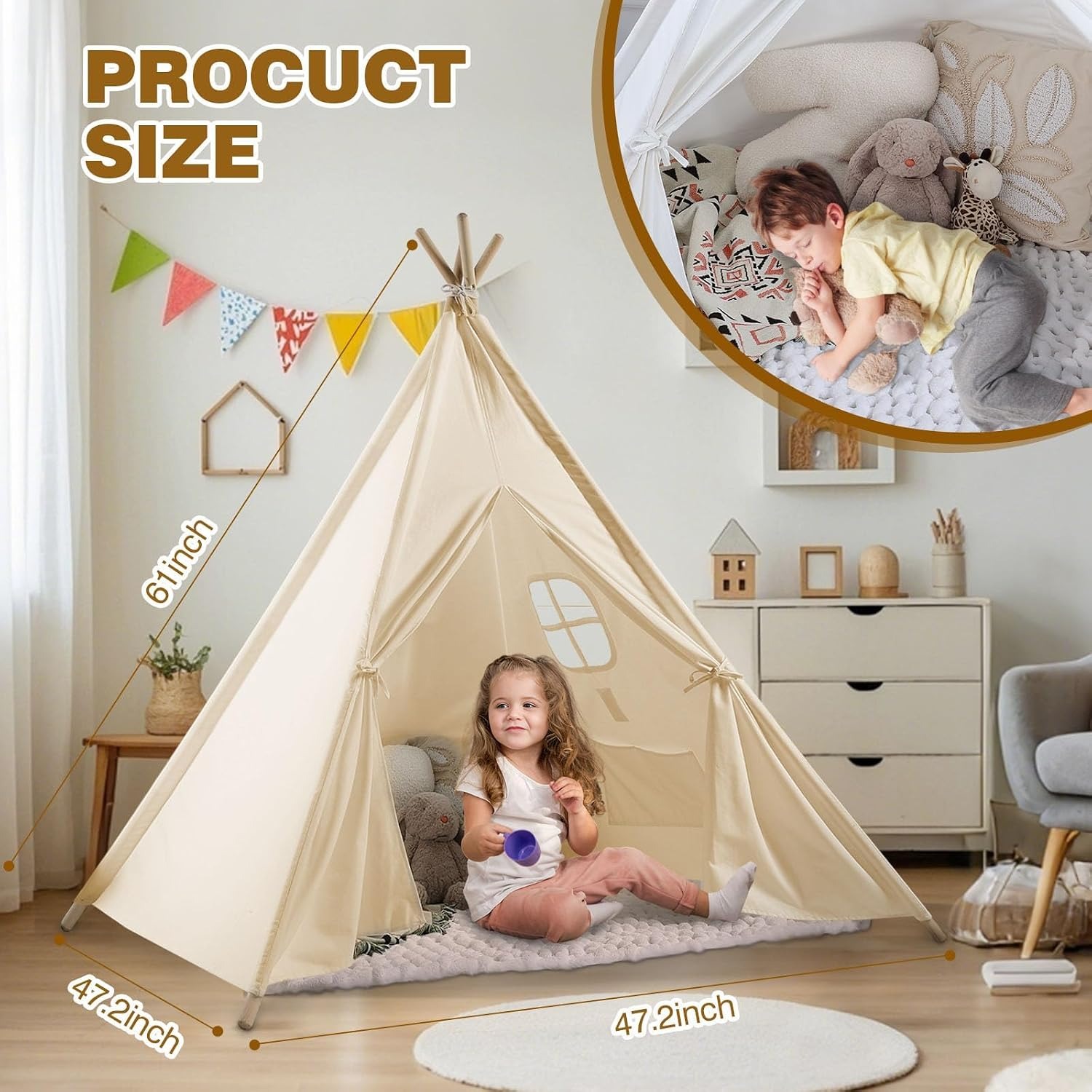
The footprint is 119 by 119 centimetres, with a height of 150 centimetres. Measure before you buy. It sounds obvious and it is the single most common reason a play tent ends up back in its box.
What you need is a square of clear floor just over a metre on each side, plus a bit of clearance so the poles are not pressed against a wall or a radiator. Pushing a teepee tight into a corner distorts the cone and puts uneven load on the frame. Give it ten or fifteen centimetres of breathing room on at least two sides.
Ceiling height is rarely an issue at 150 centimetres, but sloped ceilings in loft bedrooms can catch you out. Check the height at the exact spot you plan to put it, not at the highest point in the room.
Think about the door direction too. The front flaps need to open towards open floor, not towards a bed frame or a chest of drawers. Children will drag the tent around to suit themselves eventually, but starting it in a sensible orientation saves arguments.
What to look for in any play tent
If you are comparing options, a few things separate the best canvas play tents from the ones that disappoint.
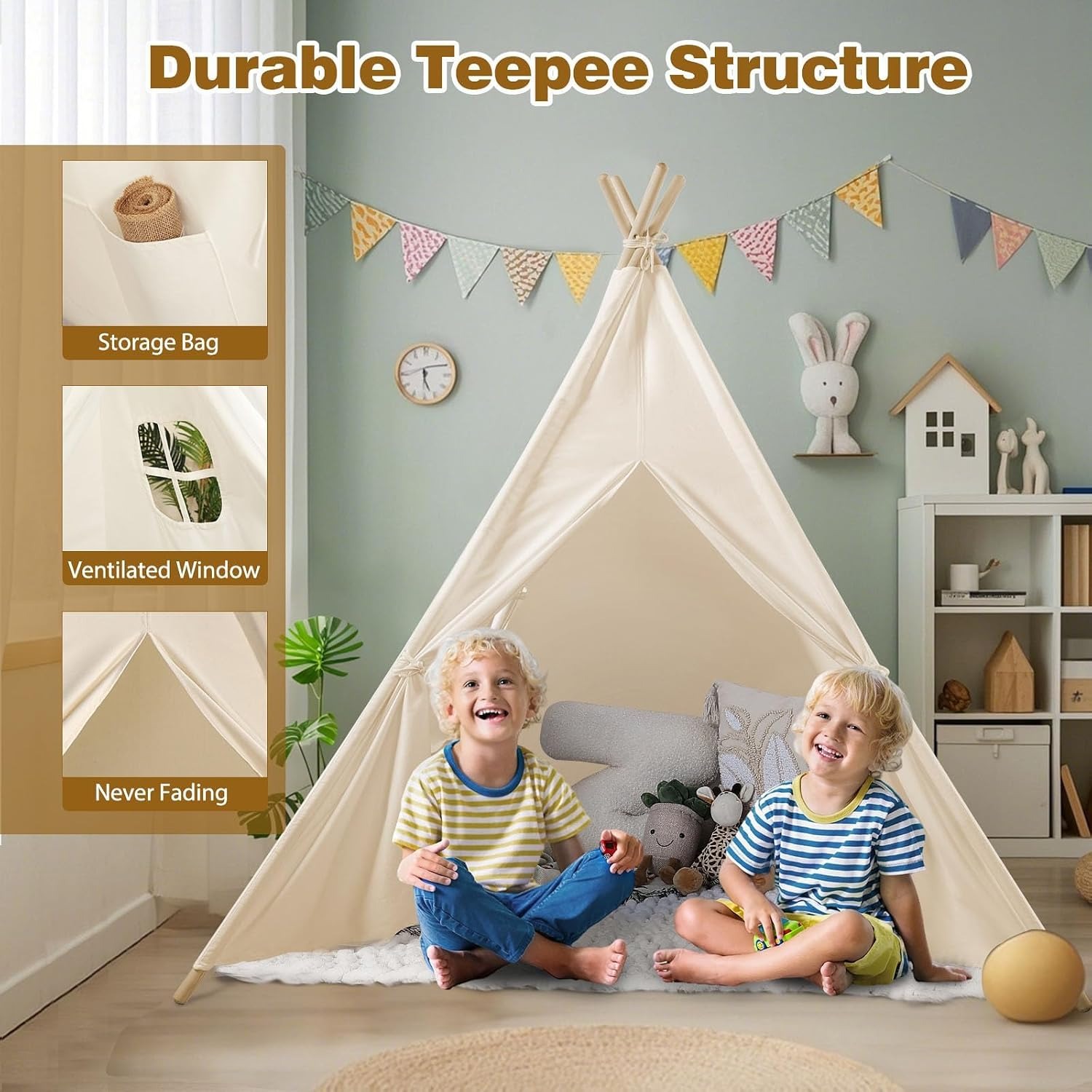
Closing flaps are near the top of the list. Plenty of tents have a permanently open doorway, and children quickly lose interest because the space never feels private. A flap that genuinely shuts changes the experience.
Frame material is the next thing. Solid wood poles, pine or similar, hold shape and feel substantial. Thin tubular plastic tends to bend under sideways pressure, and once a pole bows the whole cone sits wrong.
Fabric weight is harder to judge online, but a natural, unbleached look and a blend like polycotton is a reasonable sign. Very thin fabric lets light through so brightly that the inside never feels like a den.
Finally, think about assembly and storage. A tent that takes forty minutes to build will go up once and stay there until it is thrown out. One that goes together in a few minutes gets moved to the garden, packed for a visit to grandparents, and folded away when guests come to stay.
Looking after it
Care is mostly common sense. Spot clean the fabric with a damp cloth and mild soap, working on the mark rather than soaking the whole panel. Let it dry fully in the air before you reassemble. Hot washing polycotton risks shrinkage, and a shrunken panel will not sit correctly over the frame again.
Keep the pine poles dry. Wipe them with a dry cloth if they pick up dust, and never leave them standing in a puddle or on wet grass overnight. Wood absorbs water, swells, and then dries unevenly.
If the tent goes outdoors, the rule is simple: dry before folding. Fabric packed away damp grows mildew, and mildew on white fabric is very hard to undo.
Check the pole joints occasionally if the tent lives up permanently. Daily use loosens things slowly, and a two minute check keeps the frame sitting square.
The short version
This is a plain white polycotton teepee on a pine frame, 119 by 119 by 150 centimetres, weighing 2.05 kilograms, recommended for ages three and up. The flaps close properly, which is the detail that makes a tent feel like a real space rather than a decoration. Assembly takes minutes.
Measure your floor space first. Give it a little clearance from the walls. Keep it dry, spot clean it rather than washing it, and it will take years of being crawled into and out of. The maker backs it with a 12 month warranty from date of purchase.
For most families the appeal is not complicated. It is a door a child can shut, in a house where they usually cannot shut any.