
The complete guide
Rocket Ship Play Tent Buyer's Guide
The problem a play tent actually solves
Most children's rooms are shared space. There is a bed, a wardrobe, a box of toys and probably a grown-up walking through every ten minutes. What is often missing is somewhere that belongs to the child, a spot they can decide the rules for.
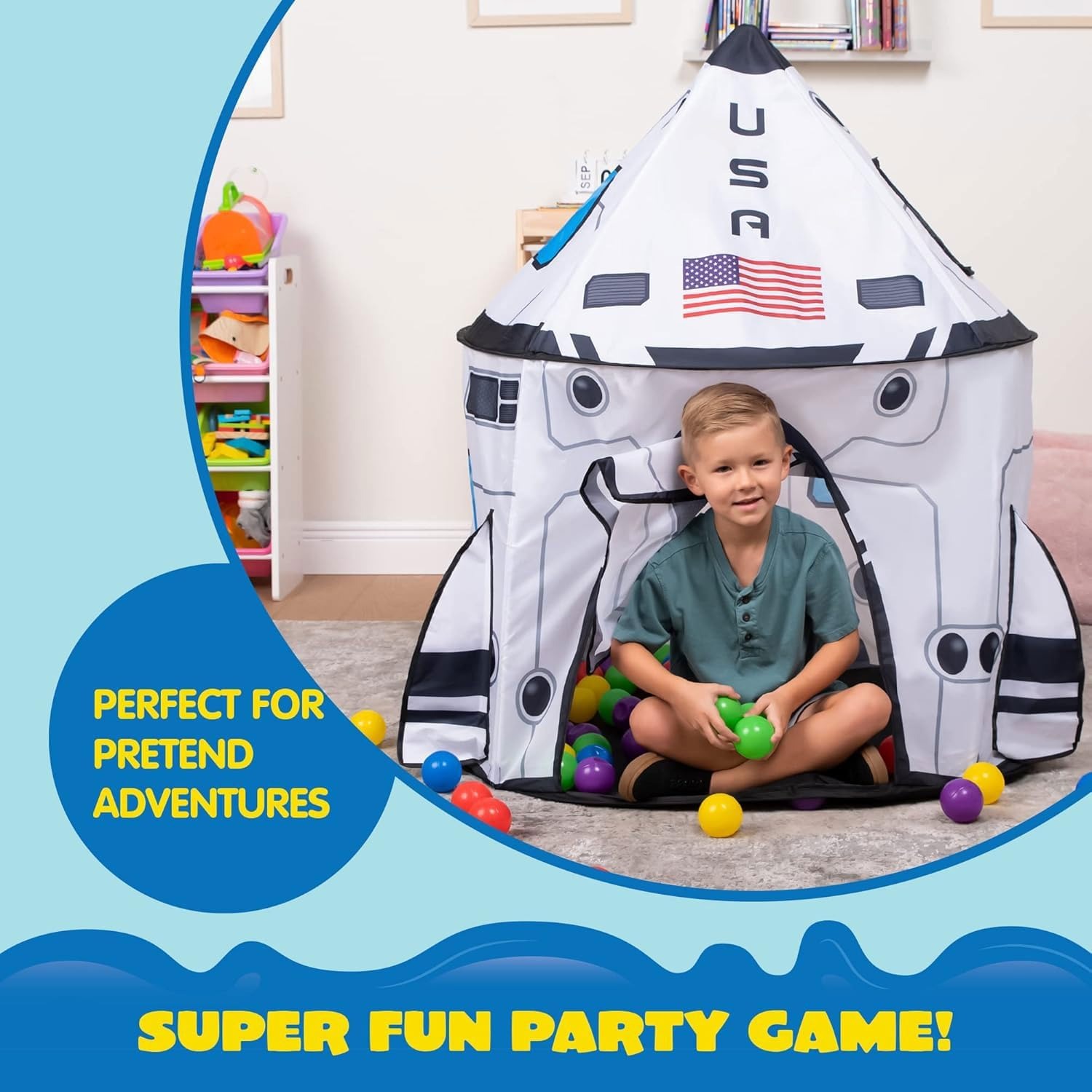
That is the real job of a play tent. The space theme is the hook, but the useful part is the boundary. A child goes inside, pulls the fabric closed and the rest of the house fades a bit. Parents notice it fastest at the end of the day, when a noisy kid who will not sit still suddenly goes quiet with a book and a torch because they are "on a mission".
It also gives you somewhere to put the pretend play that was otherwise happening on the stairs. A rocket ship play tent is a container for imagination in a very literal sense.
How this one is built
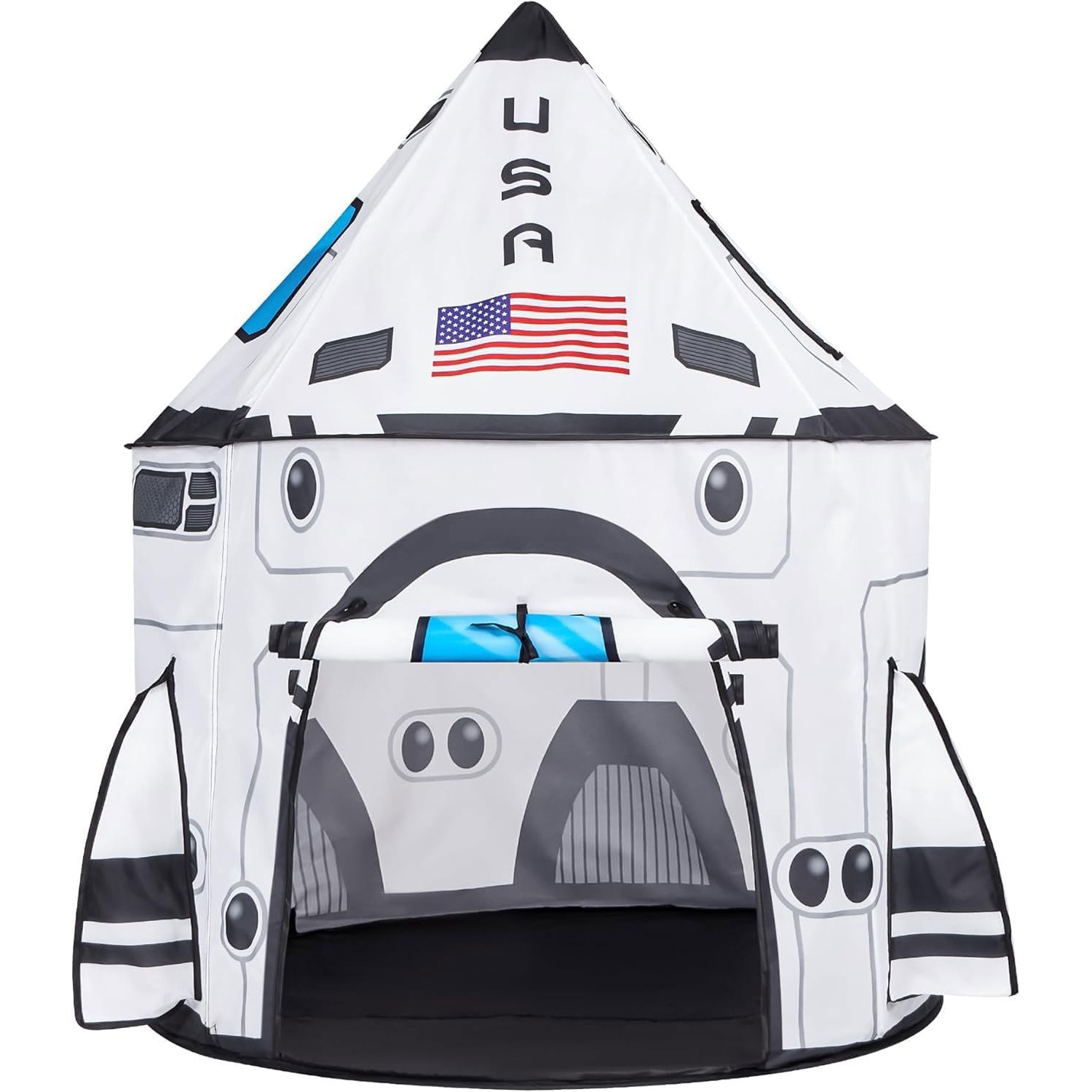
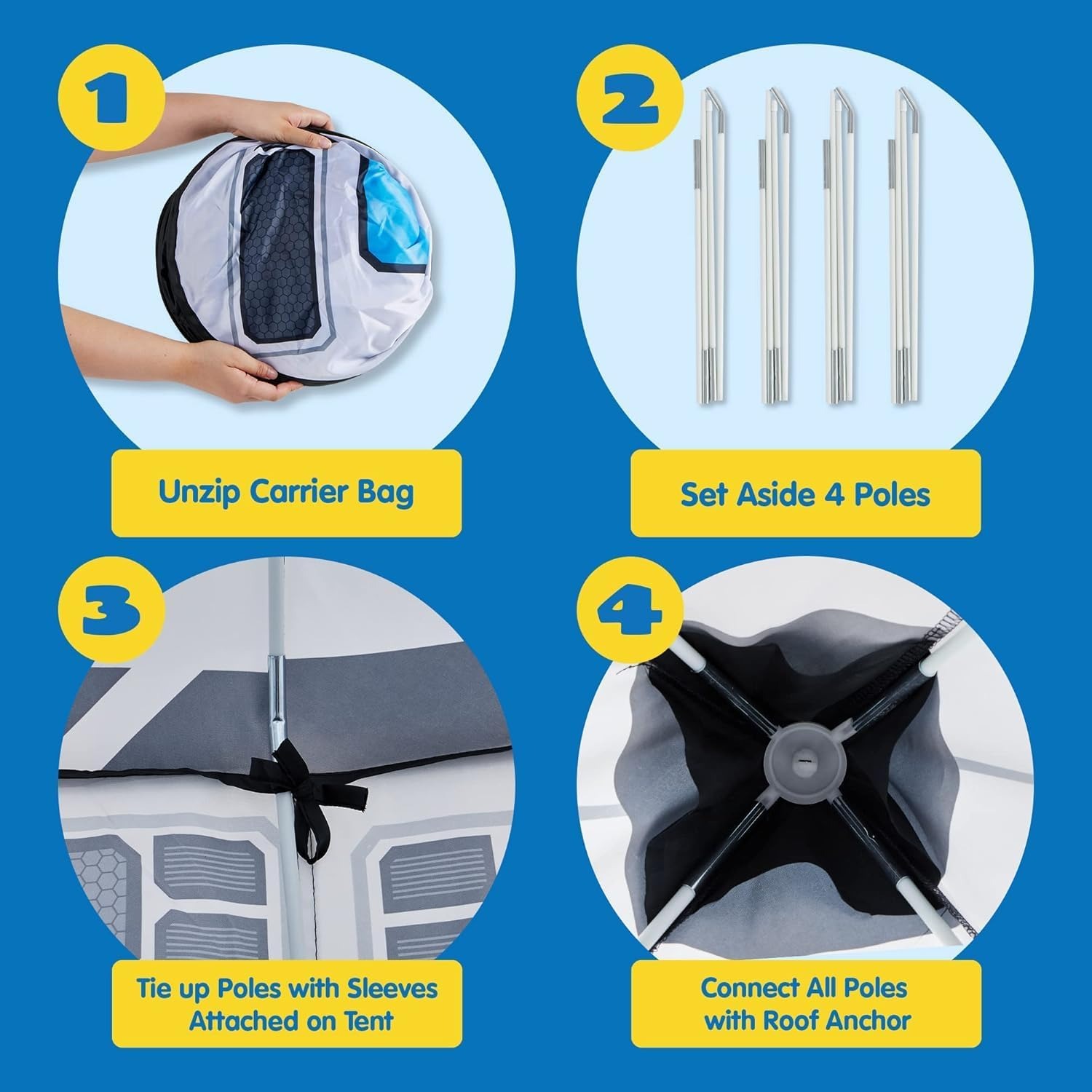
This is a pole tent, not a pop-up. Four metal poles form the frame, a polyester cover goes over the top, and roof anchors hold the shape at the point of the rocket. Floor anchors are included for use on grass or carpet, depending on your floor.
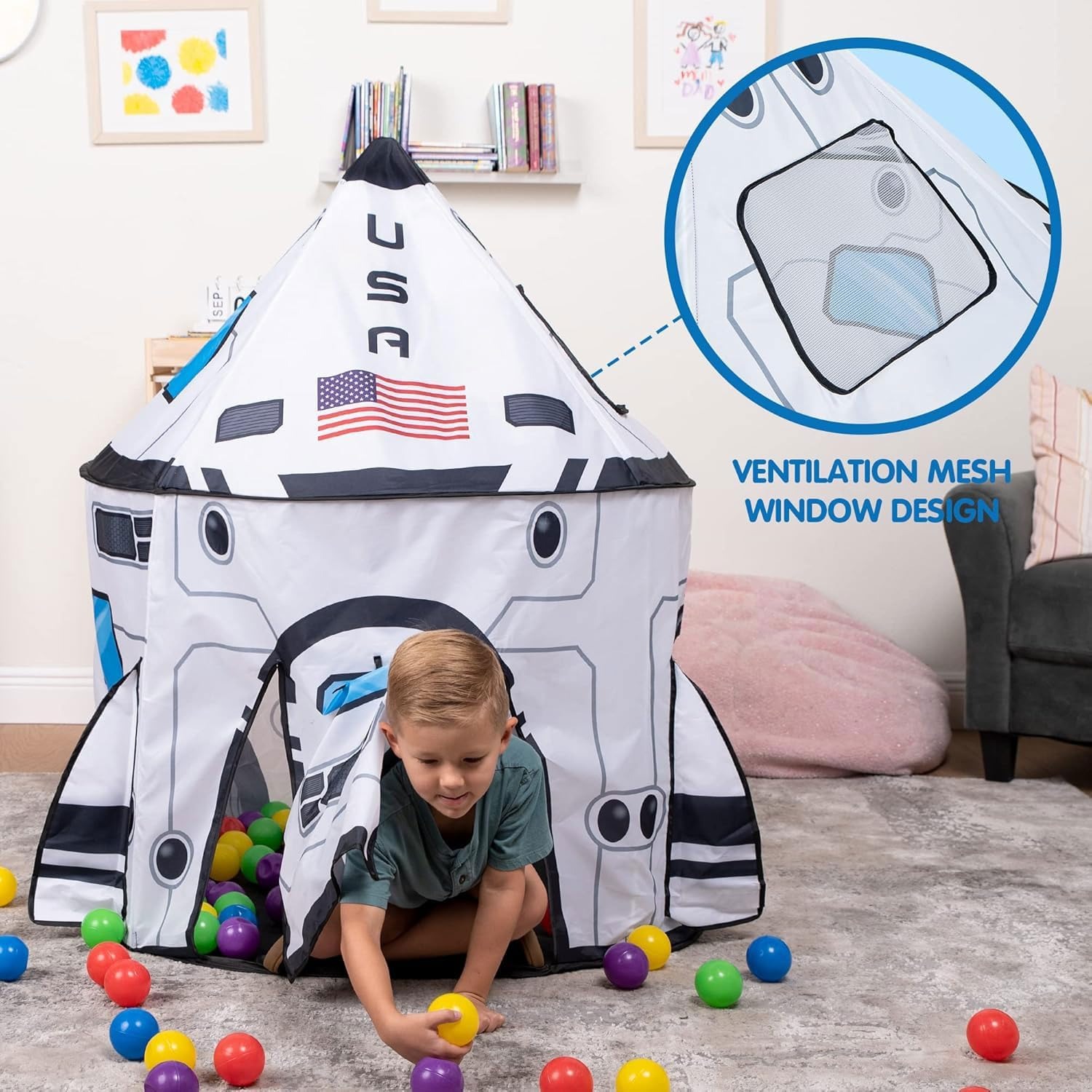
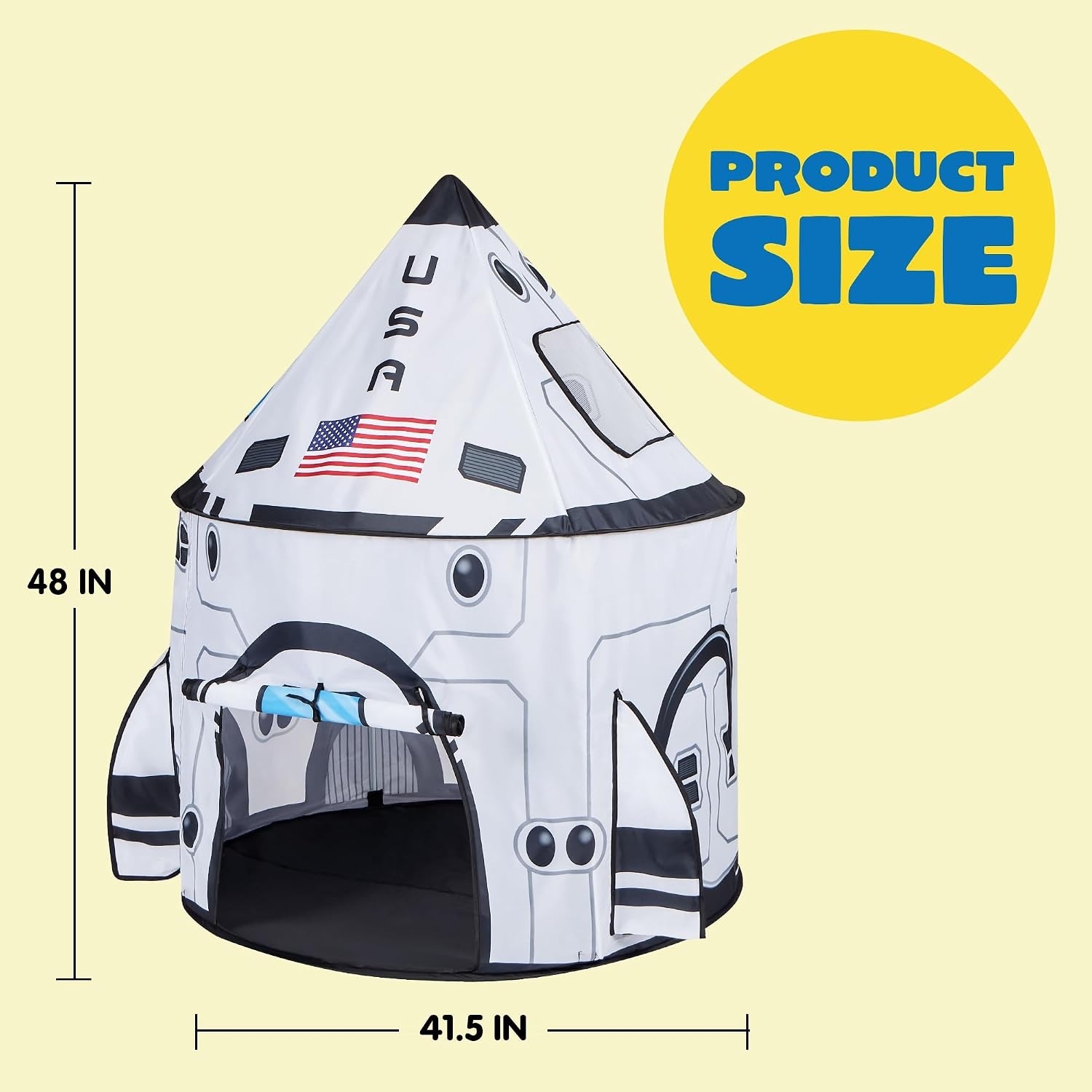
Built size is 41.5 inches square and 54 inches tall, which works out at roughly 105 x 105 cm on the floor and 137 cm high. That height matters. A lot of cheap play tents are low domes that a four year old hunches inside. This one lets most children in the recommended age band sit up comfortably and even kneel without hitting the roof.
The whole set weighs 0.91 kg. That number is easy to skim past, but it changes how you use the thing. A tent under a kilo can be picked up assembled and moved to the other side of the room, or carried out to the garden in one hand while you hold a drink in the other.
Assembly is required. The first build takes the longest because you are learning which pole is which. After that, taking it down and putting it back up is a short job, and the poles fold so everything returns to the tote.
Who it suits
The manufacturer recommends 36 months to seven years. That is a sensible band. Below three, children are still mouthing things and pulling on structures, so supervision matters more. Above seven, most kids outgrow the height.
Within that range, the tent suits a few different children. There is the one who loves space and will name every planet at you. There is the quieter child who wants somewhere to retreat when the house is busy. And there is the sibling pair who need a den to argue over, which is its own kind of play.
It also suits parents looking for the best screen free play ideas that do not require constant adult input. A tent does not need batteries or a login. You put it up and the child takes it from there.
Choosing between play tents
A few things separate a tent you keep from one that goes in the loft after a month.
Height is the first. Low tents get abandoned early because sitting up inside is uncomfortable. At 137 cm this one has proper headroom for the age range it targets.
Frame type is the second. Pop-ups are faster but they sag, and the twist-fold storage defeats a lot of adults. A pole frame like this takes a few more minutes and holds a cleaner shape, which is why the rocket silhouette reads so clearly.
Weight and pack-down is the third. If a tent is heavy or awkward to fold, it stays up permanently and slowly takes over the room, or it never comes out at all. Something light that goes back in a tote gets used more often, which is what you want from the best portable kids tent in the house.
Then there is the theme. Space works well because it ages up reasonably. A three year old sees a rocket. A six year old sees a mission control for an elaborate game with rules. Compare that to a very specific character print, which can date the moment the child moves on.
Where to put it
Corners work best. You need about a square metre of clear floor and 1.4 m of vertical clearance, so watch out for sloped ceilings, light fittings and the arc of an opening door.
Keep it away from radiators, heaters and open windows. Fabric and heat sources are a bad pairing, and a draught will nudge a light tent around.
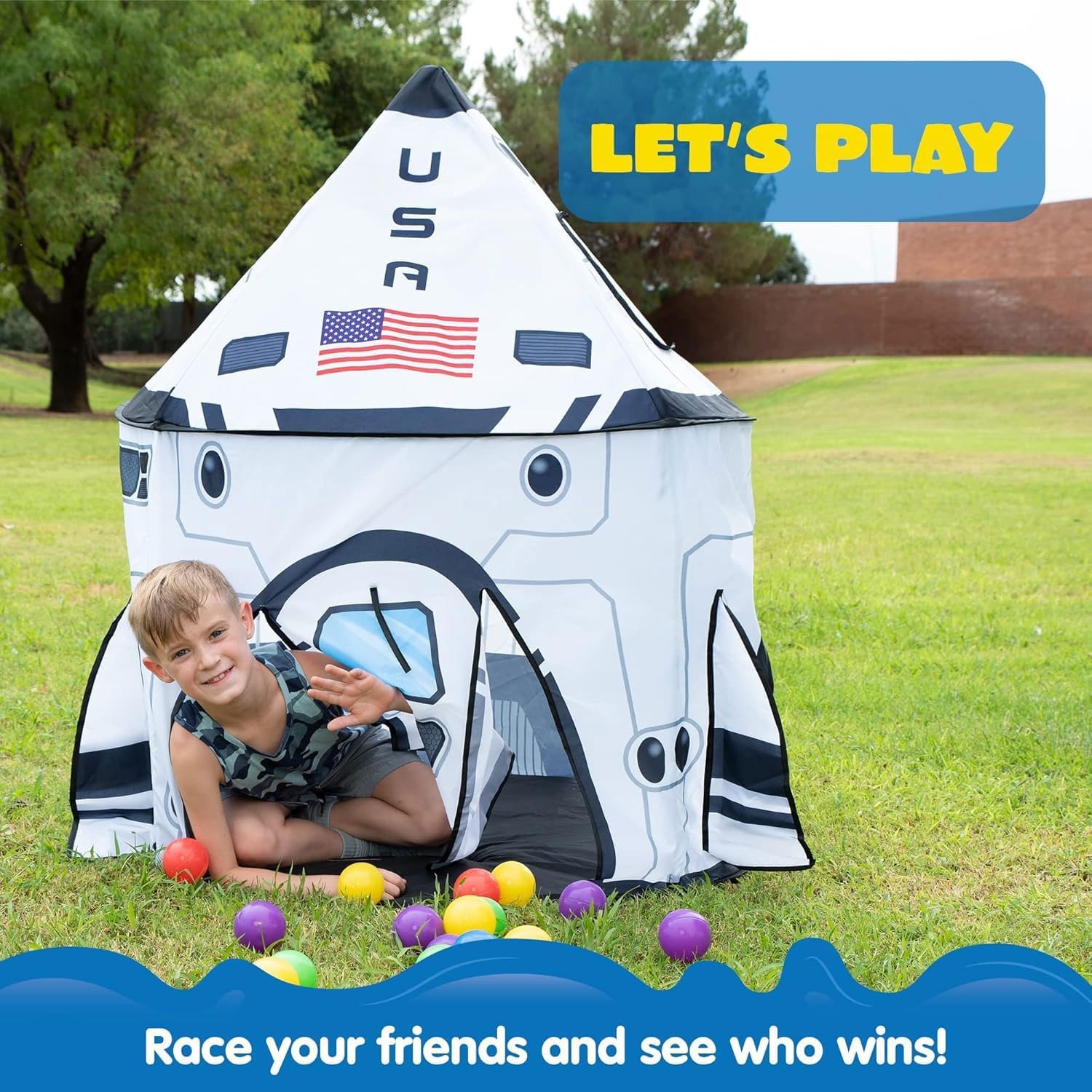
Outdoors, use the floor anchors on grass and pick a sheltered patch. This is a play tent, not camping equipment. It handles a dry afternoon in the garden well, but it should come in before rain and before dark.
Making it more than a tent
The tent on its own is a shell. What goes inside decides whether it becomes a favourite.
A thin foam mat or a folded quilt under the base makes the floor comfortable enough for a long session. A couple of cushions turn it into a reading spot. Battery string lights, hung carefully and never near a heat source, make evening play feel genuinely like a spacecraft at night.
Some families keep a small basket of specific toys that only live in the tent. Astronaut figures, a torch, a notebook for mission logs. The novelty of a dedicated set of things goes a surprisingly long way.
If you are putting together the best playroom tent corner, think about what is within reach. A low shelf next to the tent beats a toy box across the room, because children will play where the stuff is.
Looking after it
Cleaning is simple. Wipe the polyester with a damp cloth and a little mild soap, then let it air dry completely. Do not put it in the washing machine or the tumble dryer, and skip bleach entirely. Harsh treatment is what makes printed panels crack and seams loosen.
Store it dry. If the tent has been outside, let it dry fully before folding, even if it only felt slightly damp. Fabric packed away damp develops a smell and marks that are hard to shift.
Check the poles when you rebuild. Make sure each joint is fully seated before a child climbs in, and keep the parts together in the tote so nothing goes missing between uses.
The short version
This is a 137 cm tall rocket ship play tent in white polyester on a metal frame, weighing 0.91 kg, with poles, roof anchors and floor anchors included and assembly required. It suits children from three to about seven, works indoors or in the garden on dry days, and folds into its own tote when you want the floor back.
If you want a kids playhouse tent that gives a child their own space without permanently claiming a room, this is a sensible one. Put a cushion in it and see how long before someone announces a launch.