
The complete guide
Choosing a Princess Castle Play Tent, A Practical Buyer's Guide
The problem with giving a child "their own space"
Most homes do not have a spare room going begging. What children actually want is not square footage, it is a boundary. Somewhere with walls, a door and a roof, where they decide who comes in. You can see it in how they behave with cardboard boxes, blanket forts draped over dining chairs, and the gap behind the sofa. The space does not need to be big. It needs to be theirs.
That is the job a princess castle play tent does. It takes about a square metre of floor and turns it into a separate place. Once a child is inside with the flap down, the noise of the kitchen becomes background hum, and whatever they are doing in there becomes the main event. Parents often notice the same thing within a week of setting one up: play sessions get longer and quieter, because the child is not being pulled back into the room every thirty seconds.
The trade-off, of course, is that something has to live in your living room. Which is exactly why the details of the tent matter more than the pictures suggest.
How a tent like this works
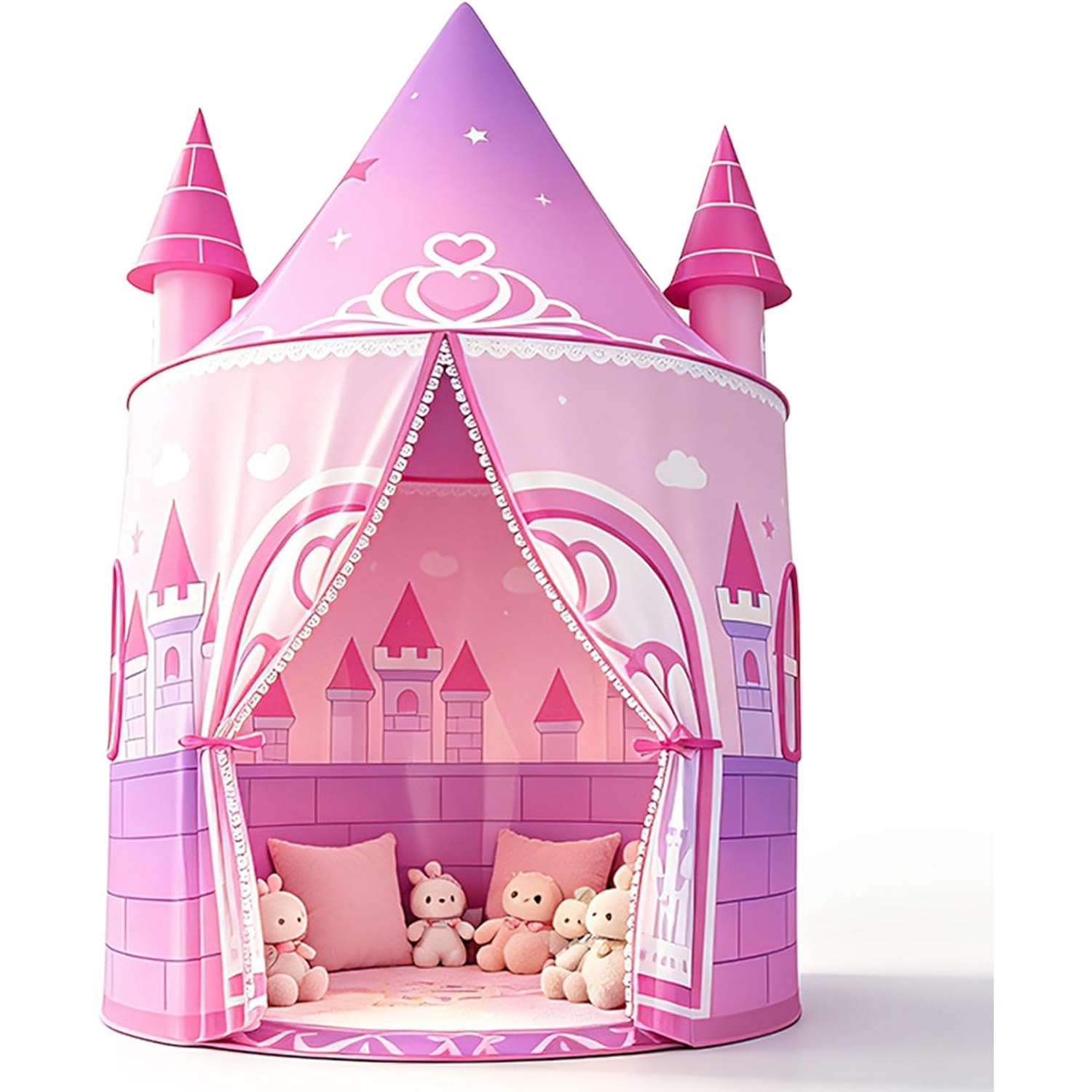
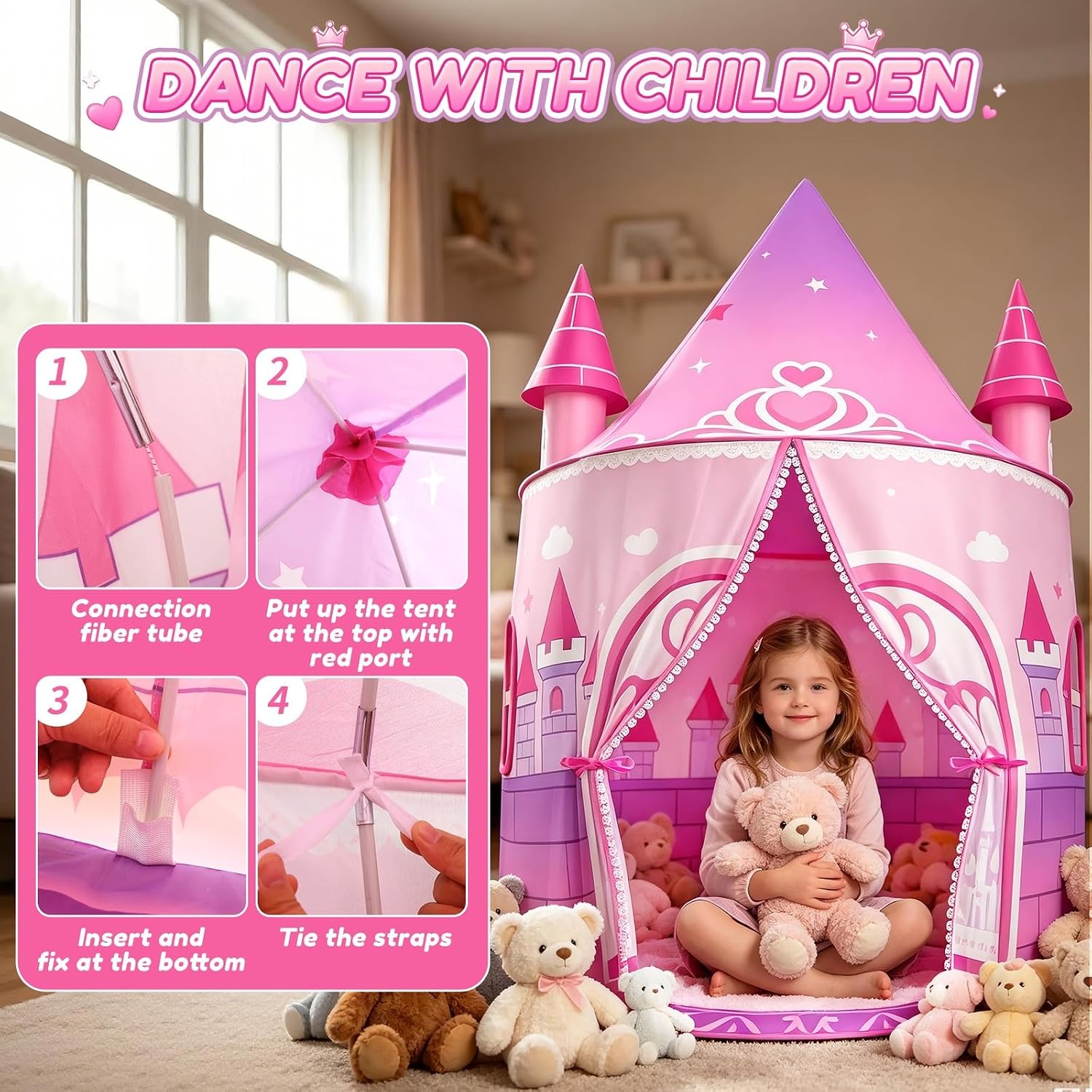
This one is a frame-and-fabric design. Poles slot together to form the structure, the fabric panels go over the top, and the result is a standing castle shape with a turret at the peak. Assembly is required out of the box, which sounds like a chore and is really just a few minutes of pushing poles into connectors. The important part is that the process runs in reverse. When you want your floor back, the whole thing comes apart and goes in a cupboard.
That is the key difference between a tent and a wooden playhouse. A playhouse is furniture. A tent is a thing you can make appear on a wet Saturday and make disappear before guests arrive. For most families, especially in flats and shared rooms, that flexibility is worth more than the extra sturdiness of something permanent.
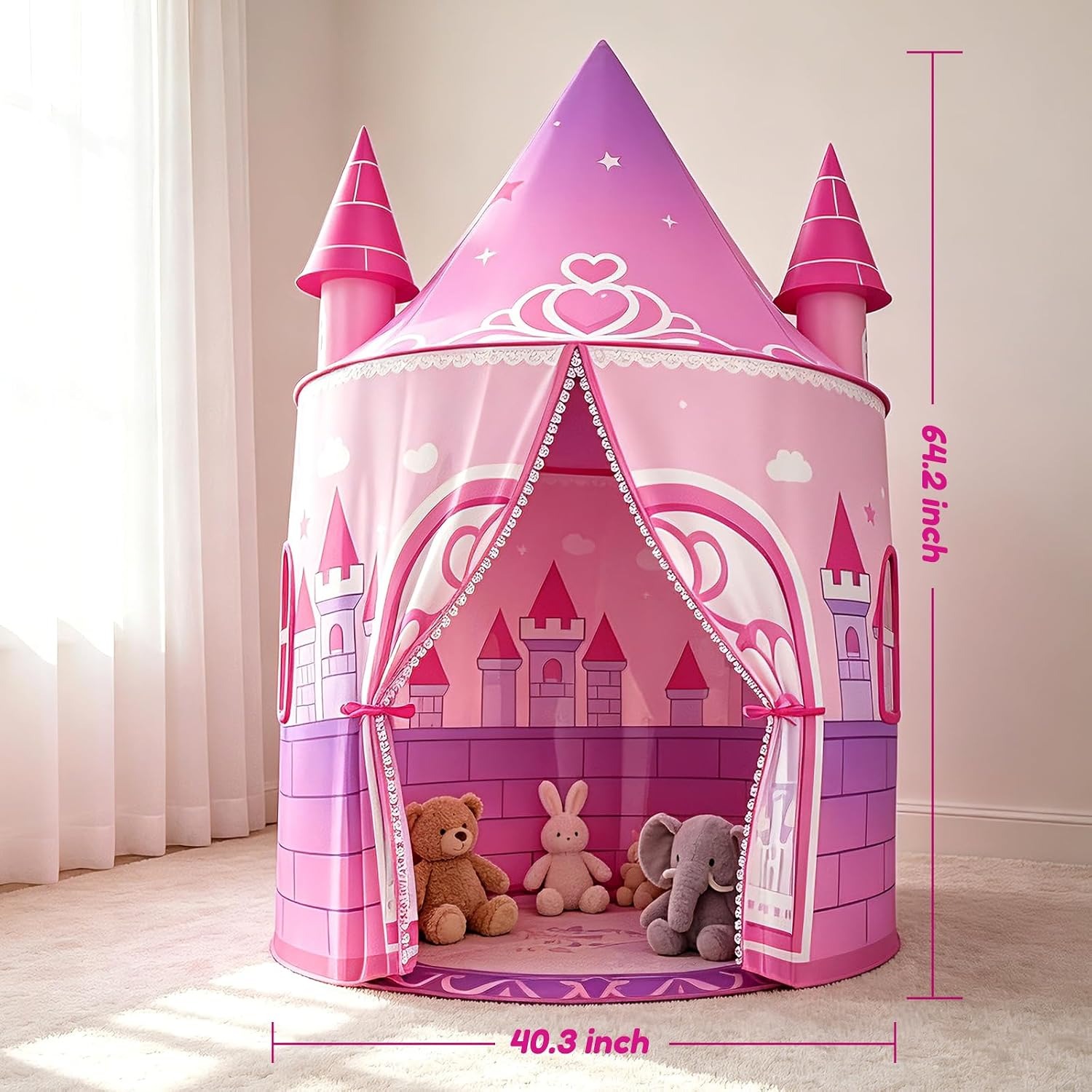
Height is the other thing a frame design buys you. Cheap pop-up tents are usually low and domed, which means children crawl in and lie down. Fine for a nap, frustrating for anything that involves hands. This tent stands 163 cm, which is taller than the child using it, so there is real room to kneel, sit upright and spread things out on the floor.
The measurements, and why they matter
The base is 104 cm by 104 cm, and the full height is 163 cm. The listing also quotes 103 x 103 x 163 centimetres as a second figure, so build in a centimetre of tolerance when you are planning.
Take two measurements before ordering. First, the floor. Mark out a square just over a metre on each side in the spot you have in mind, and leave a bit of walking room around it. Tents always feel larger in a room than they do in a product photo, because a photo crops out the furniture you have to walk past.
Second, the ceiling. Standard rooms are no problem at all, since 163 cm is shorter than most adults. The ones to watch are sloped attic ceilings, rooms with low beams, and the space under a loft bed or a high sleeper. A few centimetres of clearance above the turret keeps the shape right and stops the fabric being squashed flat.
Who it suits
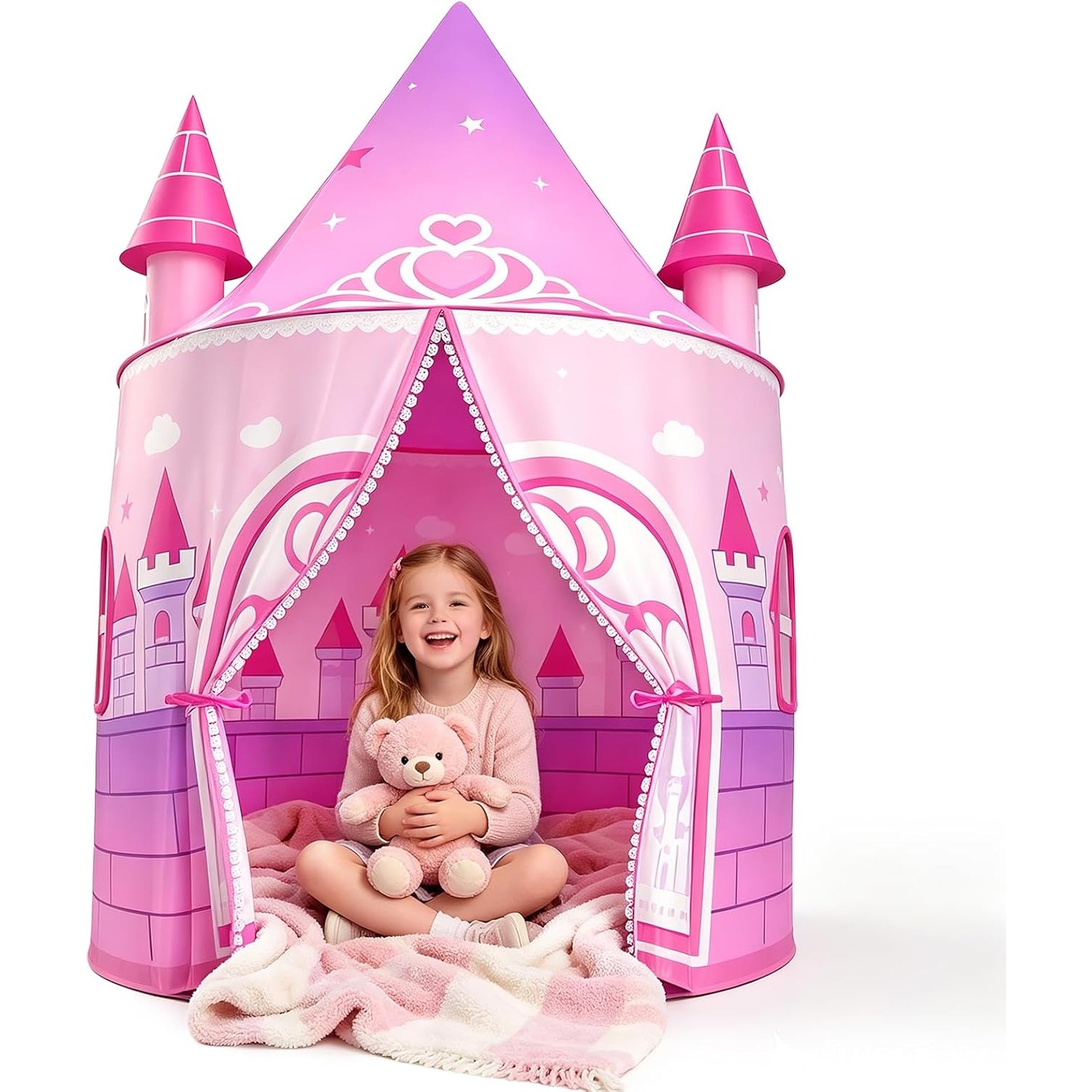
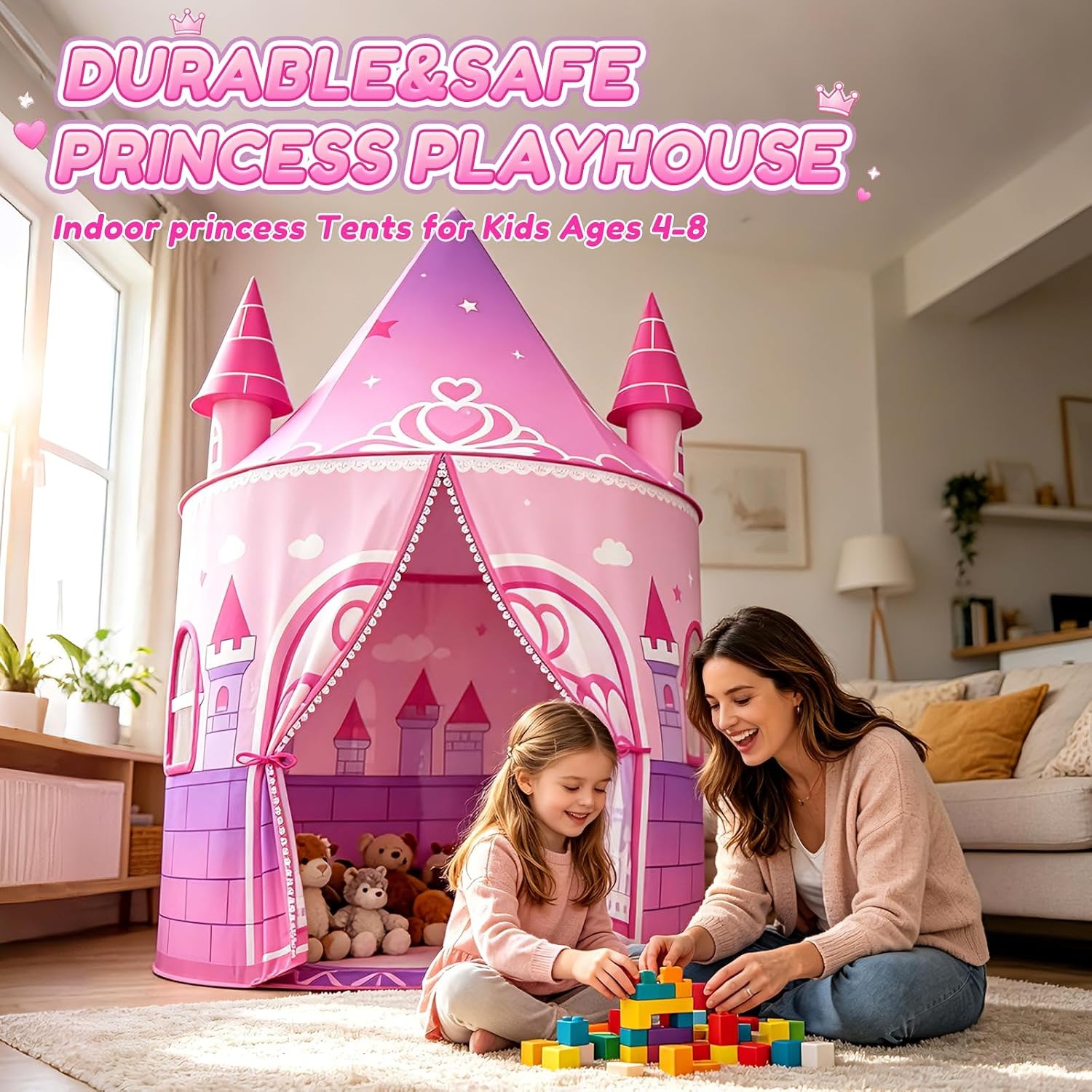
The manufacturer recommends ages 3 and up, with a stated minimum of 36 months. That is good guidance for two reasons. Around three is when imaginative play really gets going, when a child starts naming characters, setting rules for their castle and keeping a story running across several days. It is also the age where most children can get in and out of a tent confidently without an adult shadowing them.
Below three, the appeal is mostly in crawling through the doorway, which is fun but short-lived, and supervision needs to be closer. Above seven or so, interest usually fades as children outgrow the sitting room inside. The sweet spot is roughly three to six, which is a long enough run to justify the purchase.
It also suits a specific kind of child. If yours gets overwhelmed in busy rooms, a tent can work as a calm corner. The rule worth setting from the start is that it is somewhere they choose to go, never somewhere they are sent. Leave the door free to open from the inside and let the child decide when the game is over.
What to look for in any kids castle tent
A few things separate a tent that lasts two years from one that lasts two months.
Height is the first, and we have covered it. The second is the base shape. A square base like this one uses floor space efficiently and sits neatly into a corner, where a round or hexagonal base leaves awkward gaps. The third is how it packs down. A tent that takes ten minutes and a wrestling match to dismantle will quietly stop being dismantled, and then it just becomes furniture you did not choose.
Think about where it will actually live, too. Against a wall is usually best, away from radiators, stairs and the sharp corners of furniture. Keep it clear of anything a child might grab at while getting up. And set it on a level floor, because a frame sitting on an uneven surface twists slightly and never holds its shape as well.
One habit worth building early: no climbing on the roof, no hanging off the walls, no pushing it across the room while someone is inside. Lightweight play structures are not built for that, and the rule is easier to keep if it exists from day one.
Making it feel like a real room
The tent on its own is a shell. What turns it into somewhere a child wants to stay is what goes inside, and that costs almost nothing.
A folded quilt or a small rug on the floor makes the biggest difference, especially on hard flooring. Two cushions give a child something to lean against. A battery-powered lamp or a string of battery fairy lights adds the glow that makes it feel like a den rather than a corner. Keep anything mains-powered out, and keep the lights battery-only.
Then add a small basket for books or a few figures. Resist the urge to fill it. The reason a child likes a tent is that it is uncluttered and separate from the toy chaos outside, and the moment it becomes another storage container, the magic goes.
Looking after it
Care is simple and mostly about moisture. Wipe marks off the fabric with a damp cloth and a little mild soap, working on the spot rather than soaking the panel. Let it dry completely in the air before you fold it, because packing a slightly damp tent away is the fastest route to a musty smell you cannot get rid of.
Do not machine wash it, tumble dry it, iron it or bleach it. The frame and the printed panels are not built for that kind of treatment. Keep the poles clean and dry, and check the connections now and then so nothing works loose.
For storage, keep all the poles bundled together so none wander off, and put the whole lot somewhere dry and out of direct sunlight. Sun fades colour faster than anything else. A large storage bag or a lidded box keeps the set intact between uses, and makes it much more likely the tent comes back out next winter.
What the maker's details does and does not tell you
Worth being straight about this. One item is included, the tent.
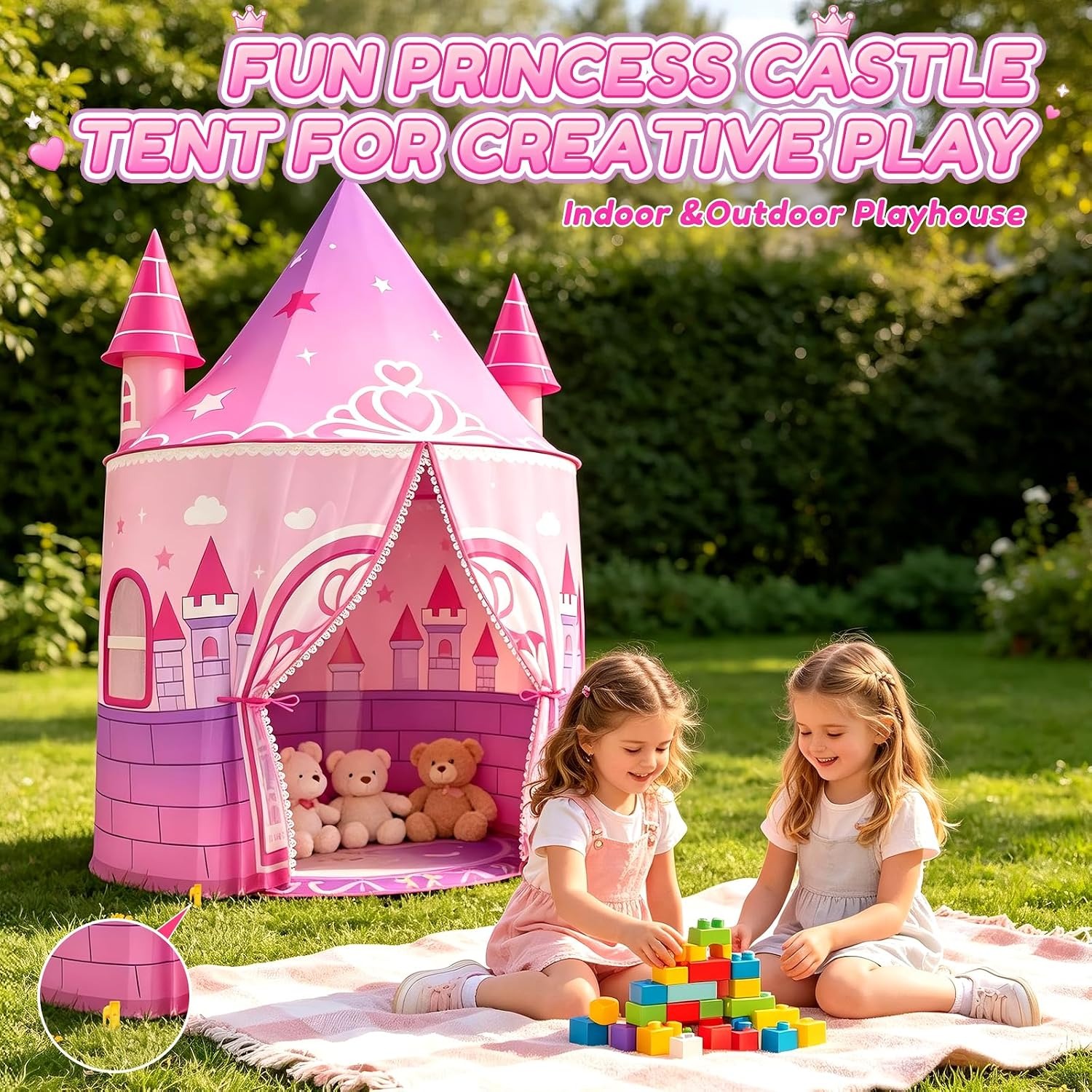
The maker does not specify a colour, a weight, a country of origin or any safety certification, so we have left those fields blank rather than fill them with guesses. The product photographs on this page show the design as supplied, and they are the best guide to the look and the openings. If there is a detail you need confirmed before you buy, ask us and we will check rather than estimate.
The short version
A tall princess castle play tent gives a child a defined space of their own in a home that does not have a spare room. This one is 104 cm square at the base and 163 cm tall, so there is proper head height for sitting and playing rather than just crawling in to lie down. It needs assembling, and it comes apart again, which is the whole point.
It is recommended for ages three and up, it suits a corner of a bedroom or playroom, and it works best with a rug, a cushion and a battery lamp inside. Measure your floor and your ceiling first, keep it dry, and store it with the poles together. Do that and it will see out several years of castles, dragons and quiet afternoons with a picture book.