
The complete guide
Pop Up Play Tents and Tunnels, A Practical Buyer's Guide
The problem with wet weekends and small houses
Children do not stop moving because it is raining. They crawl under the dining table, build forts out of sofa cushions and tip the laundry basket upside down to make a cave. It is good for them, but it takes over the room, and putting it all back is a job nobody enjoys.
A pop up play tent and tunnel set gives that instinct somewhere proper to go. It is a defined space, it has a shape children recognise, and when they are finished it folds into a flat disc that goes behind the sofa. That is the real appeal. Not the novelty of the tent, but the fact that the mess has a container and an off switch.
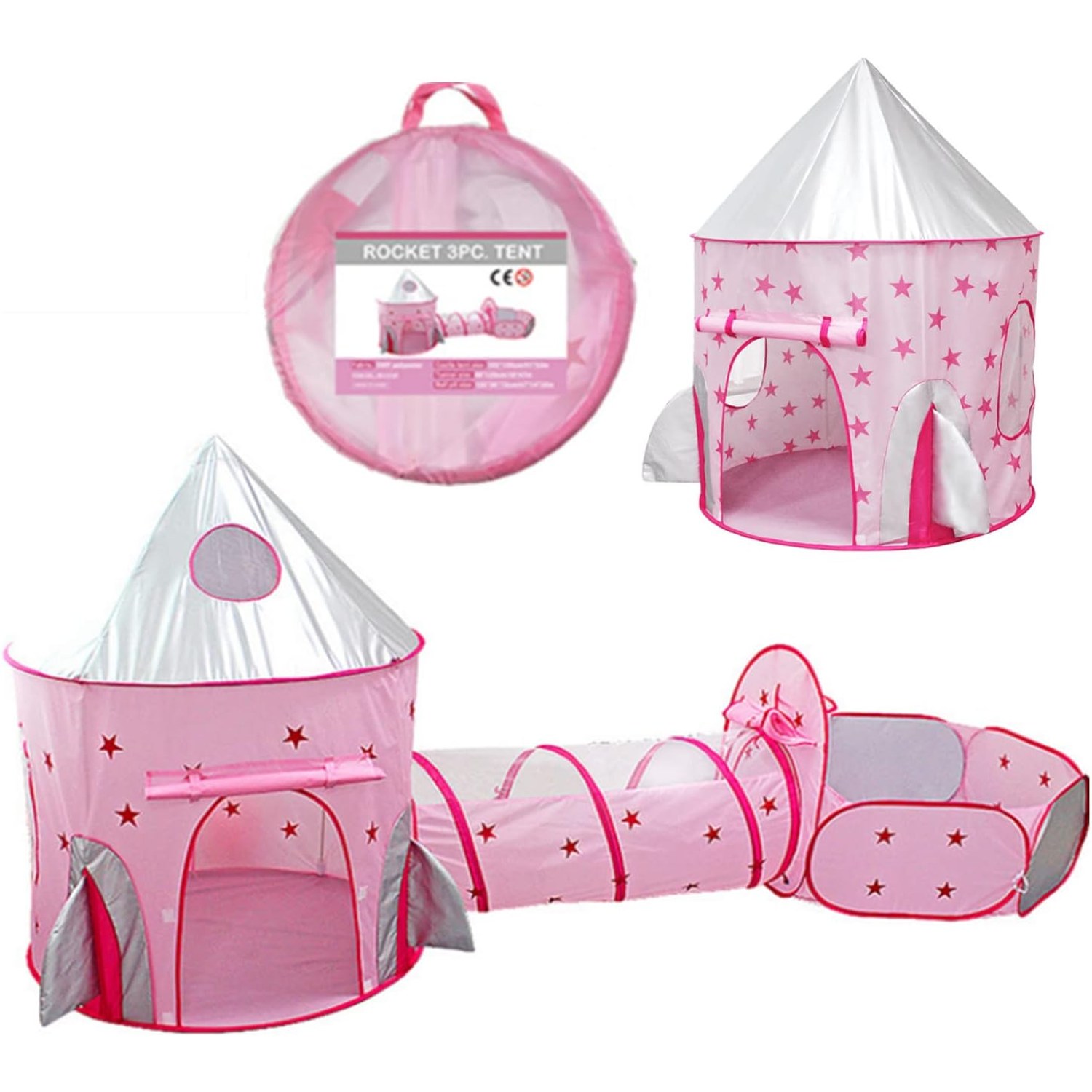
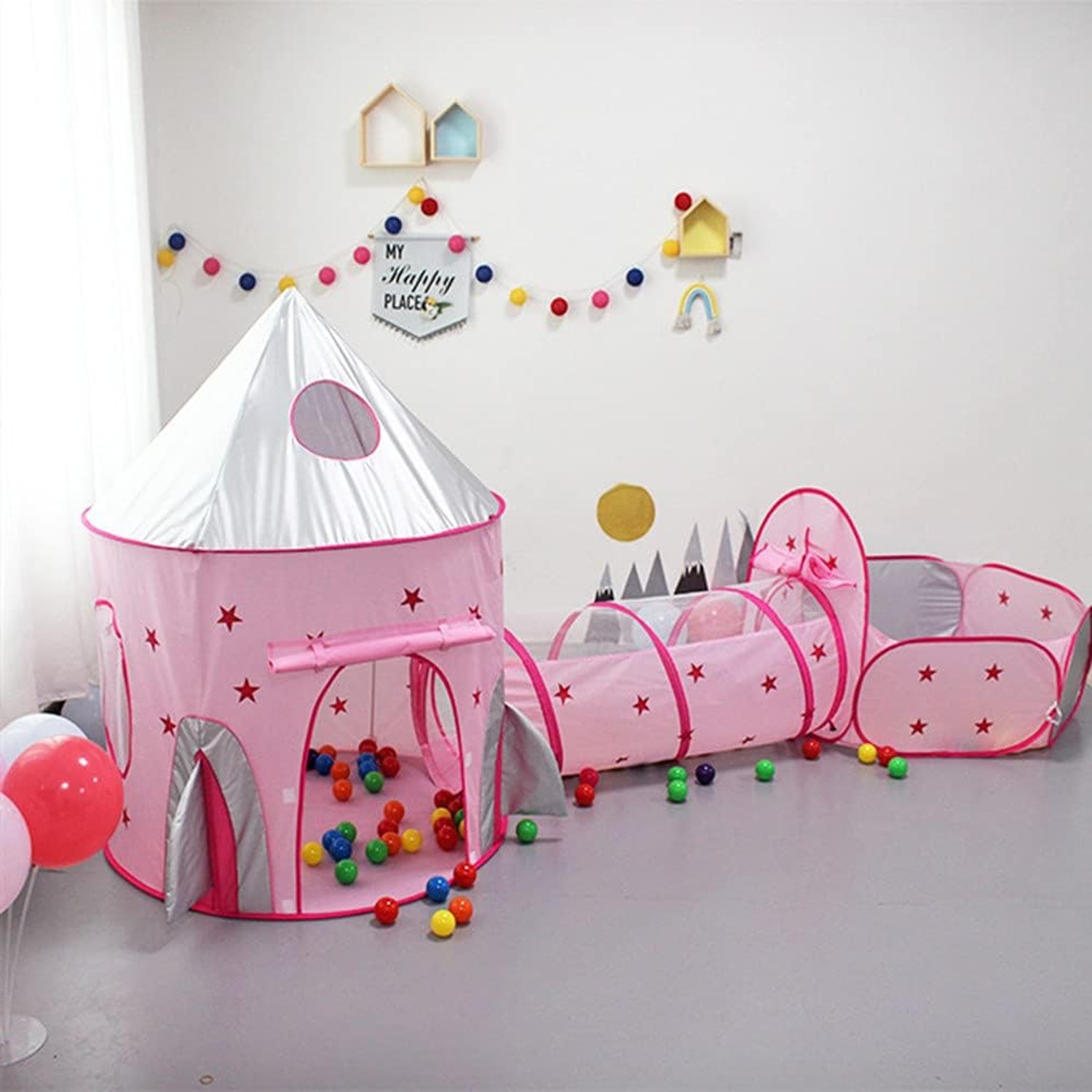
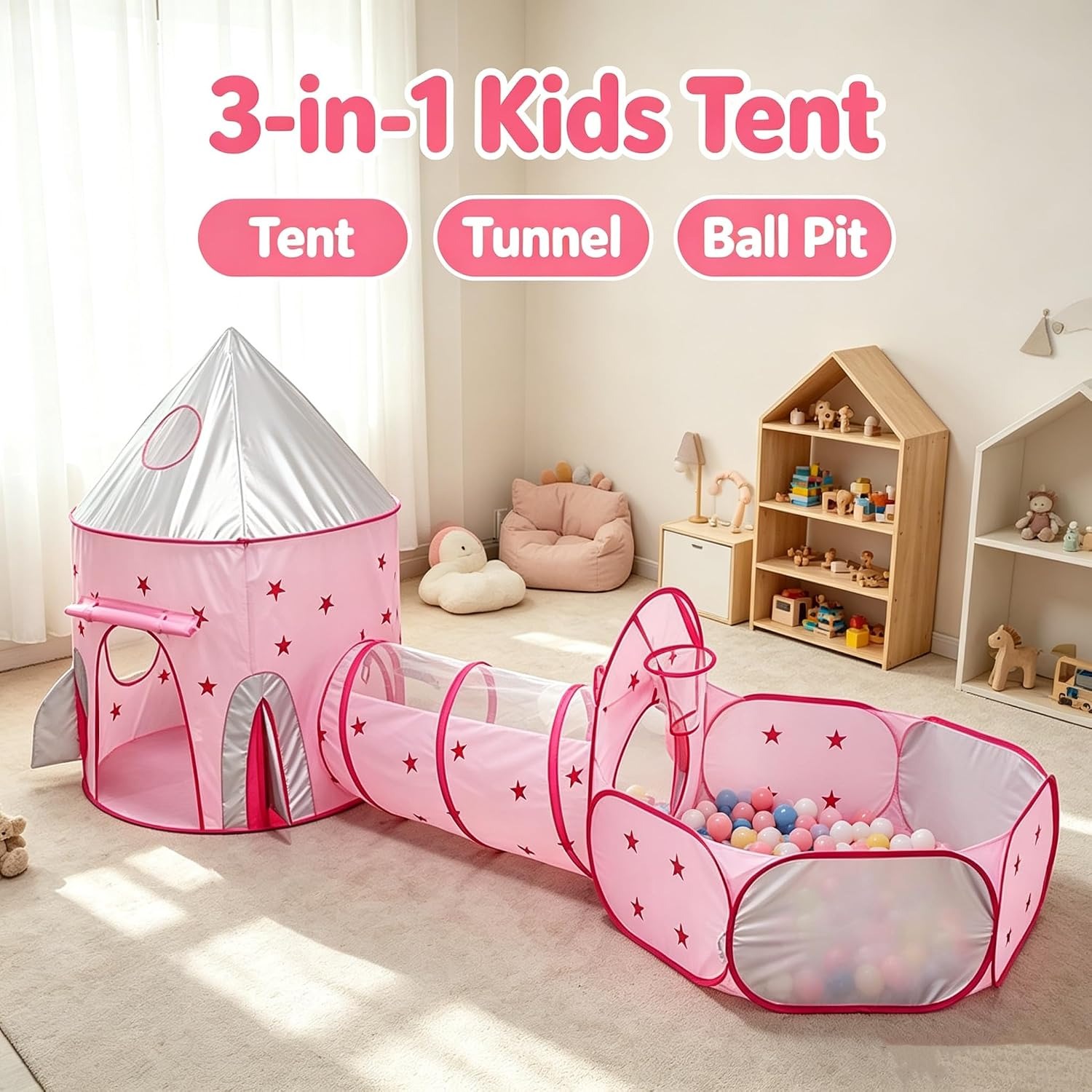
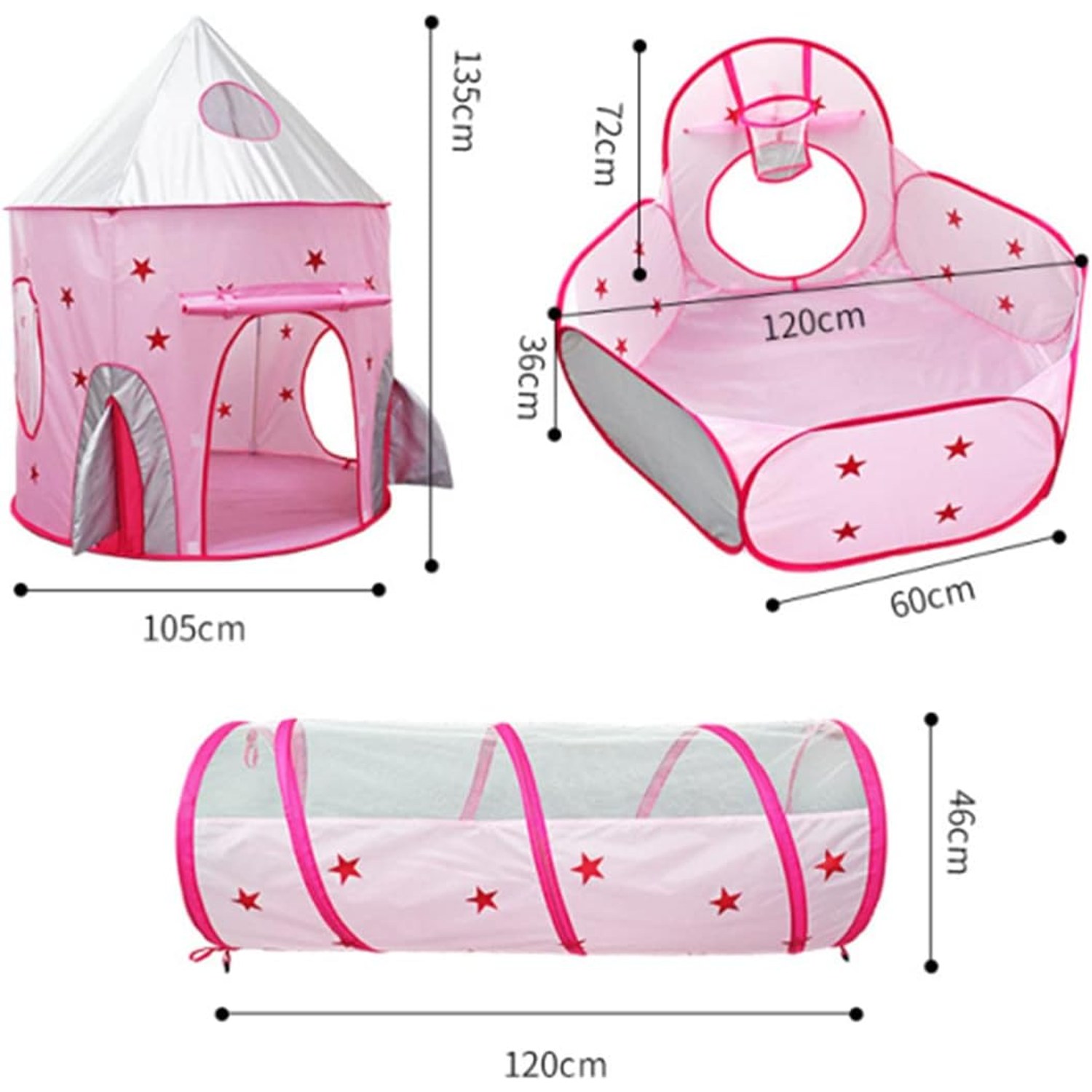
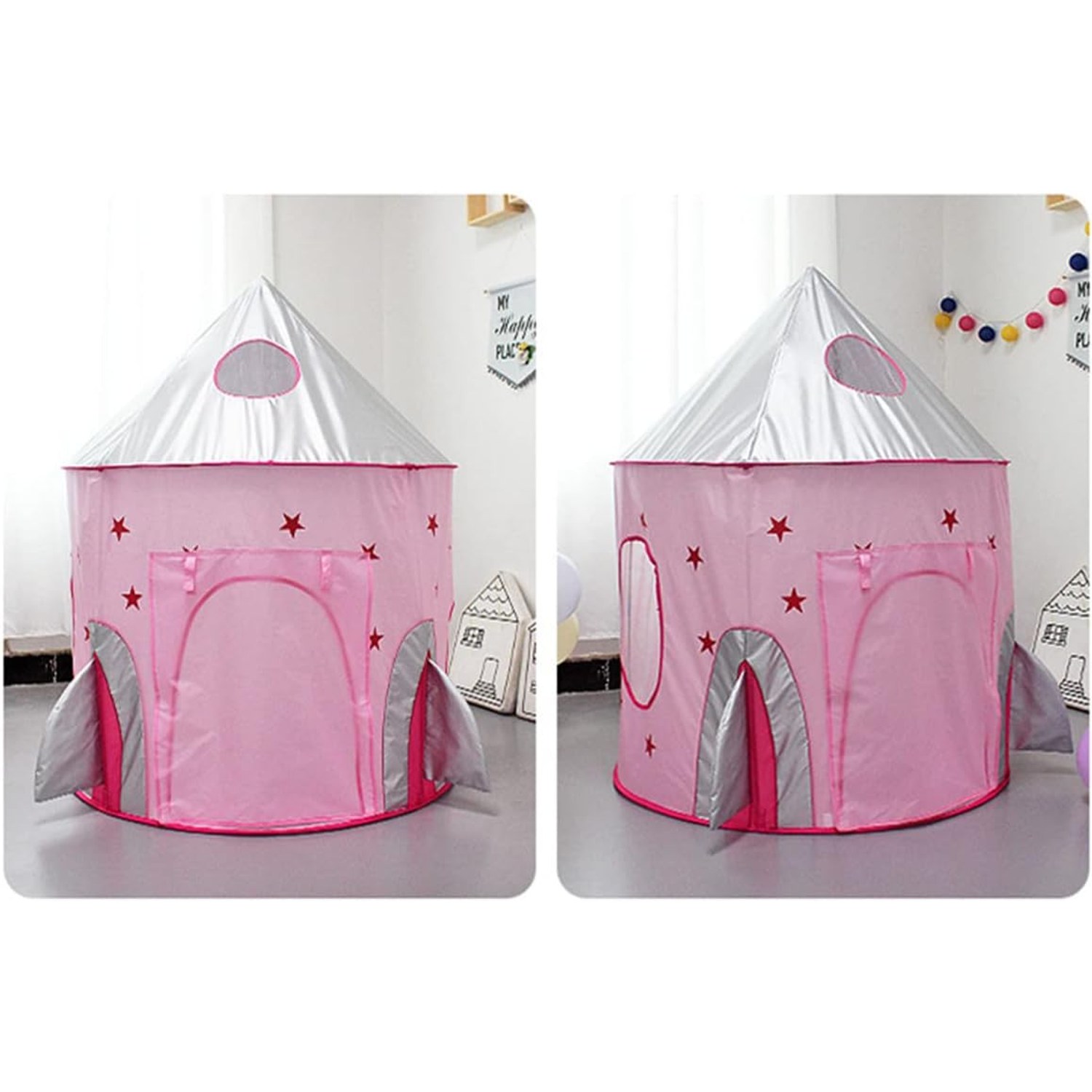
This set includes three pieces. A pop up tent, a crawl tunnel and a ball pit. They connect into a single course or split apart to suit whatever floor you have free that day.
How a pop up set actually works
There is no pole threading and no tent pegs here. The structure is a flexible polyester frame sewn into the fabric. When you release it from the bag it springs into shape by itself, usually in a second or two. The connected openings on the tunnel then clip to the tent and the pit.
Folding it is the part that catches people out the first time. You do not push it flat. You hold the hoop, twist it so it crosses over itself, and let it collapse into two or three smaller loops. Most adults get it on the third attempt and never think about it again. Children pick it up surprisingly fast once they have watched it done.
The fabric is polyester with mesh panels set into the walls. The mesh matters more than it sounds. Enclosed fabric gets warm and stuffy when a child is inside it giggling for twenty minutes, and the panels keep air moving. They also let you look over from the kitchen and see what is happening without crawling in yourself.
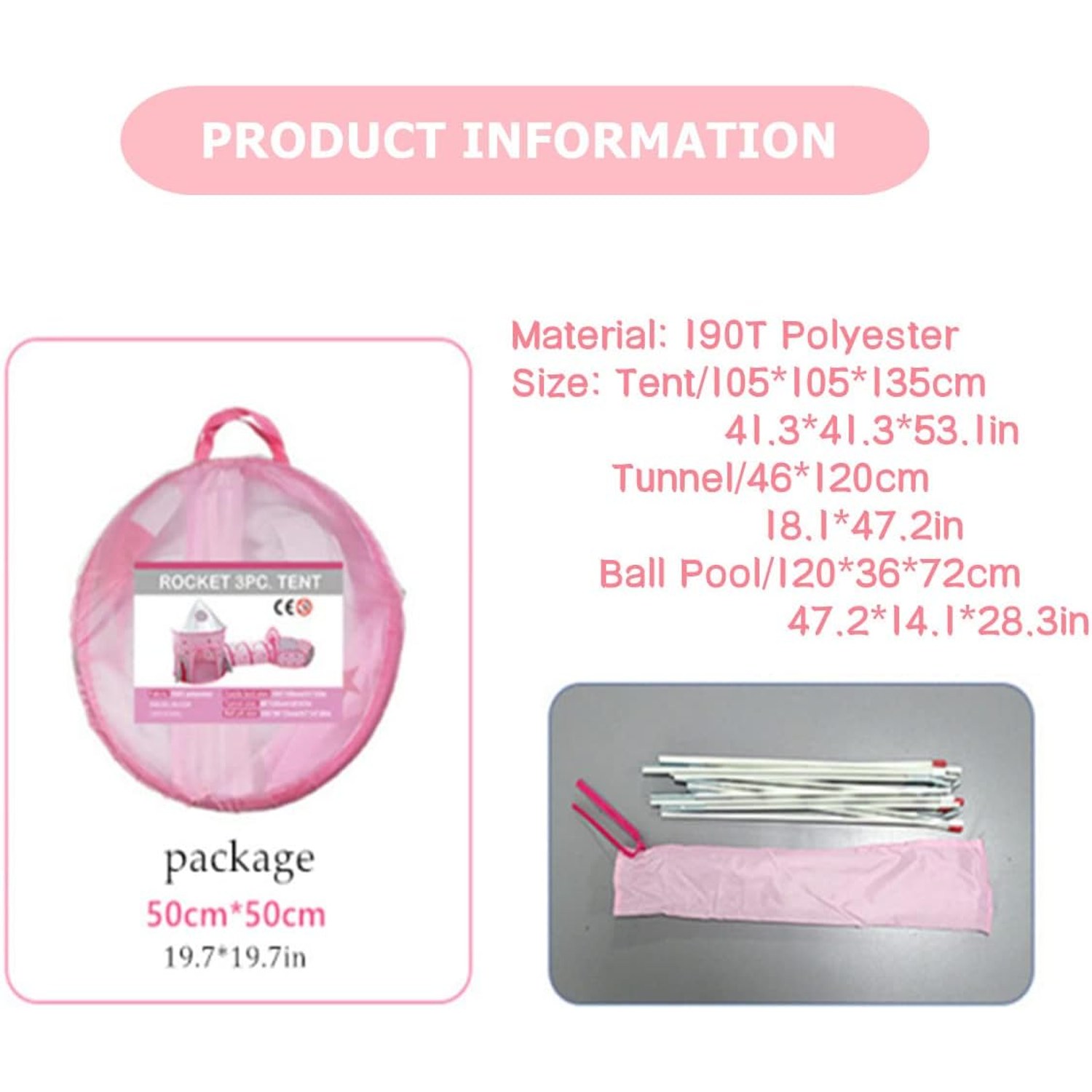
Packed, the whole thing measures roughly 50 cm by 50 cm by 2 cm and weighs 1.7 kg. That is lighter than most young children' coats.
Who it suits
The recommended age range is 36 months to 7 years. That covers a wide band of behaviour, so it is worth thinking about where your child sits in it.
A three year old usually wants company. They will crawl into the tunnel if an adult is waiting at the other end calling their name, and the first few runs are a shared game rather than solo play. A five or six year old treats it differently. The tent becomes a base, the tunnel becomes a secret passage, and the whole thing gets folded into a story that may involve dinosaurs, spies or a shop.
It also works well for children who need movement to settle. Crawling, pushing and squeezing through a tunnel is heavy work for the body, and a lot of parents find a few laps takes the edge off before homework or bedtime. If you have been hunting for the best kids play tunnel for a child who struggles to sit still, this kind of set earns its keep.
Siblings share it reasonably well, with one proviso. Keep the tunnel to one child at a time. Two children entering from opposite ends is funny for about four seconds and then somebody's head meets somebody's knee.
Choosing between a set and a single piece
You can buy a tent on its own, a tunnel on its own, or a ball pit on its own. A three-piece set costs more up front but tends to get used more, because the pieces feed each other. A tent alone is a quiet corner. A tent with a tunnel attached is a game.
The other argument for a set is flexibility over time. In a small flat you might only ever put out two pieces. In a bigger room or a garden you run all three. As your child's interests shift, the configuration shifts with them. A single-piece purchase does not offer that.
Where a set can go wrong is storage. If the pieces fold separately and awkwardly, they end up scattered across three cupboards and nobody bothers setting them up. This one folds flat into a single carry bag, which is the detail to check on any set you are considering. A good foldable playhouse should go away as easily as it comes out.
Setting it up well
Pick your floor first. A rug or play mat under the set makes a real difference on laminate or tile, both for knees and for grip. On bare hard floor the pieces slide when a child crawls through at speed.
Leave a clear run for the tunnel. Measure the space roughly with your eye and keep the course away from radiators, stairs, cords and anything heavy that could be knocked over. If the room is short, set the tent and tunnel up in an L shape along two walls rather than straight across the middle.
Outdoors, scan the grass before you lay anything down. Small stones, twigs and sharp seed heads are the usual culprits for fabric damage. Keep it off gravel and paving where the base will scuff.
One more practical point. Balls are not included with this set. If you want the pit filled, buy soft play balls separately and check they suit your child's age. Plenty of families skip the balls entirely and throw in cushions and soft toys instead, which is cheaper and makes less mess at tidy-up time.
Keeping it clean and lasting
Polyester is forgiving. Wipe it with a damp cloth and a little mild soap, then let it air dry fully before folding. Damp fabric packed into a bag will smell within a week, so give it time.
Do not put it in the washing machine or the tumble dryer, and skip bleach and the iron. The frame inside the fabric does not take kindly to any of that. Shake crumbs and grass out after each outdoor session, because crushed biscuit in the seams is a job for later you do not want.
Store it flat and dry in the carry bag. Long spells in direct sunlight will fade polyester over months, so a cupboard beats a conservatory windowsill. Avoid dragging the connected set across rough ground, since that is where most wear happens.
What it is not
It is worth being clear. This is not a camping tent and it is not weatherproof. It will not keep rain out and it should not be left on the lawn overnight. It is a toy that happens to be tent shaped.
It is also not a sleeping space. Children should not nap or sleep inside it, and it should not be used unsupervised for long stretches, especially with the youngest end of the age range.
The short version
If you want a self-contained play space that sets up in seconds and disappears just as fast, this covers it. You get a tent, a crawl tunnel and a ball pit in soft polyester with mesh panels, connectable or separate, suitable for children from three to seven. It folds to a 2 cm flat disc, weighs 1.7 kg, and travels in its own bag.
Buy balls separately if you want the pit filled. Put a mat underneath on hard floors. Learn the twist-and-fold trick once and it becomes a thirty second job. Beyond that, it mostly looks after itself while your child does the hard work of inventing somewhere to be.