
The complete guide
Choosing a Castle Play Tent That Children Actually Keep Using
The problem with most play tents
Plenty of children's tents get opened on a birthday, used hard for four days, and then quietly disappear into the back of a wardrobe. It is rarely because the child lost interest. Usually it is because the tent was too small to really get inside, too flimsy to survive normal play, or so fiddly to put up that nobody wanted to do it twice.
A good castle tent solves all three problems at once. It gives a child enough room to bring friends and toys in. It holds its shape when someone crashes through the doorway. And it goes up fast enough that you will actually say yes when your kid asks for it on a wet Saturday morning.
That last point is worth sitting with. The best kids play tent is the one that gets used, and use is mostly a function of how little friction there is between the idea and the game starting.
What makes this one different
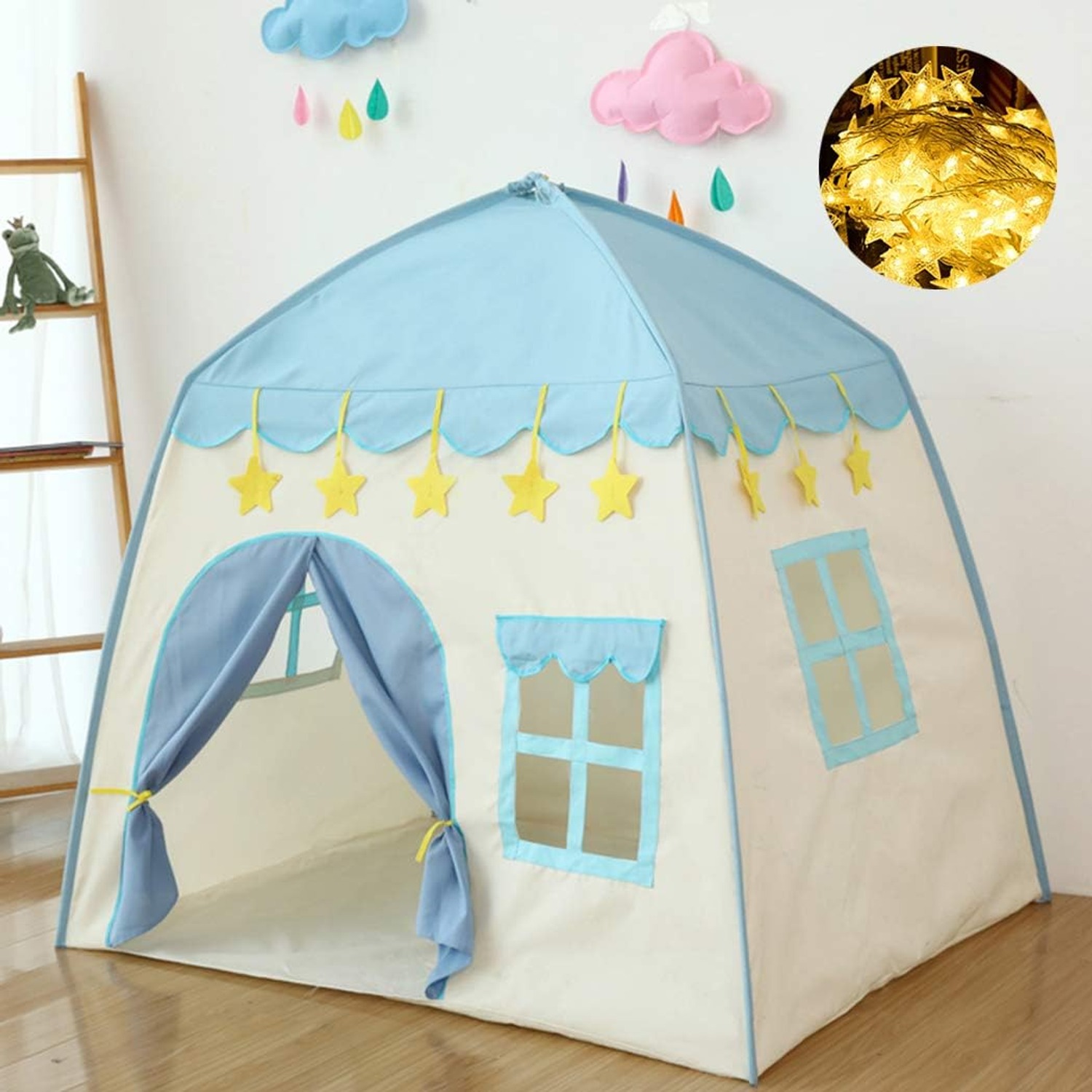
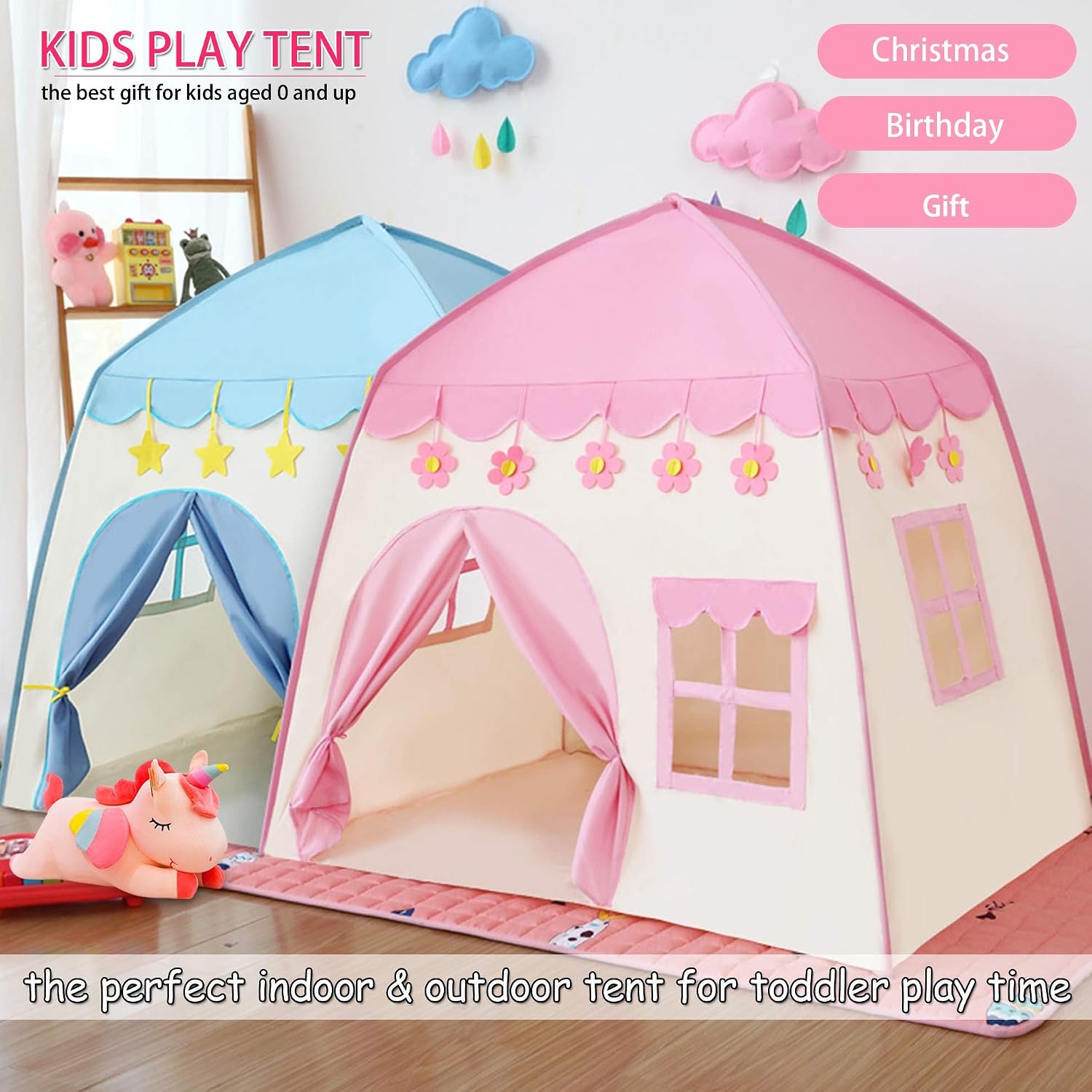
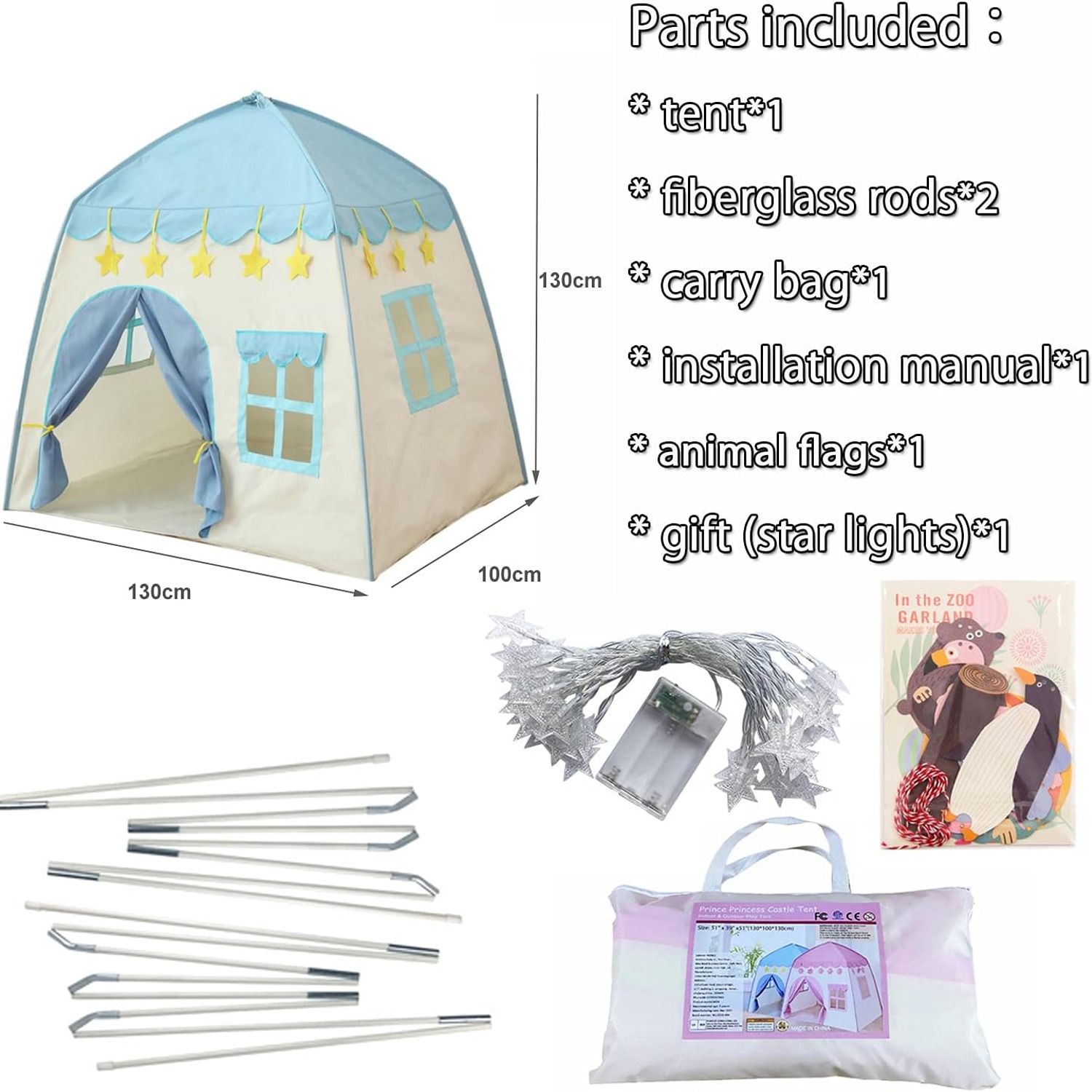
The size is the honest headline. At 130 cm wide, 100 cm deep and 130 cm tall, this is a structure rather than a pop-up pod. A child can kneel up inside without their head pressing the roof. A few children can sit in a circle. An adult can get in on their knees for a story, which is more important than it sounds, because tents that exclude grown-ups entirely tend to get less interesting to small children.
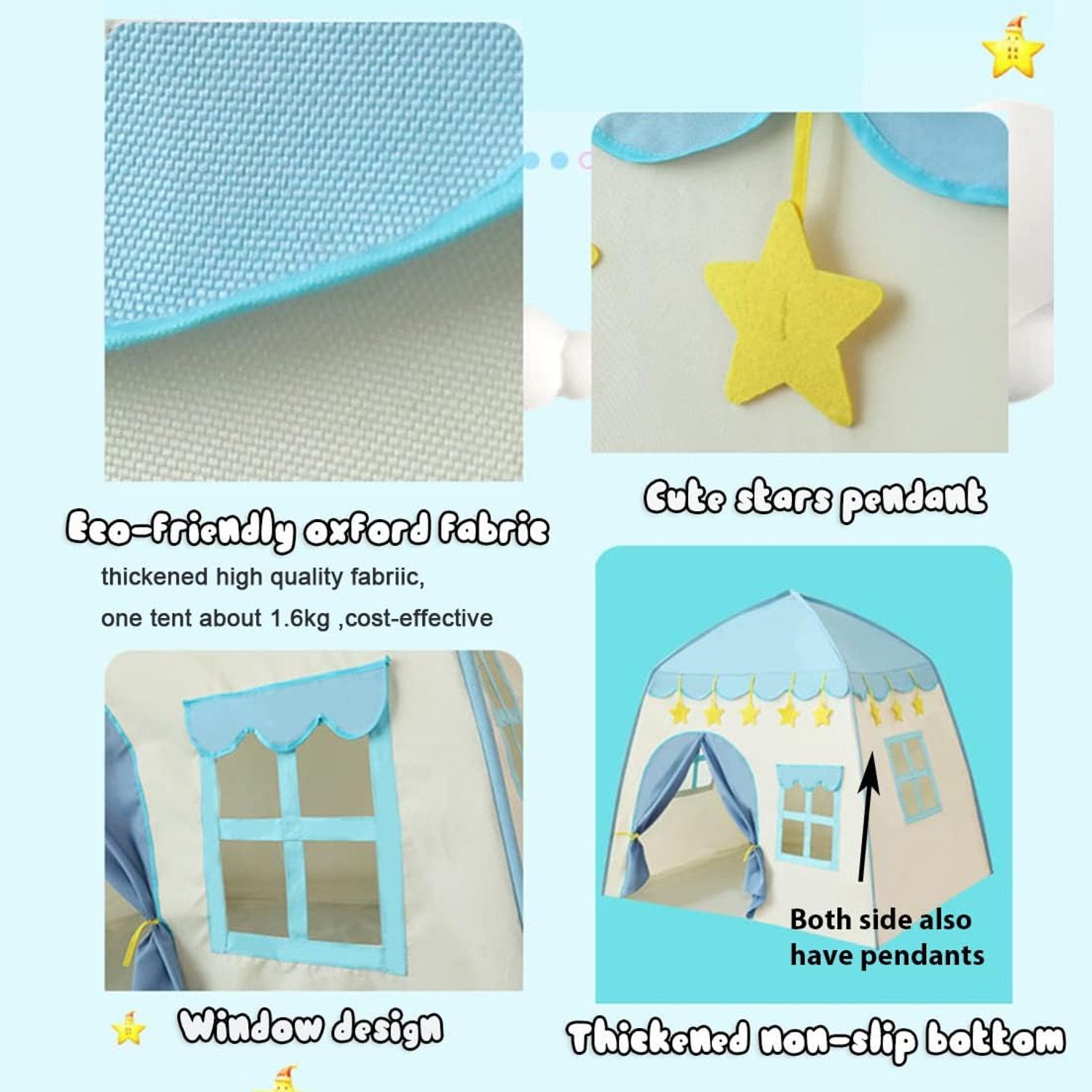
The fabric is Oxford, a tight basket weave used widely in bags and outdoor gear. It takes colour well, which is why the blue stays looking like blue rather than fading to grey after a summer in a sunny bedroom. It also puts up with being leaned on, sat against, and dragged a metre to the left because the light was better over there.
The frame is fibreglass rods. Fibreglass is the right choice here because it bends instead of breaking. When a six-year-old runs at the doorway, the rod flexes and pops back. A rigid frame in the same situation either holds and jolts the child, or snaps.
No assembly is required. You work through the short instruction sheet, slide the two rods into place, and the castle stands up.
The extras that keep it interesting
Two things come in the box that do more work than you would expect.
The animal flags are the first. They are small, but children love deciding where they go, and that bit of personalisation turns a bought object into their object. Expect them to be rearranged weekly.
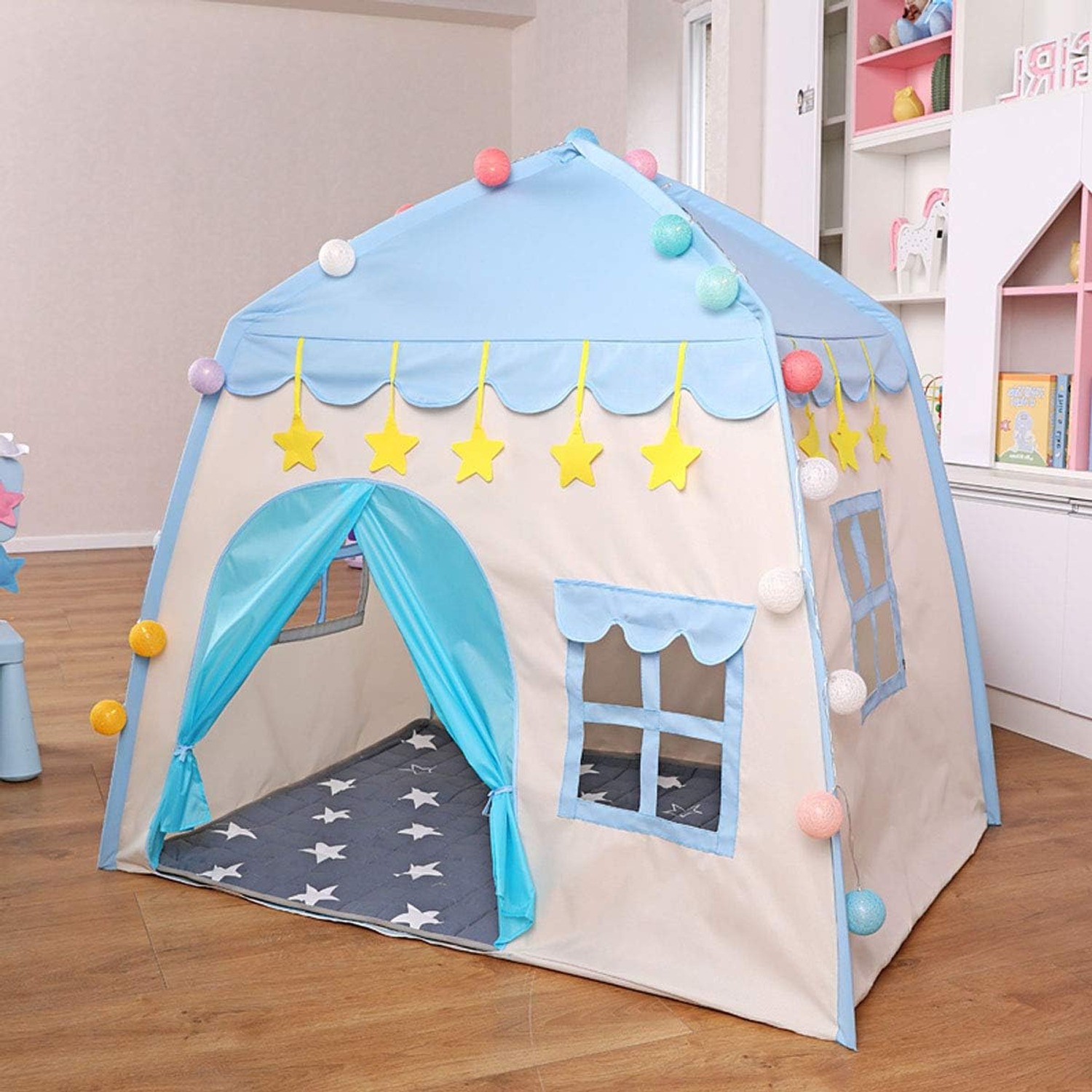
The second is the 5 m string of 30 LED star lights. This is the detail that extends the life of the tent well past the initial excitement. A dim, warm, lit-up space is genuinely lovely to sit in, and children figure that out fast. It becomes the place for reading with a torch, for calming down after a big day, for whispering with a sibling after lights out. If you are comparing options and want the best play tent with lights, having them included rather than sold separately is a real advantage.
Who it suits
This works for a wide age band. The supplier lists 36 months to 13 years, and in practice the way it gets used changes a lot across that range.
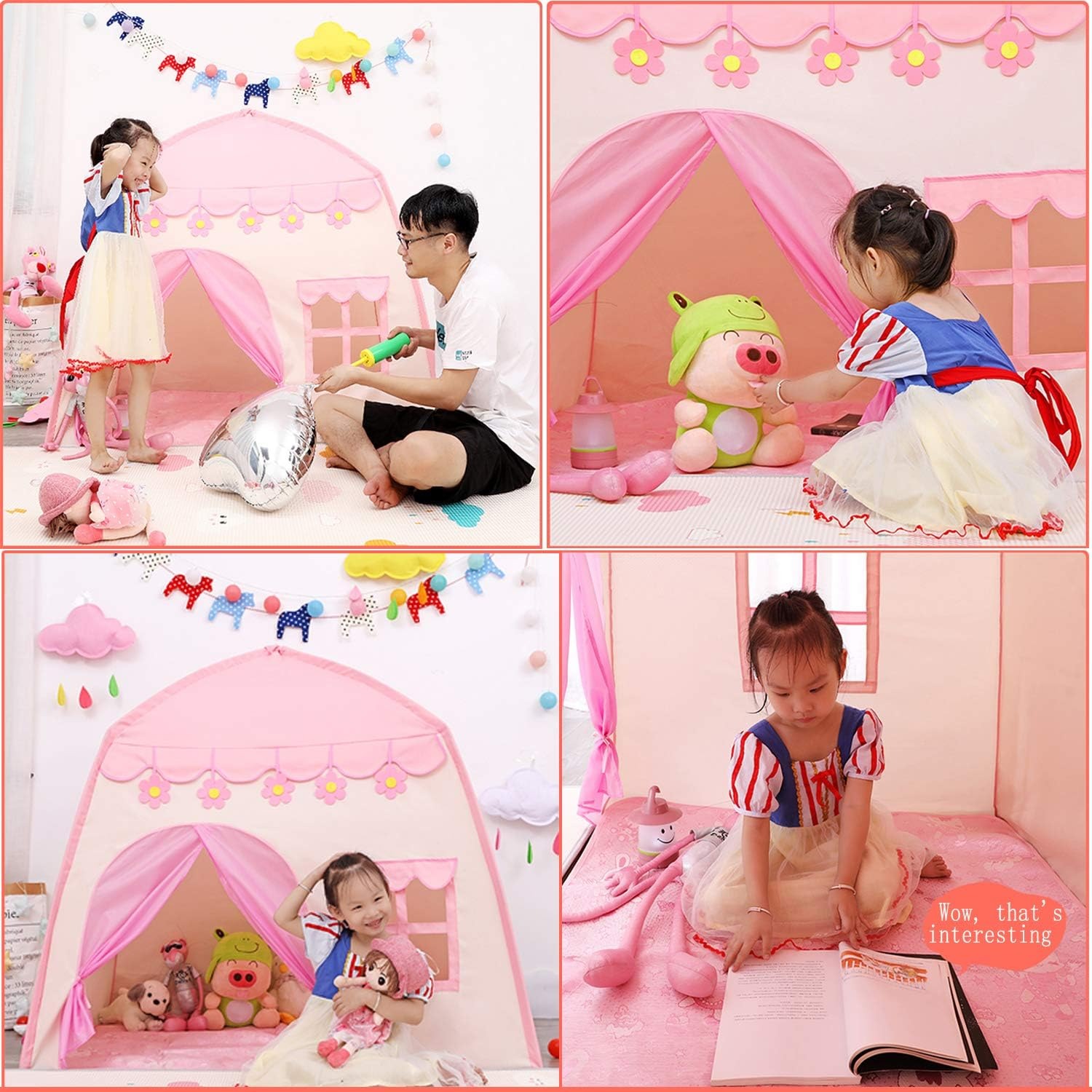
Three and four year olds treat it as a house. They will move cushions, cups and soft toys in, and run a full domestic operation from inside. Supervision matters most at this age, mainly around the light cord and around pulling the frame over.
Five to eight is the peak castle years. This is where the princess castle play tent and the fortress and the dragon's lair all happen, sometimes in the same hour. Siblings and friends get involved and the space actually fills up.
Nine and above tends to shift toward a private corner. Reading, gaming on a tablet, hiding from the rest of the household. That is a legitimate use and a sign the tent has earned its space.
It also suits families who need something portable. The carry bag means it travels to grandparents, to the garden, to a campsite or a picnic. If you want the best portable kids tent for camping trips, the fold-down-and-go design matters more than any feature on the spec sheet.
How to choose between castle tents
A few things are worth checking whenever you compare children's tents.
Interior height. Anything under about 100 cm means your child is lying down or hunched. Taller is better, and 130 cm sits in good territory for primary-age kids.
Frame material. Fibreglass or sprung steel both work. Thin plastic rods are the ones that fail first, usually at the joints.
Fabric weight. Heavier woven fabrics like Oxford hold their shape and resist snagging. Very thin polyester tends to sag and show every crease.
Set-up time. If it takes more than a few minutes, it will come out less often. Honest truth.
What is included. Lights, flags, instructions and a storage bag in the box saves you three separate purchases and a lot of hunting.
Where it will live. Measure the corner you have in mind before ordering. A tent that does not fit is a tent that gets packed away.
Looking after it
Care is simple and mostly about moisture. Wipe the fabric with a damp cloth and a bit of mild soap when it needs it, then let it air dry. Skip the washing machine, the tumble dryer, bleach and the iron. All four will damage the weave or the coating.
If it has been outside and got rained on, open it out indoors and let it dry fully before folding. Fabric packed away damp develops a musty smell that is very hard to shift later.
Take the LED string and the flags off before any cleaning. When you pack the tent down, slide the fibreglass rods out carefully and store them straight in the carry bag. Rods that get bent or stored under heavy objects lose their spring over time.
For outdoor use, pick flat ground and bring the tent in before strong wind. It is a garden tent, not a storm shelter.
Setting it up well
A few small choices make a big difference to how much the tent gets used.
Put something soft on the floor. A rug, a play mat or foam tiles turn a hard surface into somewhere a child will happily sit for an hour. This is probably the single highest-value addition.
Position the doorway so it faces into the room rather than at a wall. Children want to see out while feeling tucked in.
Run the star lights around the inside of the roofline rather than coiling them in a corner. The light spreads better and the effect is much nicer.
And resist the urge to fill it with toys. A tent packed with objects stops being a space. Leave room for the child.
The short version
This is a roomy blue castle play tent at 130 x 100 x 130 cm, made from Oxford fabric on a fibreglass frame, with no assembly required. It ships with two rods, a carry bag, instructions, animal flags and a 5 m string of 30 LED star lights, and it is covered by a 1 year warranty against manufacturer defects.
It suits children from about three up to the early teens, works indoors or in the garden, and folds into its bag when the game is over. Add a soft mat, string up the lights, and let them get on with it.