
The complete guide
How to Choose a Play Tent with a Mat and Lights
Why a corner of the room is never enough
Children are strange about space. Give a child a whole playroom and they will end up under the dining table, behind the sofa, or in a cardboard box that came with the washing machine. What they are after is not more room. It is an edge. Somewhere with a wall and a doorway, where they decide what happens and who comes in.
That is the problem a play tent with mat and lights actually solves. It gives a defined, enclosed space inside a room that is otherwise shared with everybody else. The practical effect shows up quickly. Toys stay roughly in one area. A child who cannot settle has somewhere to go that is not their bed. And reading, which can be a battle in a busy house, suddenly has a place that belongs to it.
The catch is that a lot of fabric playhouses do the job badly. They are too short, so a child has to crawl in and out. They sag after a fortnight. They come with no floor covering and no light, so you end up buying a rug and a lamp afterwards and the thing costs twice what you planned.
What this one is and how it works
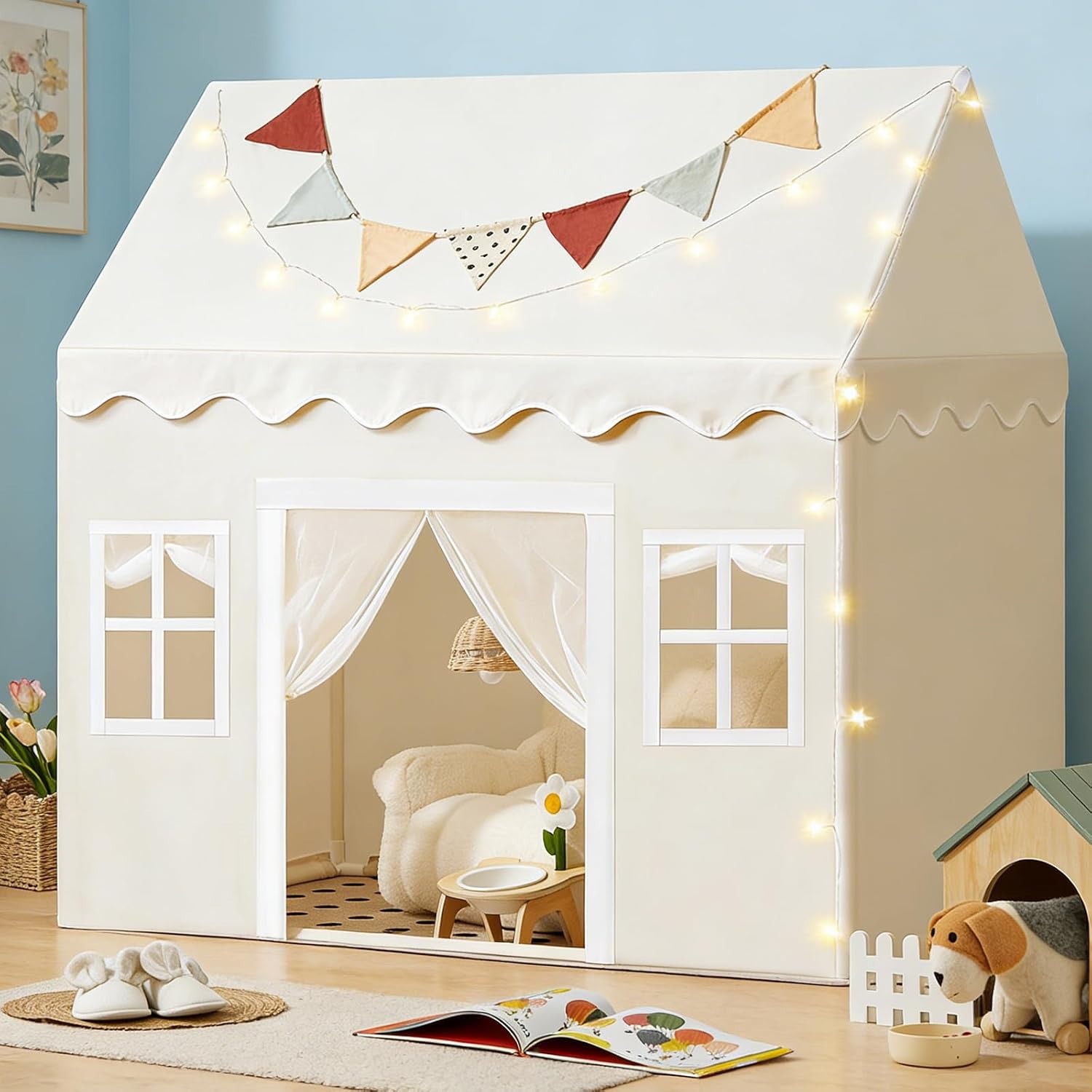
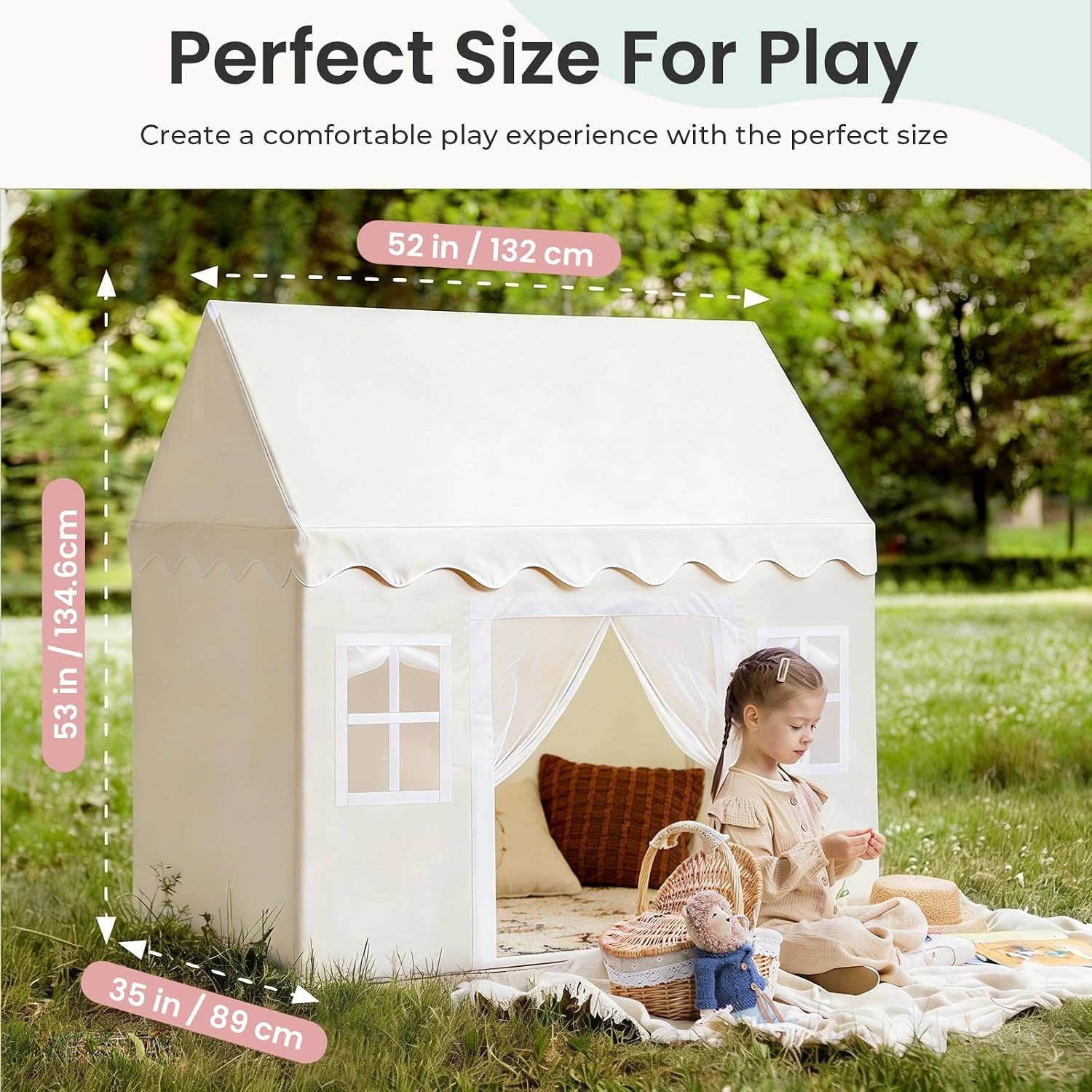
This is a house-shaped tent with a PVC rod frame and a polyester canopy that slides over the top. It measures 133 cm long, 90 cm wide and 136 cm high, with listed product dimensions of 89.9 D x 132.1 W x 135.9 H cm. The colour is a neutral cream and the theme is princess and fairy tale, though in practice the shape and colour read as a plain little house.
The height is the detail worth pausing on. At 136 cm, most young children and young children can walk in standing upright. That sounds minor until you watch a three year old crawl in and out of a low teepee twenty times in an afternoon. Standing headroom changes how much they use it. An adult can also duck inside, which makes bedtime stories inside the tent possible rather than a contortion act.
The frame uses upgraded anti-crack PVC rods. These are the structural part of the product and the bit most likely to fail on cheaper tents. The canopy has breathable mesh windows so air moves through, and curtain panels at the entrance so the door can be closed.
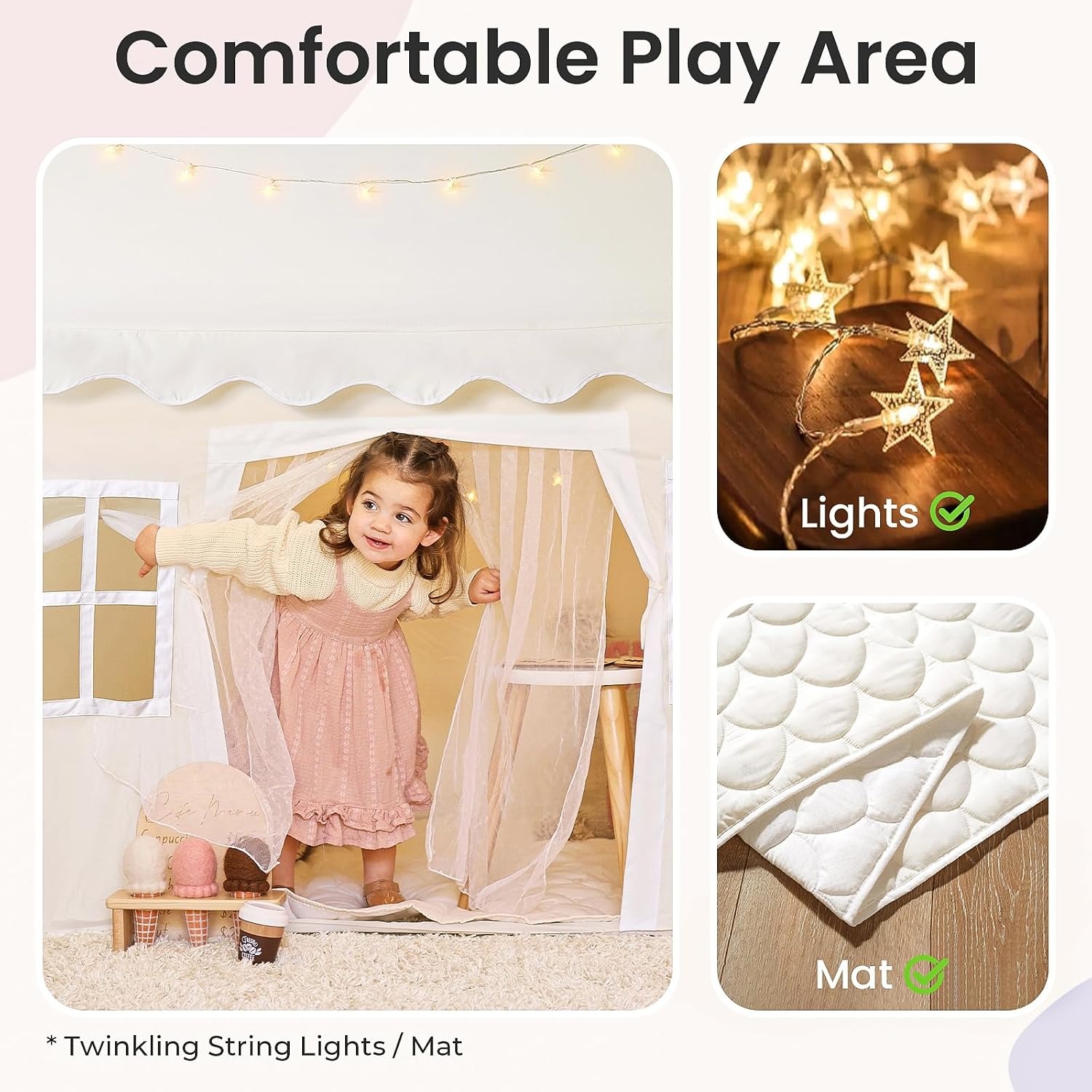
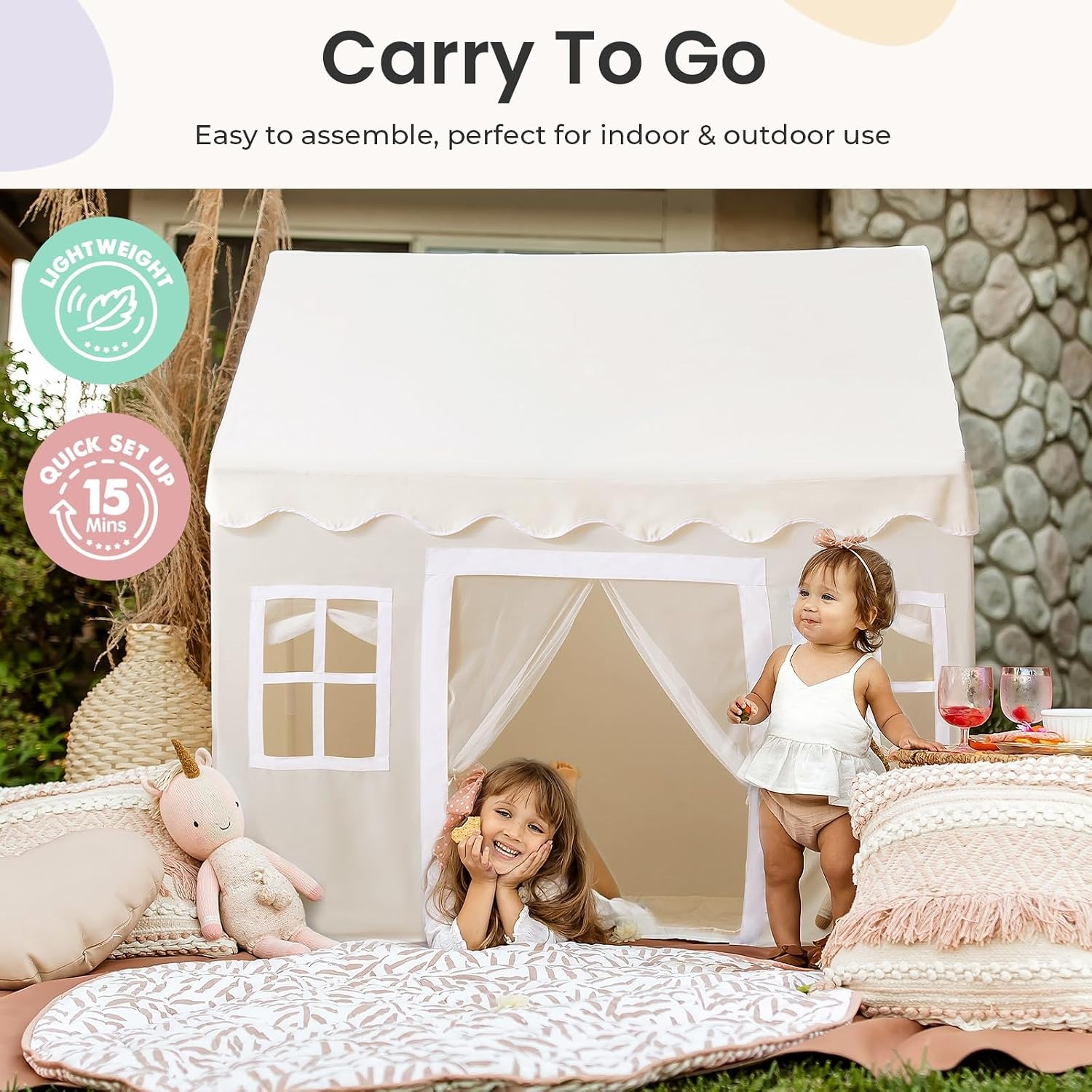
Two inclusions set it apart. There is a padded floor mat, so you are not setting the tent down on bare boards or hunting for a rug the right size. And there is a 4m string of star fairy lights. Those lights are what turn the inside from a fabric box into somewhere a child wants to be after dark. Together they mean the setup is finished on day one.
Who it suits
Families with more than one child get good value here, because up to three can be inside at once. A narrow teepee turns into a territorial dispute. This footprint lets siblings sit together.
It suits small homes too, oddly enough, because it packs down. The canopy comes off, the rods come apart, and the whole thing stores flat when you need the floor back for Christmas or visitors.
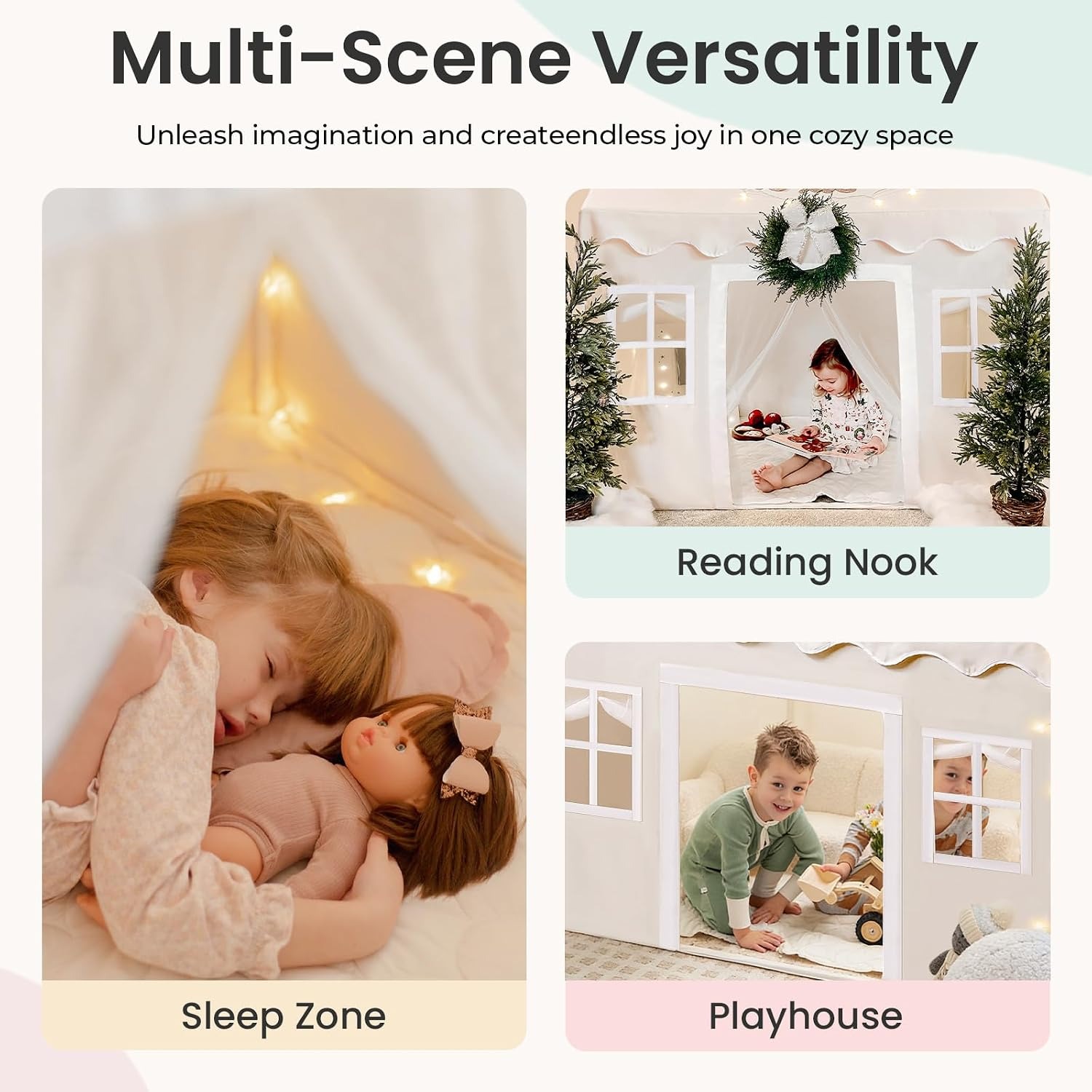
It suits parents trying to build a reading habit. A cushion, a stack of books, the fairy lights on and the curtain pulled across is a surprisingly effective setup. Children who will not sit on a sofa with a book will happily sit in a den with one.
The manufacturer recommended age is 0 to 5 years. Younger young children should always be supervised inside, as with any fabric structure. Older children often keep using it as a quiet space well past five, simply because the headroom holds up.
How to choose between options
Measure first, always. You need a clear floor area of roughly 133 x 90 cm plus a bit of space at the door end for coming and going. Ceiling height is rarely an issue at 136 cm, but a sloped attic ceiling might be. Measure before you order rather than after.
Think about the floor. On carpet, a fabric playhouse sits more firmly and feels warmer. On tile or floorboards, the included padded mat does real work. Most people add a cushion on top for longer sessions.
Check what is actually included. This is where a lot of tents disappoint. A mat and a light string are included here. A decorative flag garland appears in some styled photos draped over the roof, and that is not included. Worth knowing before it arrives.
Consider washing. Children eat in dens. They always do. The polyester canopy is machine washable, which matters more than any other feature once the thing has been in use for a few months. Take the fabric off the frame, remove the lights, gentle cycle in cool water, then air dry fully.
Look at the frame material. PVC rods that are described as anti-crack are a step above the thin plastic poles on budget tents. Frame failure is the usual reason a play tent gets thrown out.
Setting it up
Allow about ten minutes. No tools are needed. Lay out all the parts first and check them against the instructions before you start pushing anything together, which also catches a missing or damaged piece early.
The rods slot together to form the house shape, then the canopy goes over the top. The single most common cause of a leaning tent is a joint that was not pushed all the way home, so run a hand over each connection once it is standing. Thread the fairy lights along the frame, keeping the cable tidy and out of reach of small hands, and lay the padded mat inside.
One person can do all of this. A second pair of hands speeds up the canopy stage slightly, nothing more.
Keeping it in good shape
Wash the canopy when it needs it, not on a schedule. Cool water, mild detergent, gentle cycle, and let it air dry completely before it goes back on the frame. Heat from a tumble dryer can shrink lightweight polyester, which makes refitting a nuisance.
Spot clean the padded mat with a damp cloth and let it dry through. Do not soak it, because padding holds water for a long time.
Wipe the PVC rods with a damp cloth now and then. Check the joints every few weeks, particularly if the tent gets enthusiastic use.
When you store it, fold the fabric loosely rather than cramming it, and coil the light string so the wire does not kink. Store everything dry. Damp fabric in a cupboard is how you get a musty tent next time you set it up.
A note on safety. Switch the fairy lights off when nobody is inside. Keep the tent away from heaters, candles and open windows with a drop below. Supervise young children and very young young children.
Getting more out of it
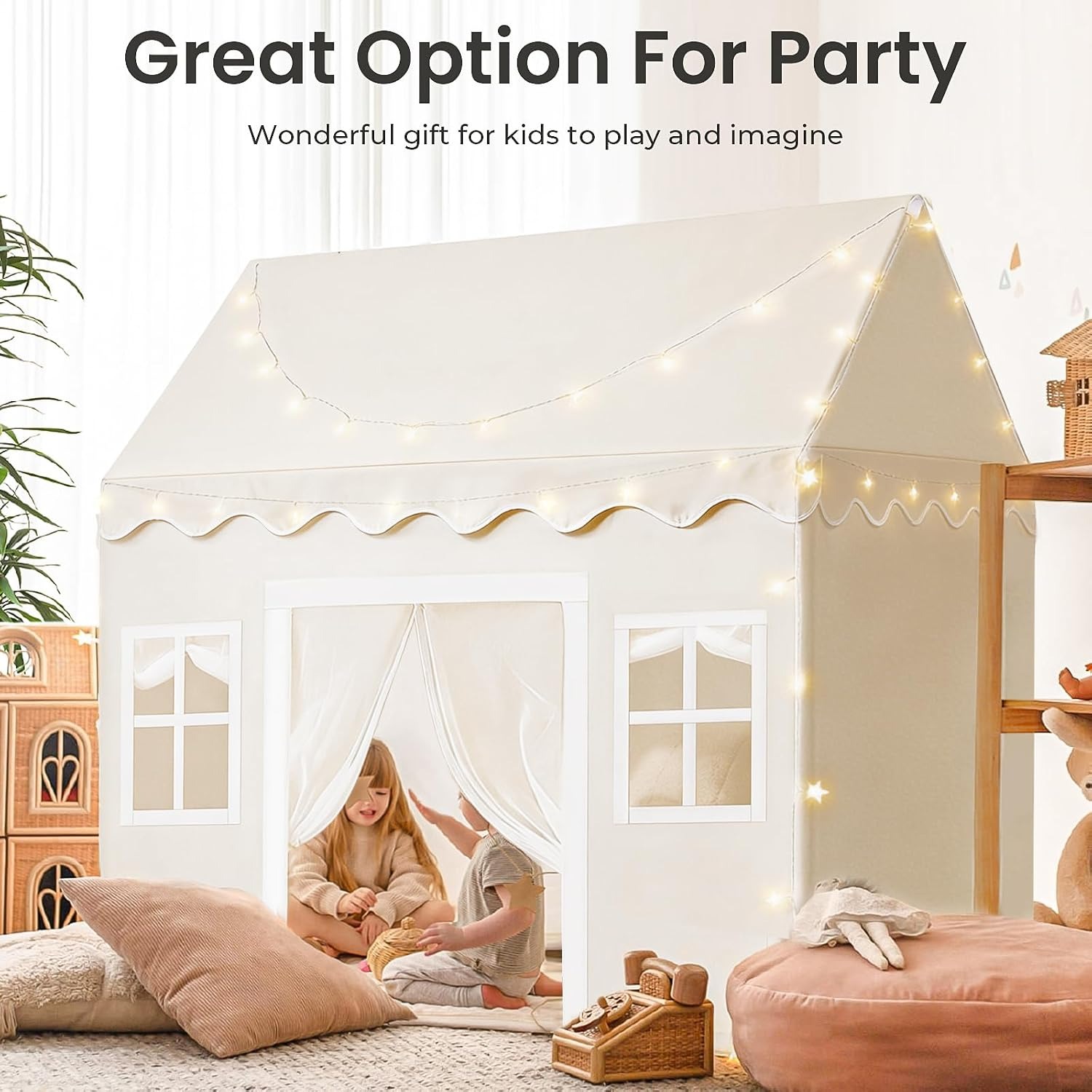
A play tent earns its keep when it changes use. The same structure works as a ball pit, a quiet-down corner, a pretend camping trip in the lounge, a secret base, or a party feature for a birthday in the garden on a dry day.
Small changes keep it interesting. Rotate the books inside. Swap the cushions. Let your child decorate the inside with their own drawings. Children lose interest in things that stay identical, and a den that occasionally becomes something new gets used for years rather than months.
The short version
This is a 133 x 90 x 136 cm house-shaped indoor play tent with a polyester canopy, an anti-crack PVC frame, mesh windows and privacy curtains. A padded mat and a 4m star fairy light string come in the box, so the space is complete the day it arrives. It fits up to three children, has enough headroom for young children to stand, takes about ten minutes to assemble with no tools, and the canopy goes in the washing machine.
Measure your floor space first. Expect to add a cushion if you want it used as a reading corner. And know that the flag garland in the styled photos is not included. Beyond that, it is a straightforward way to give a child somewhere that is properly theirs.