

The complete guide
Choosing a Play Tent and Tunnel Set That Actually Gets Used
The problem with most indoor play gear
Big plastic toys take up space and then get ignored. That is the quiet frustration behind a lot of playroom clutter. A ride-on tractor that lives on its side in the hall. A kitchen set that gets pushed against the wall and used as a shelf. The things children actually return to, day after day, tend to be the ones that let them make up their own game rather than play someone else's.
A play tent and tunnel set sits firmly in that second group. It is not a toy with rules. It is a space. One week it is a cave, the next it is a shop, then a car wash, then a hospital for soft toys. Children supply the story. The set just gives them walls and a way in.
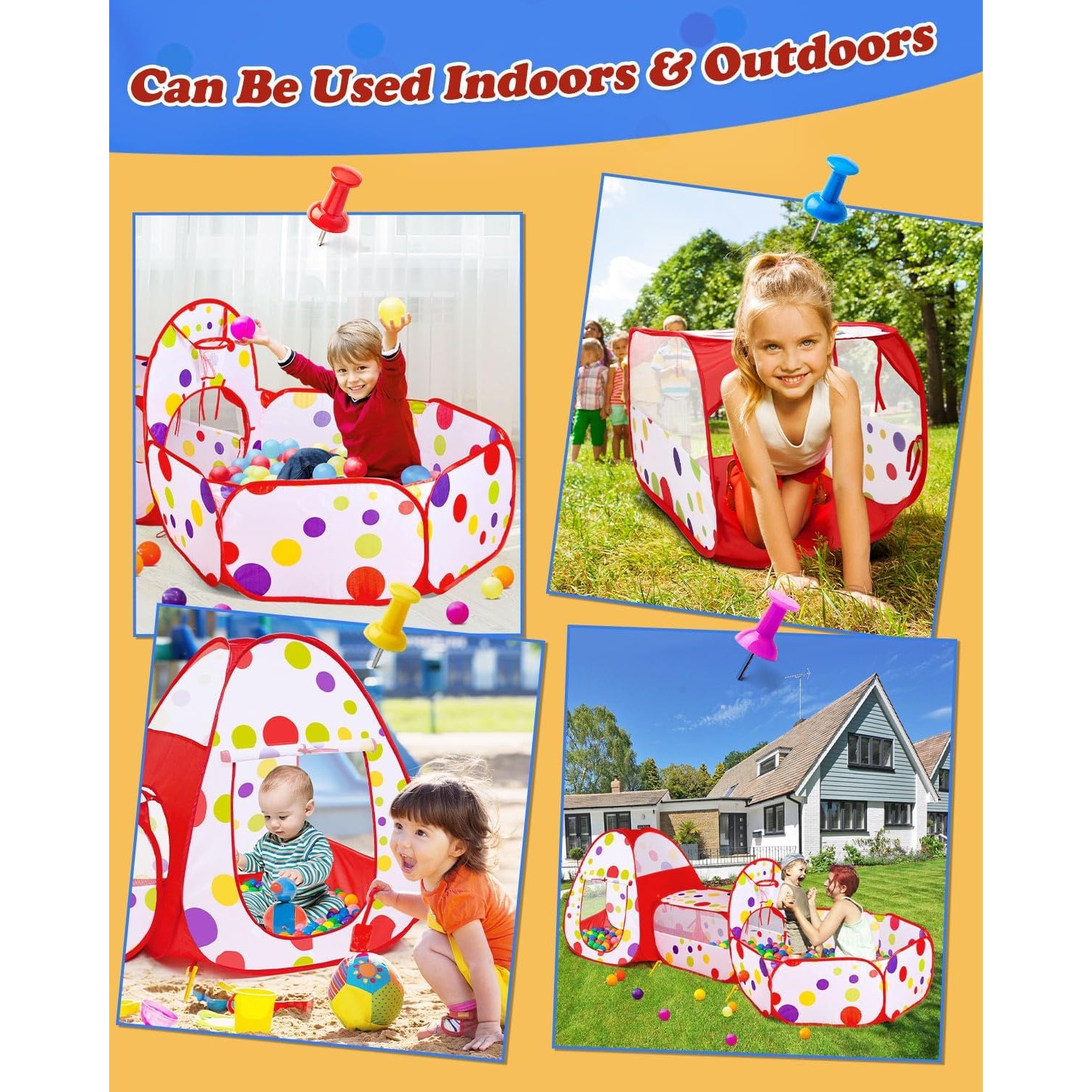
The other thing it solves is movement indoors. On a wet weekend, a child with energy to burn and nowhere to run gets loud and then gets cross. Crawling through a tunnel and out into a ball pit is not a huge amount of exercise, but it is enough to change the mood of an afternoon. That is why so many parents hunting for the best indoor play tent end up looking at sets with a tunnel attached rather than a tent on its own.
How a pop up set works
There is no frame to build. Inside the seams of the fabric runs a continuous loop of flexible steel wire. When the set is packed, that wire is twisted into a tight coil. Release it and the wire springs back to its natural shape, pulling the polyester panels taut and standing the structure up.
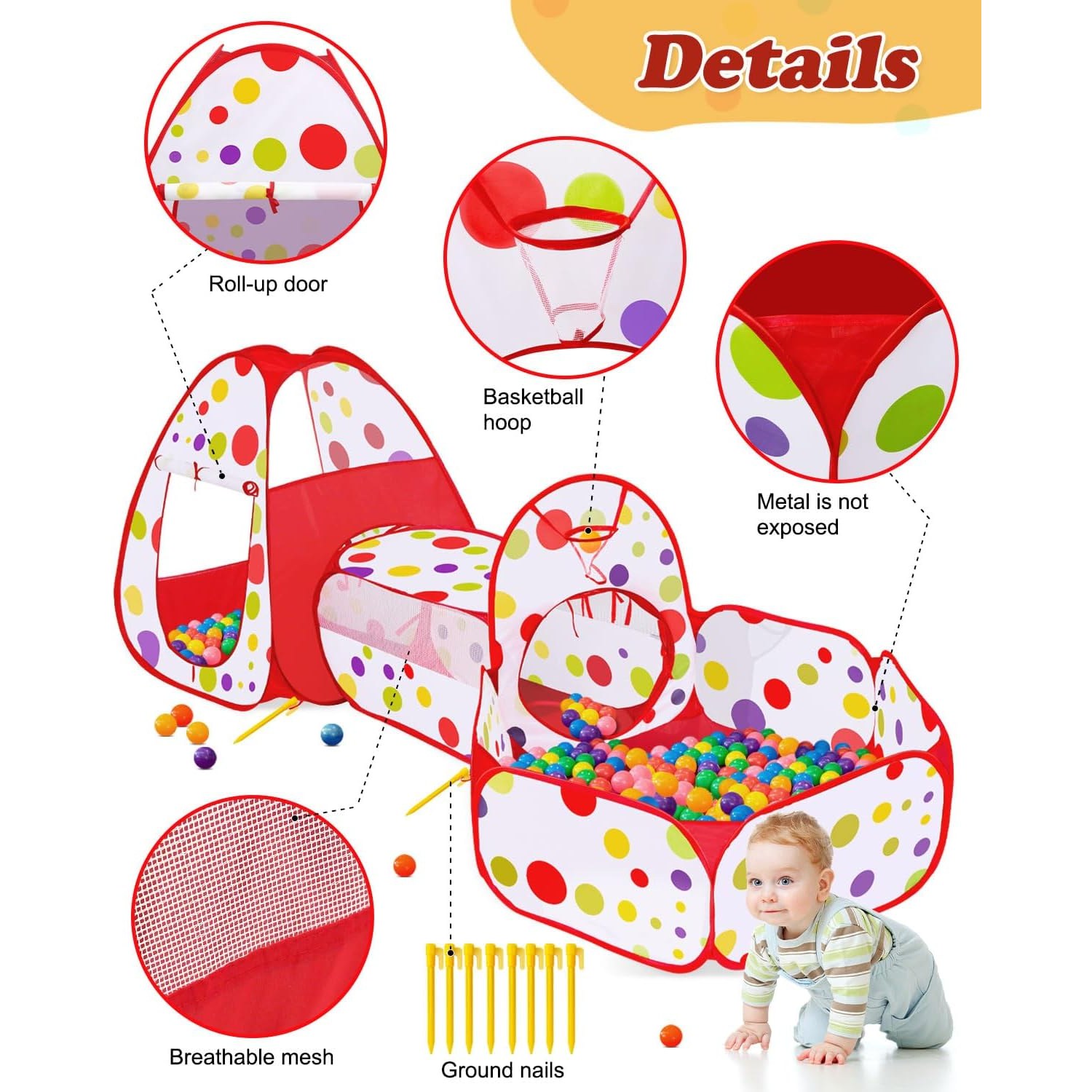
That design has two advantages. The first is speed. You take it out of the box, let it open and it is done, which matters when a child is standing next to you asking if it is ready yet. The second is safety through simplicity. Because the wire is sewn inside the fabric, there are no exposed poles, no clips and no small connectors to lose under the sofa or end up in a mouth.
Folding it back down is the part that takes practice. The general method is to flatten the structure, twist the hoop so it forms two smaller loops, then fold those together. The first attempt is usually fumbling. By the third or fourth, it takes about fifteen seconds. Plenty of brands include a short diagram in the box, and video guides for pop up tents are easy to find online.
Why the tunnel shape matters
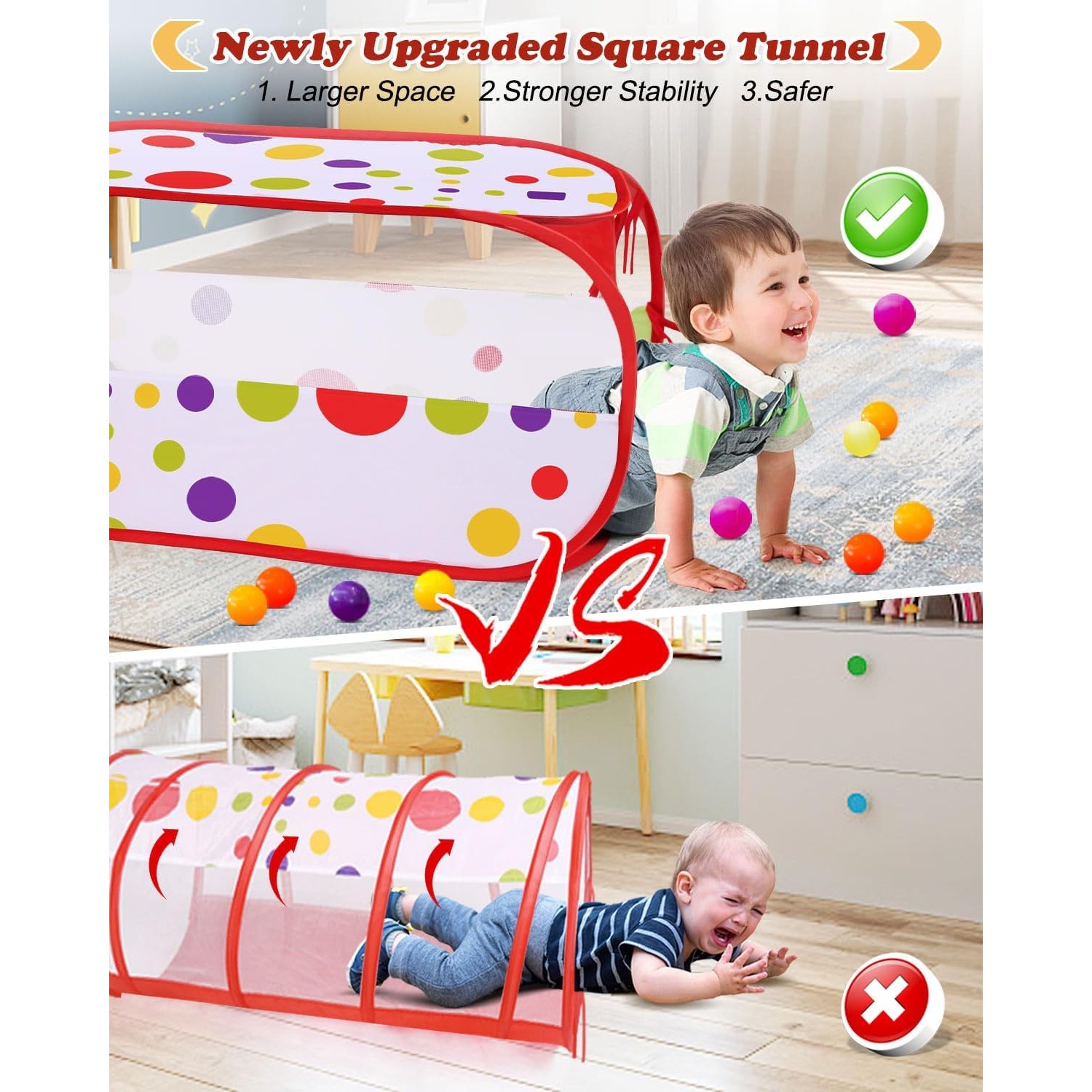
Not all tunnels behave the same way. Traditional crawl tunnels are round tubes, and round tubes roll. A young child moving through one shifts their weight, the tube turns a quarter of the way round and suddenly they are crawling up a slope that was flat a second ago. It is rarely dangerous, but it is unsettling, and some children stop using the tunnel because of it.
A square tunnel sits on a flat base. It stays where you put it. It also makes slightly better use of the same material, because the corners give usable height right across the width rather than only in the middle. For children at the upper end of the age range, that extra headroom is the difference between crawling through and squeezing through. If you are comparing options for the best pop up play tunnel, tunnel profile is worth more attention than the pattern printed on the fabric.
Who the set suits
The stated age guidance here is 36 months to 8 years. That is a wide span, and different ages get different things from it.
Three and four year olds tend to use it physically. They go through the tunnel again and again, in and out of the ball pit, not really playing a game so much as enjoying the movement. Five and six year olds start building stories around it, and the tent becomes a base with rules about who can come in. By seven and eight, the tunnel often gets ignored and the tent becomes a private spot for reading or screen time, which is a perfectly good second life for it.
Families with more than one child get the most from a set like this, because two or three can use it at once and the separate sections give them a bit of space from each other. It also earns its keep for anyone who hosts playdates or has visiting grandchildren, since it comes out of a cupboard and goes back in the same day.
How to choose between sets
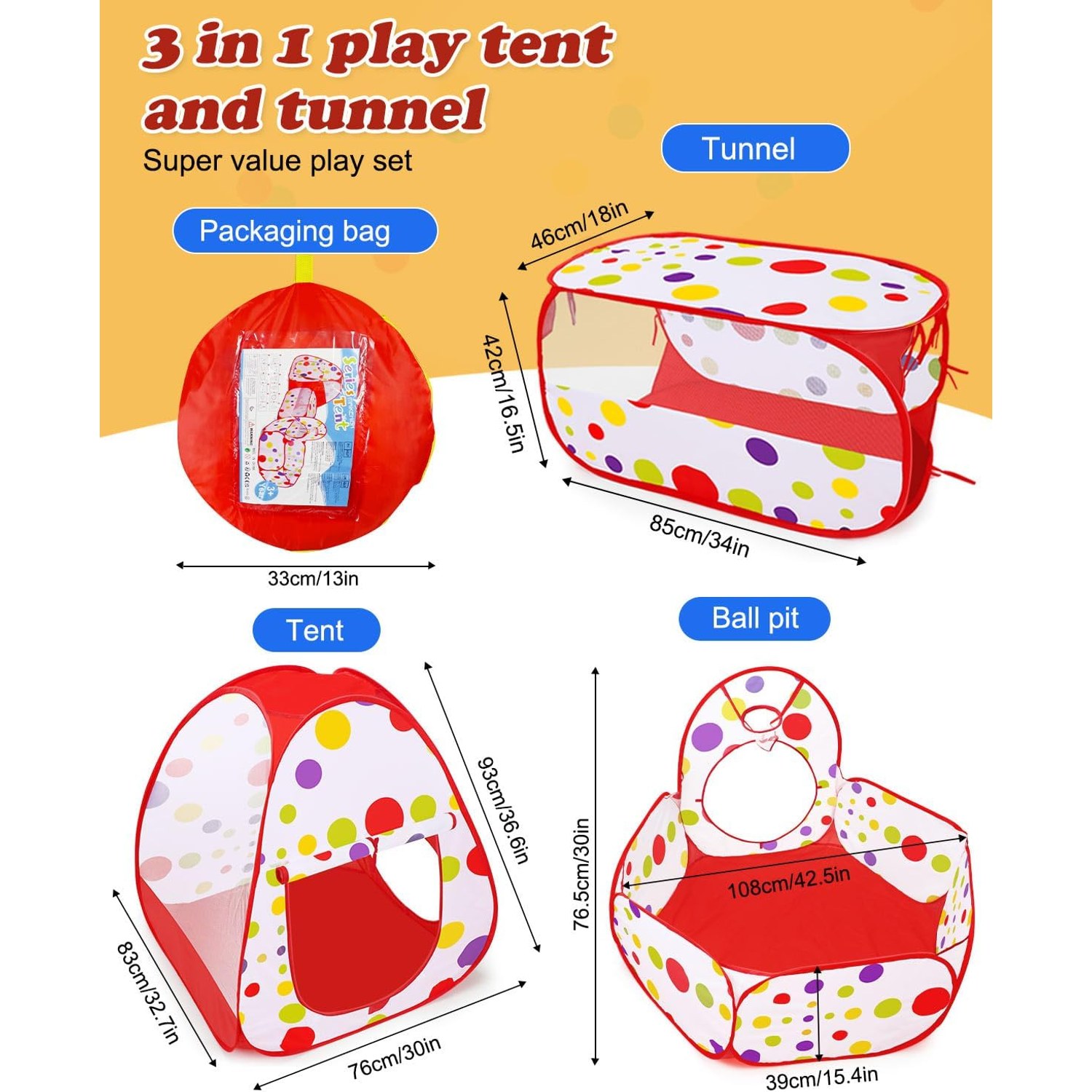
Start with floor space, not features. This set measures 269 x 93 x 83 cm when all three parts are joined in a line. Walk into the room you have in mind and look at where that would sit. If it will not fit end to end, that is not a dealbreaker, because the sections separate and can be arranged around furniture, but it is better to know before the box arrives.
Next, think about material. Polyester is the usual choice for good reasons. It is light, it does not soak up moisture the way cotton does, and it wipes clean. It does not breathe as well as cotton, so on a hot day in direct sun the inside of a tent gets warm quickly. That is worth remembering if you plan to use it in the garden in summer. Set it in shade and leave the openings uncovered.
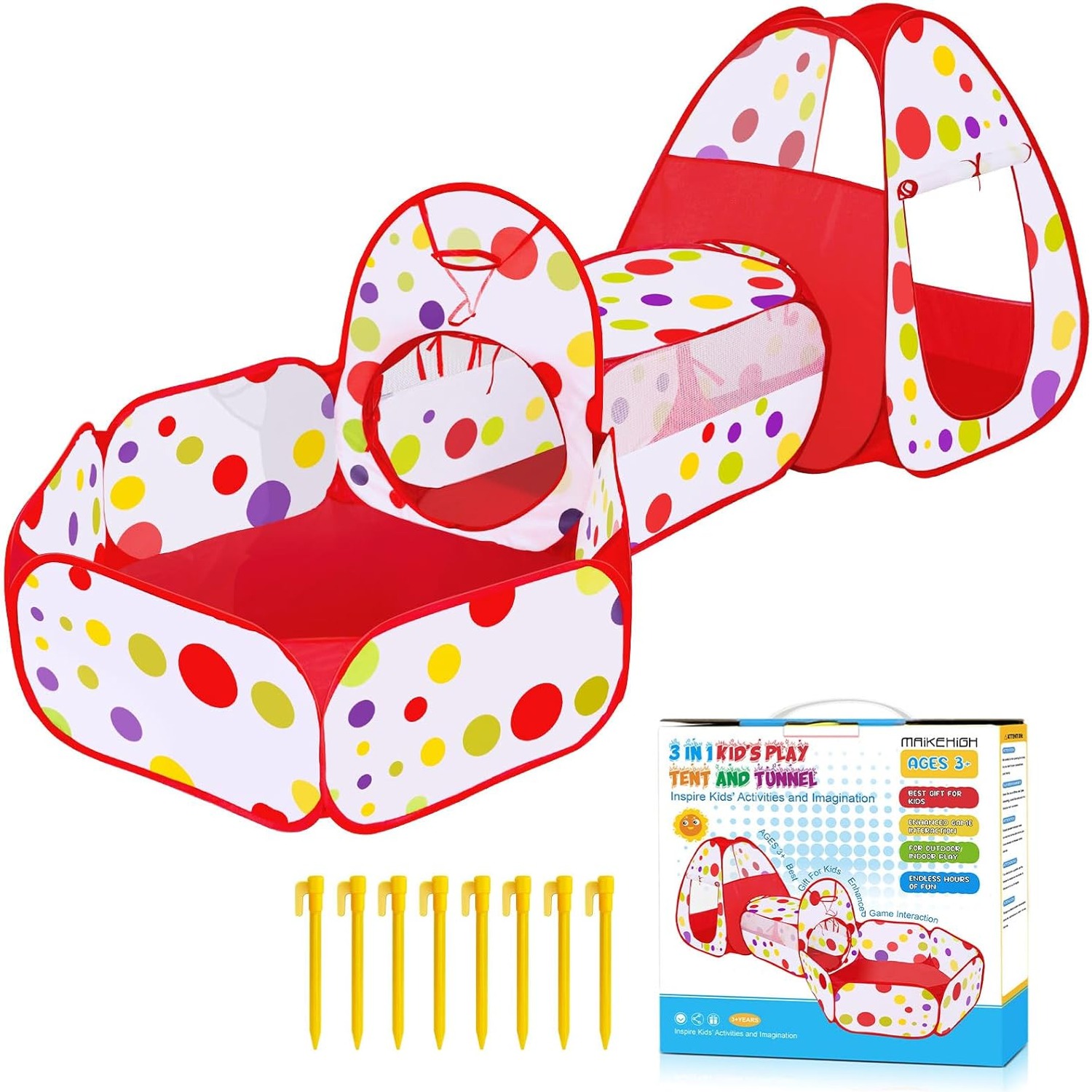
Then check what is included. This set lists the tent, tunnel, ball pool, small balls and ground nails. Ground nails are a genuinely useful inclusion for anyone looking at the best garden play tent category, because an unpegged pop up tent is a kite waiting for a gust. The quantity of balls supplied is modest, so budget for a bag of play balls if you want the pit properly full.
Finally, be honest about storage. The best foldable play tent is the one you are willing to put away. If there is no cupboard it fits in, it will live out, and then it becomes furniture rather than a toy. Pop up sets fold to flat discs, which slide behind a wardrobe or under a bed easily enough.
Setting it up well
Give the tunnel a straight run if you can. Bends are possible but the fabric kinks and children feel the resistance. On hard floors, put a rug or foam mat under the whole set. It makes crawling kinder on knees and stops the tunnel sliding away when a child pushes off.
Outdoors, peg every anchor point. It takes an extra minute and prevents the set tumbling across the lawn. Check the grass for stones and anything sharp before you lay the fabric down. Keep it out of full sun if you can, both for the children inside and because long sun exposure fades dyes over time.
Indoors, think about what the tent is near. Children launch themselves into ball pits with enthusiasm. A clear metre around the set, away from radiators, coffee table corners and anything glass, saves a lot of worry.
Keeping it in good shape
Care is simple. Wipe the fabric with a damp cloth and a little mild soap when it needs it, then let it air dry completely before folding. Damp polyester folded away will smell musty within a week. Never machine wash or tumble dry, because the internal wire can bend and the stitching that holds it can stretch.
Shake the set out regularly. Crumbs, raisins and stray stickers find their way into the corners of ball pits faster than you would believe. For garden use, brush off grass clippings and soil at the door rather than carrying them indoors.
Store the ground nails in a sealed bag, kept somewhere children cannot reach. They are the one component in the box that needs adult handling.
The short version
A three in one play tent with tunnel is a lot of play for not much storage space. You get a den, a crawl tunnel and a ball pit, usable together or apart, in polyester with the wire frame sewn safely inside. It pops up with no assembly, pegs down for the garden and folds back to a flat disc when you are done.
Measure your floor first, expect to buy extra balls, and practise the fold once before the children are watching. Do that and you have a set that comes out on wet mornings for years rather than one that gets pushed to the back of a cupboard after a fortnight.