
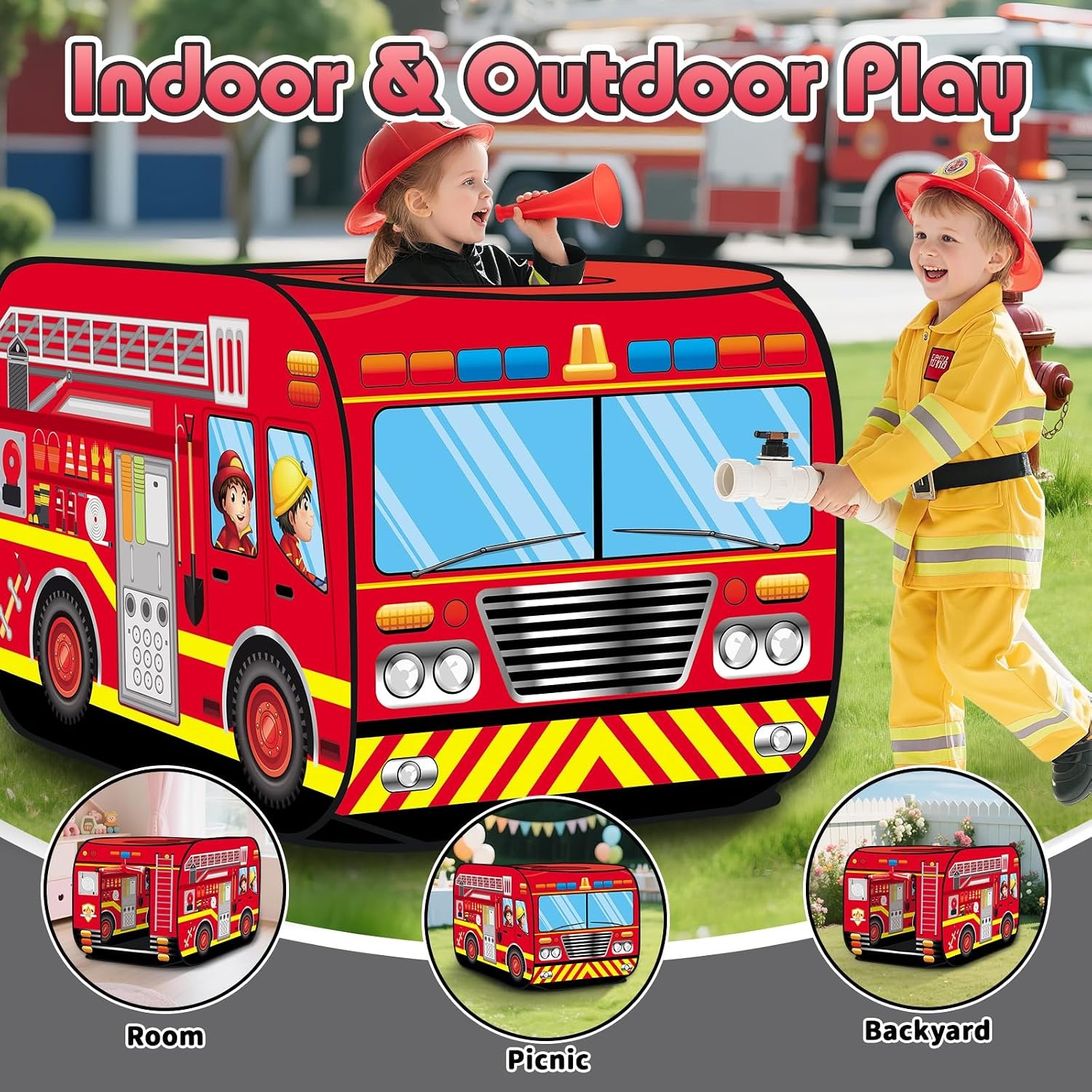
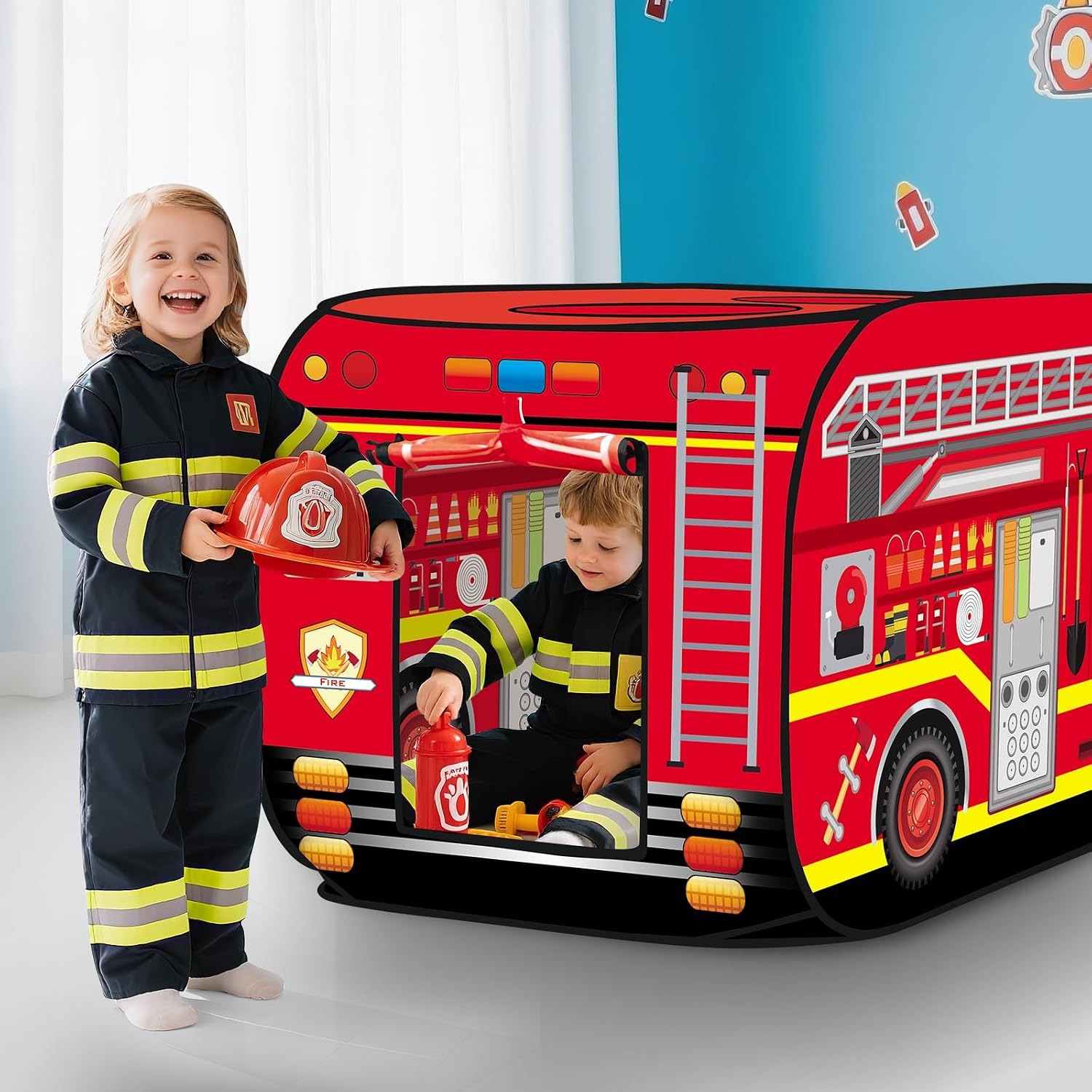
The complete guide
Choosing a Pop Up Play Tent: A Practical Buyer's Guide
The problem with most children's toys
A lot of toys arrive, get played with hard for a fortnight, then sit in a corner taking up floor space. Part of the reason is that children grow out of a single function quickly. A toy that only does one thing has a short shelf life.
A play tent is different, and it is worth understanding why before you buy one. A tent does not tell the child what to do. It is a space, not an activity. On Monday it is a fire station. On Wednesday it is a reading corner. On Saturday it is where every soft toy in the house has been piled for reasons only the four year old understands. That flexibility is the real value, and it is why play tents tend to stay in use far longer than their price suggests.
The second problem is storage. Many play structures, the wooden ones and the frame-and-fabric kind, are a nuisance to put away. If a toy takes ten minutes to dismantle, nobody dismantles it, and then it lives permanently in the middle of the living room. A pop-up design solves that, because the folding is measured in seconds rather than minutes.
How a pop-up play tent actually works
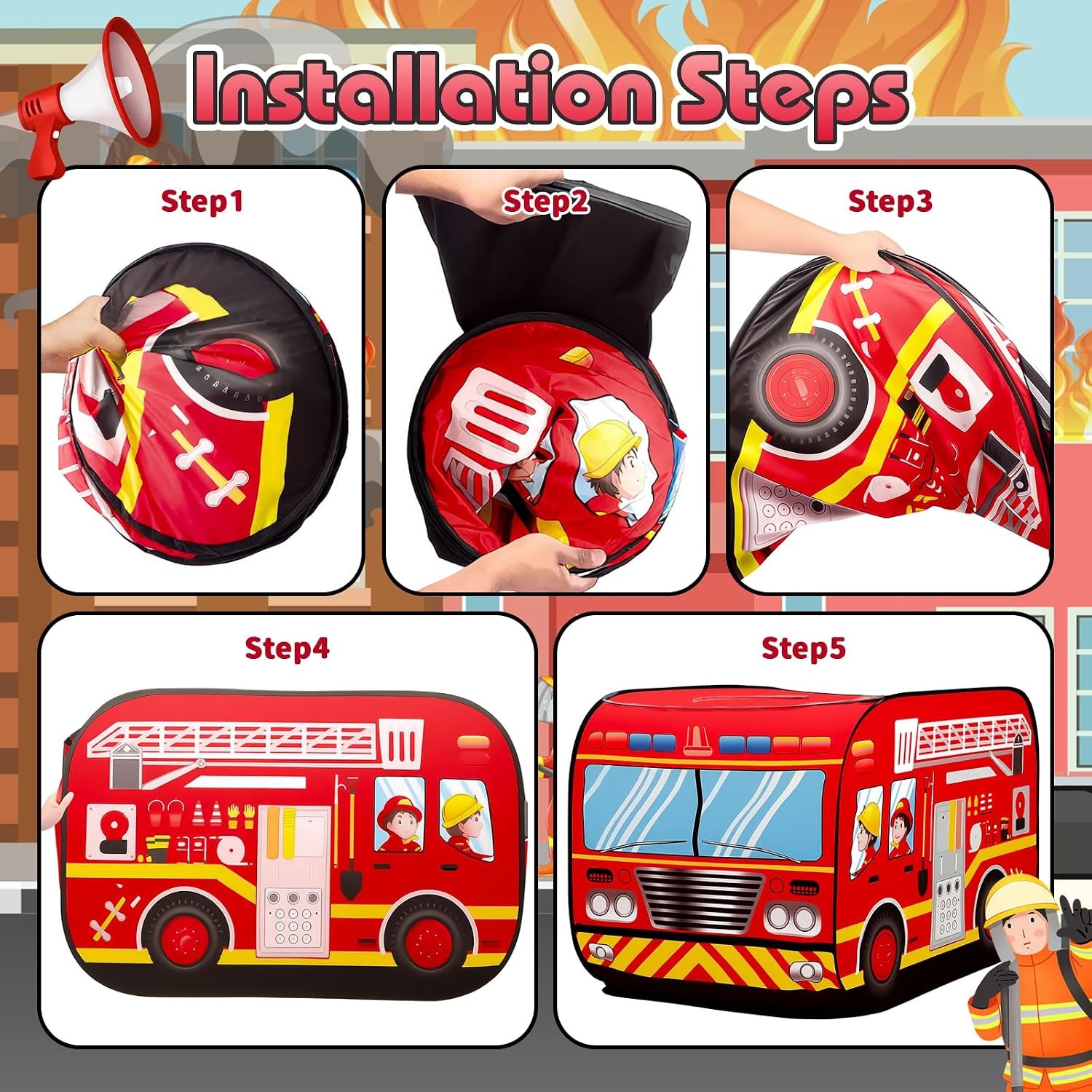
The mechanism is simple once you have seen it. Flexible hoops are sewn into the seams of the fabric. Those hoops want to spring into a circle, so when the tent is released, it opens itself. There are no separate poles to thread, nothing to click together and nothing to lose in the garden.
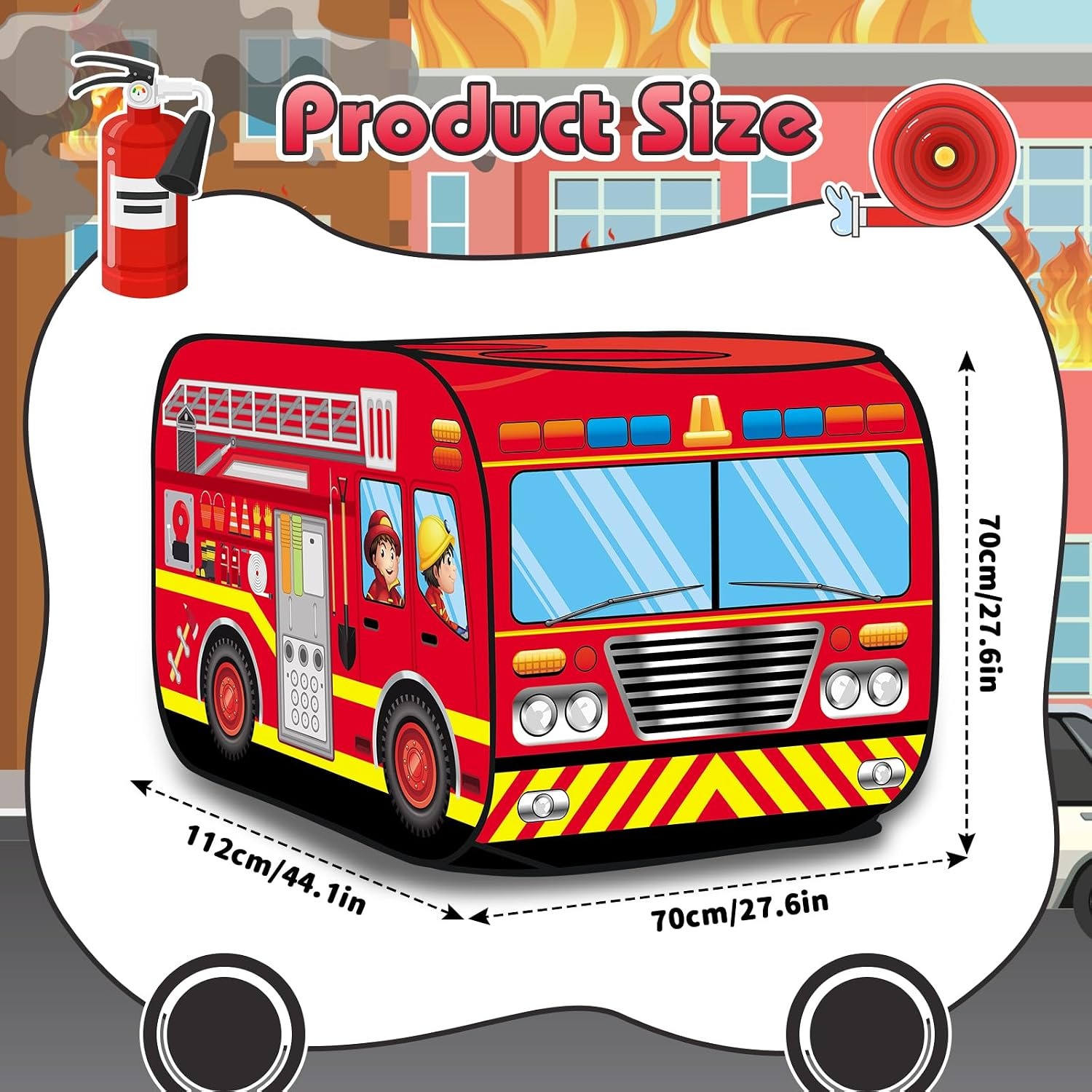
This particular tent opens into a shape 112 cm deep, 70 cm wide and 70 cm high. The product details confirm no assembly is required. You unpack it, shake it out, and it is ready.
Folding is the part that catches people out the first time. You are not fighting the tent, you are working with the hoops. Push the sides together so the circles overlap, then twist gently and let the frame collapse on itself. It feels awkward for the first two or three attempts and then becomes automatic. Once you have the knack, the whole thing goes from upright to flat in about ten seconds.
Weight matters here too. At 500 g, this tent is light enough for a small child to carry. That changes how it gets used. Instead of the adult relocating it, the child decides where the fire station is today, which is a small thing that makes play feel more like theirs.
Who it suits
The maker recommends ages 3 and up. That is the sweet spot for this kind of toy, because around three is when sustained pretend play really takes hold. Children start inventing roles, giving each other jobs, and building stories that run for half an hour at a time rather than two minutes.
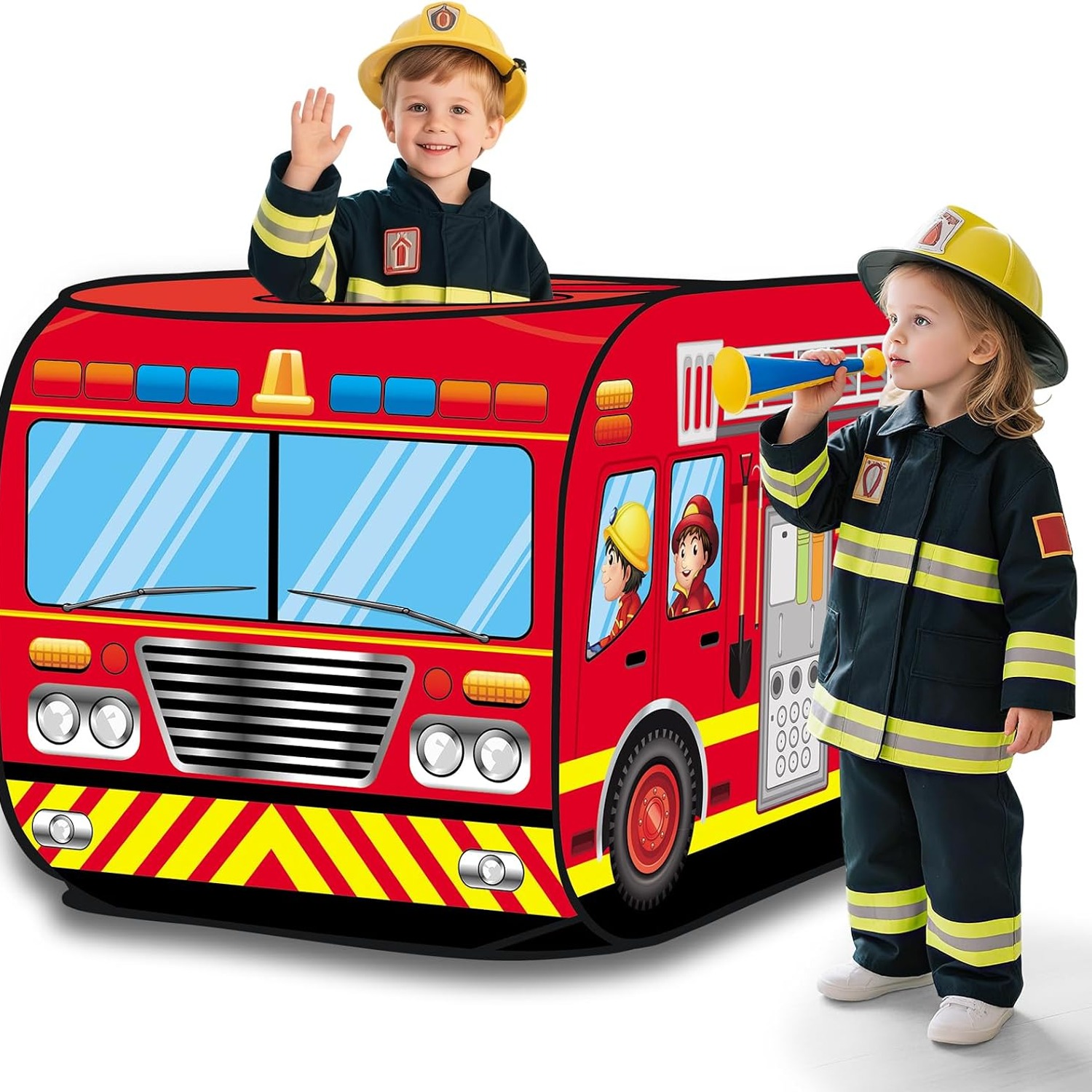
The fire truck theme gives that imagination a starting point. A child who likes rescue vehicles will know exactly what to do with a red tent the moment it opens. For a lot of families, the best fire truck tent for kids is the one that needs no explanation, and a bold red fire engine shape is about as self-explanatory as it gets.
The interior suits two or three children. That is useful if you have siblings close in age or if friends visit often. Shared play inside a small space encourages taking turns and talking things through, and children generally sort that out between themselves with surprisingly little input from adults.
It also suits anyone short on room. The 70 cm width is narrow enough to tuck along a wall or beside a bed. If you are hunting for the best indoor playhouse for a flat or a small bedroom, footprint matters more than almost anything else, and this one keeps its claim on the floor modest.
How to choose between play tents
A few things are worth checking before you commit to any tent, this one included.
Start with the measurements and compare them against your actual floor. People buy on photographs and then discover the tent blocks a door. Pace out 112 cm by 70 cm on the carpet and you will see immediately whether it works. Remember to leave a little extra clearance at the front so the door can roll up without hitting furniture.
Then think about height. This tent is 70 cm tall. That suits sitting, lying and crawling in. It is not a tent a child stands up inside. For most three to six year olds that is fine, because tent play is almost entirely done sitting down, but it is worth knowing so you are not surprised.
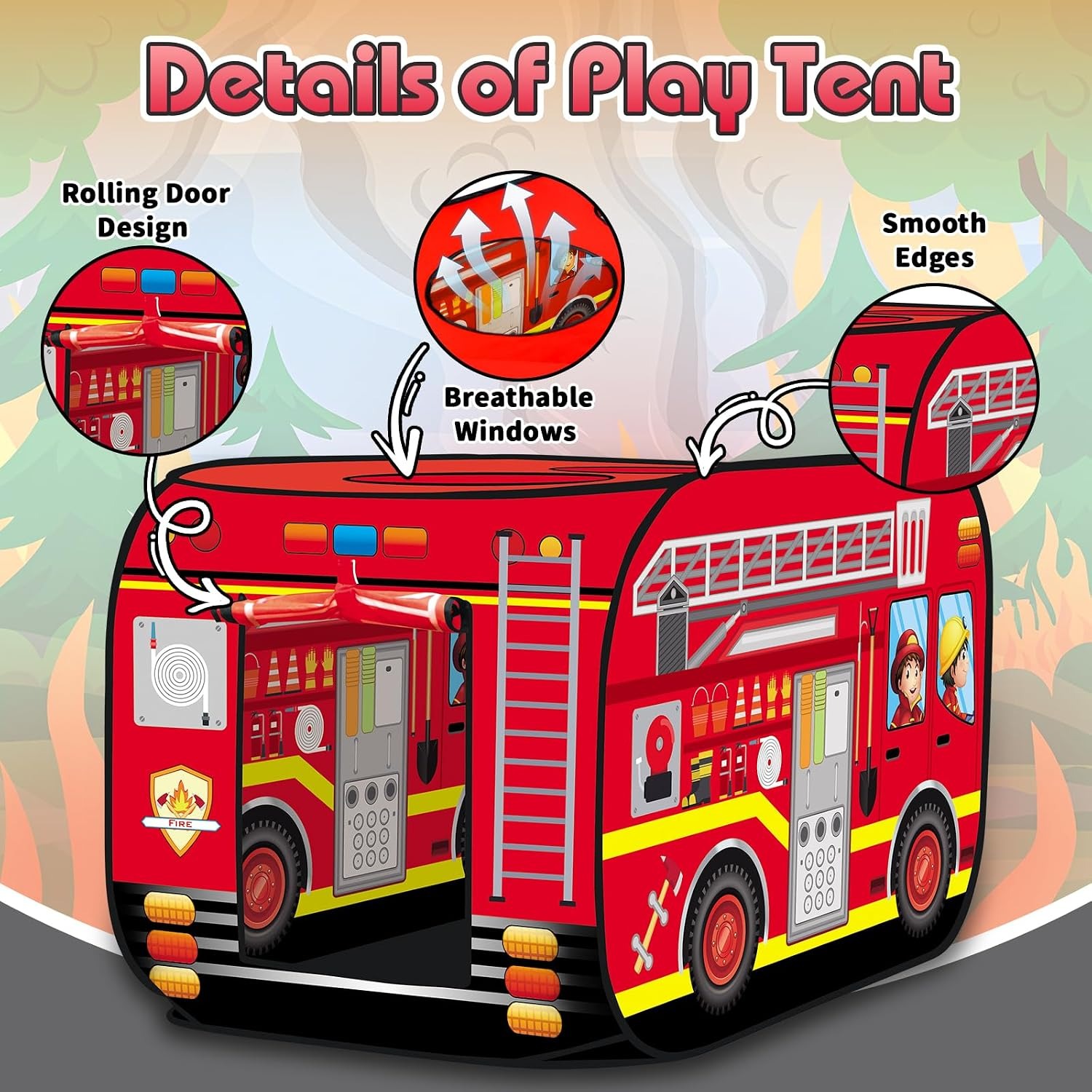
Consider ventilation next. A closed fabric box gets stuffy fast, especially in a warm room. The roll-up door and the roof window on this model both help air move through, and the window also stops the inside from feeling dark, which matters for younger children who are not keen on enclosed spaces.
Finally, think honestly about where it will live. If you want something that stays up permanently in a dedicated playroom, a heavier structure might serve you better. If you want something that appears when it is needed and vanishes when it is not, a pop-up is the right tool. The best foldable play tent is the one you are actually willing to put away each evening, and a ten-second fold makes that likely.
Indoors, outdoors and the line between them
This tent is built for the bedroom, the playroom and the living room, and it travels happily to the garden, the park or a picnic on a calm, dry day.
What it is not is camping equipment. No waterproof rating is specified for this product, the frame is plastic and the whole thing weighs half a kilo. Treat it as a light shelter for fair weather and bring it in when conditions turn. Wind is the main enemy of any lightweight pop-up, simply because there is not enough mass to hold it down.
That boundary is not a flaw, it is just the design. A tent light enough for a child to carry cannot also be heavy enough to stand up to a gusty afternoon, and the portability is the more useful trait for the way most families actually play.
Looking after it
Care is undemanding. Wipe marks off with a damp cloth and a little mild soap, then let the fabric air dry completely. Do not put it in a washing machine or tumble dryer, because the sewn-in frame is not built for that, and skip bleach and irons entirely.
The single most important habit is storing it dry. If the tent gets damp in the garden and then goes straight into a cupboard folded, it will smell musty within a week and that smell is hard to shift. Open it up, let it dry indoors, then fold.
Be gentle with the hoops. Forcing the frame into a shape it does not want to make is what eventually causes a kink. Work with the natural spring and the structure stays true for years.
Keep it out of long spells of direct sunlight when you can. Strong sun fades colour on any fabric over time, and a red tent shows fading more than a dark one would.
The short version
This is a red fire truck themed pop-up play tent measuring 112 x 70 x 70 cm and weighing 500 g. It needs no assembly, opens in seconds, folds flat, and has a roll-up door plus a roof window. It is recommended for ages 3 and up, fits two or three children, and is listed with plastic frame and material and a 30 day manufacturer warranty.
If you want a toy that gives a child their own space without giving up a corner of your home permanently, this does the job. It is simple, it is light, and children tend to know exactly what to do with it the moment it springs open.