

The complete guide
How To Choose A Kids Castle Tent That Actually Gets Used
The problem with most play tents
Plenty of play tents get opened on a birthday, used hard for a week, then end up crumpled behind a wardrobe. That is rarely the child's fault. It is usually because the tent was too small to sit up in, too fiddly to put back up after the first pack-down, or made from something that looked tired after a month.
A good kids castle tent solves a simple problem. Children want a space that belongs to them, somewhere adults have to ask permission to enter. Give them that and the tent earns its floor space. Get the size, the setup and the materials right and it stays in rotation for a long stretch of childhood.
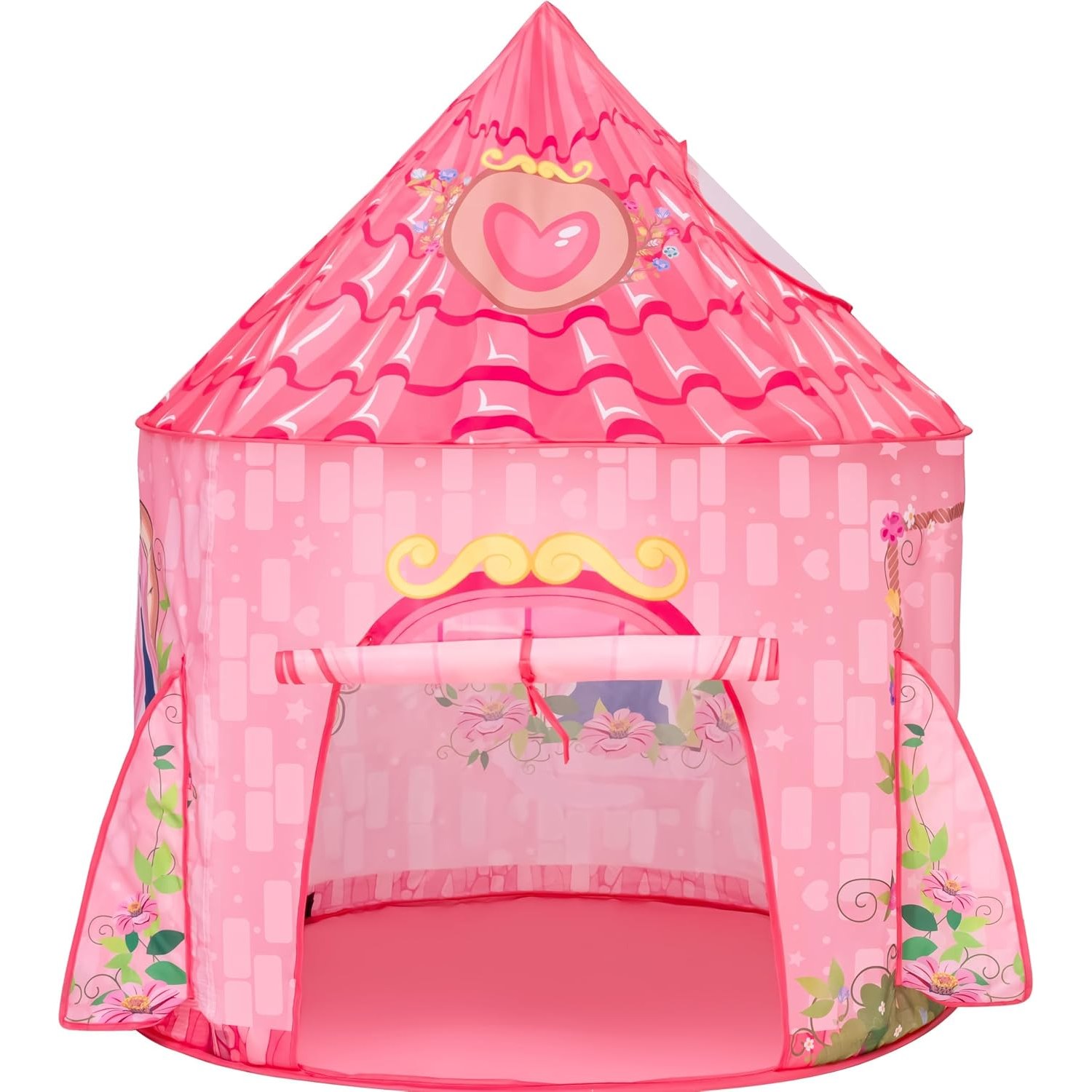
This guide covers what matters when you are choosing a castle style play tent, using this the maker model as the worked example.
How a castle tent works
The basic idea is straightforward. Printed polyester panels form the walls and roof, and four plastic poles hold everything upright. Roof anchors keep the top of the structure in shape, so the towers do not sag inwards. Floor anchors let you peg the base down when the tent is on grass.
Assembly is required, which sounds worse than it is. You slot the poles into the fabric sleeves, attach the roof anchors and stand it up. The first time takes a few minutes with the instruction sheet in hand. By the second or third build, most people stop reading the instructions entirely.
When play is over, the poles come out, the fabric folds down and everything slides into the carry tote. That tote is more useful than it sounds. It is the difference between a tent that lives in a cupboard in one piece and a tent whose poles mysteriously vanish by March.
Who it suits
The manufacturer lists a recommended age of 0 to 3 years, with a maximum age of 36 months. That is your main guide. This is a young child and young preschooler product.
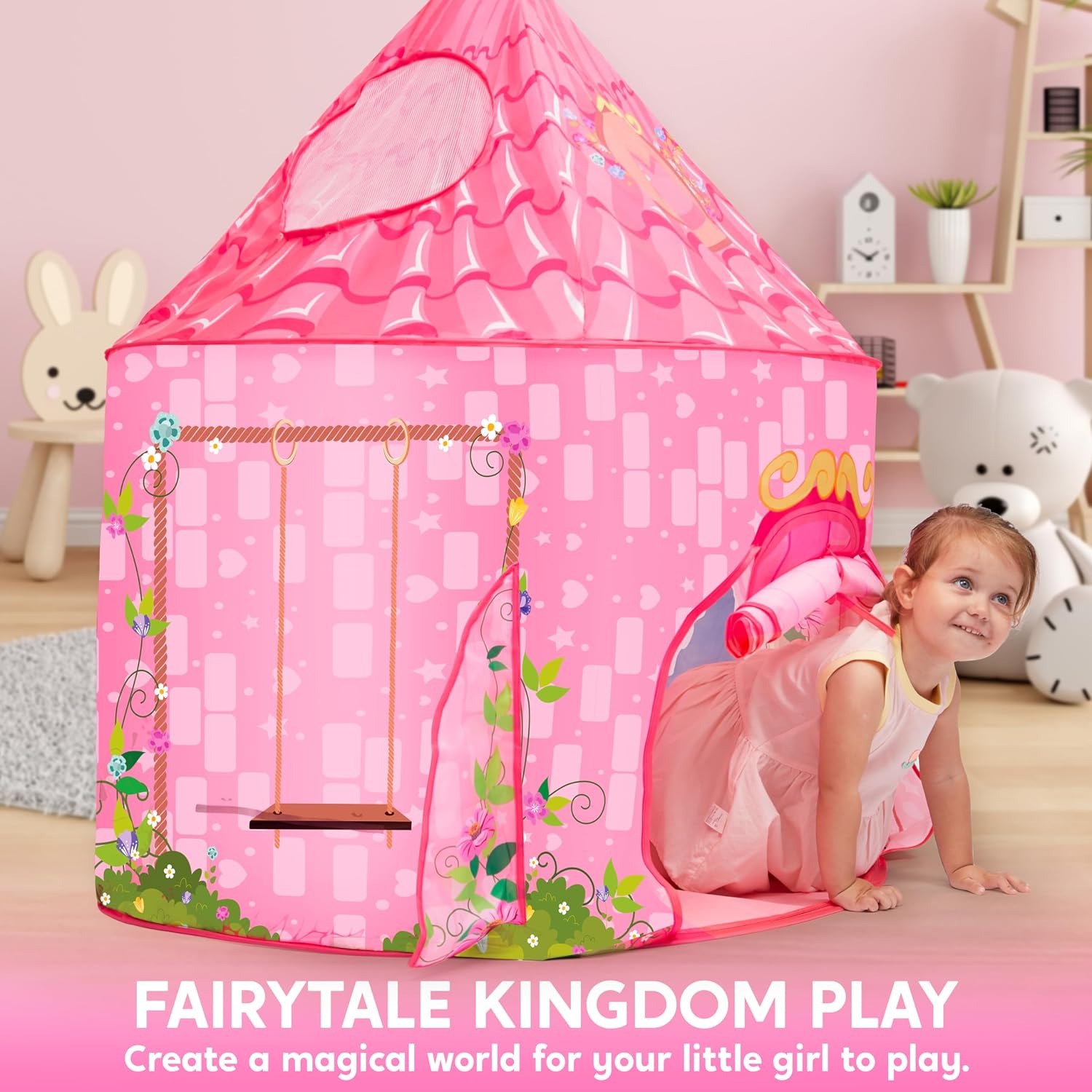
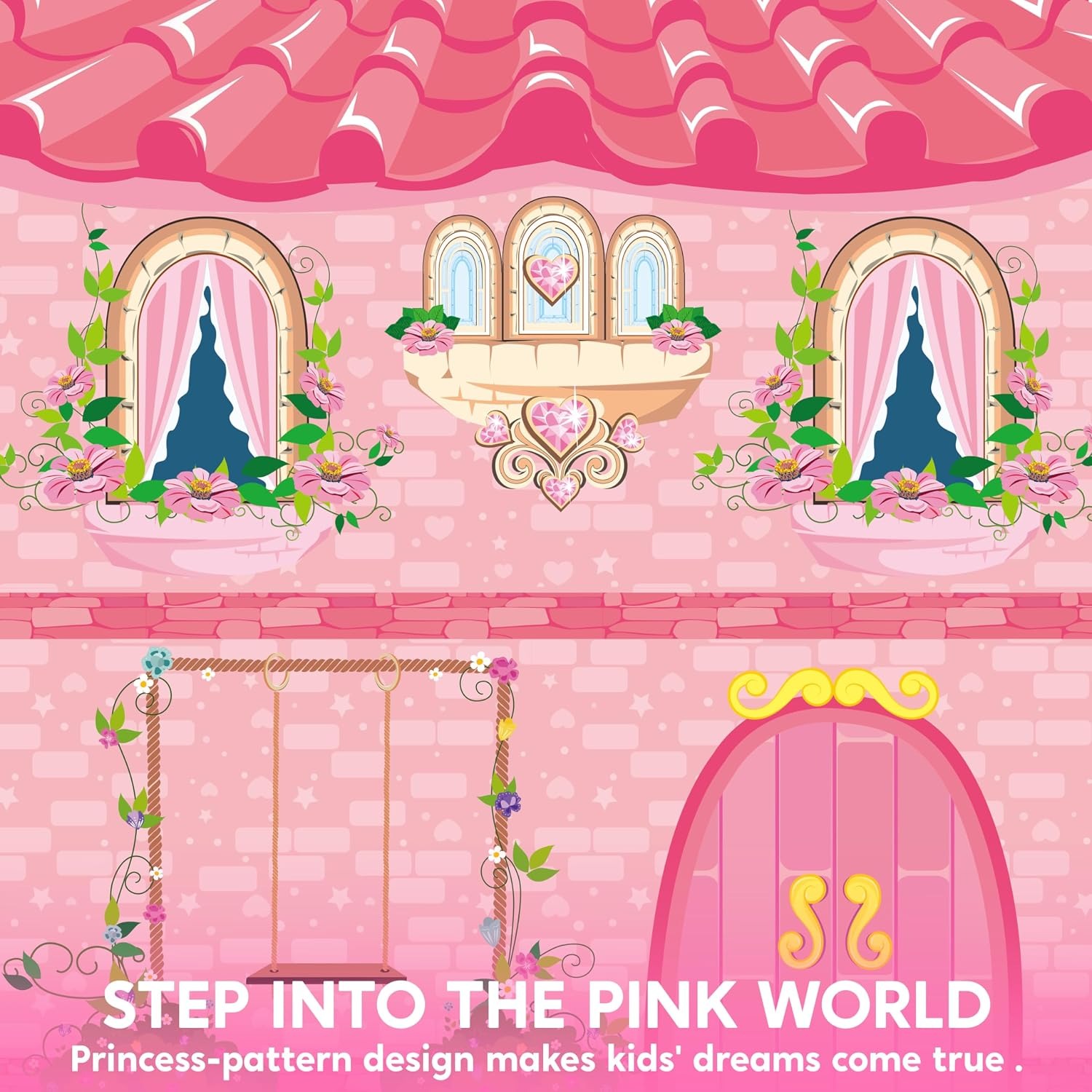
For a one year old, the appeal is physical. Crawling in, crawling out, peeking through the opening, repeating all of that forty times. For a two or three year old, the castle theme starts doing real work. The printed towers and royal motifs give them a setting, and the stories follow. That is when a princess castle play tent becomes a proper fixture rather than a novelty.
Older children can of course still enjoy it, but the 120 cm height will start to feel low once they hit school age. If you are buying for a five or six year old, look for something taller.
Getting the size right
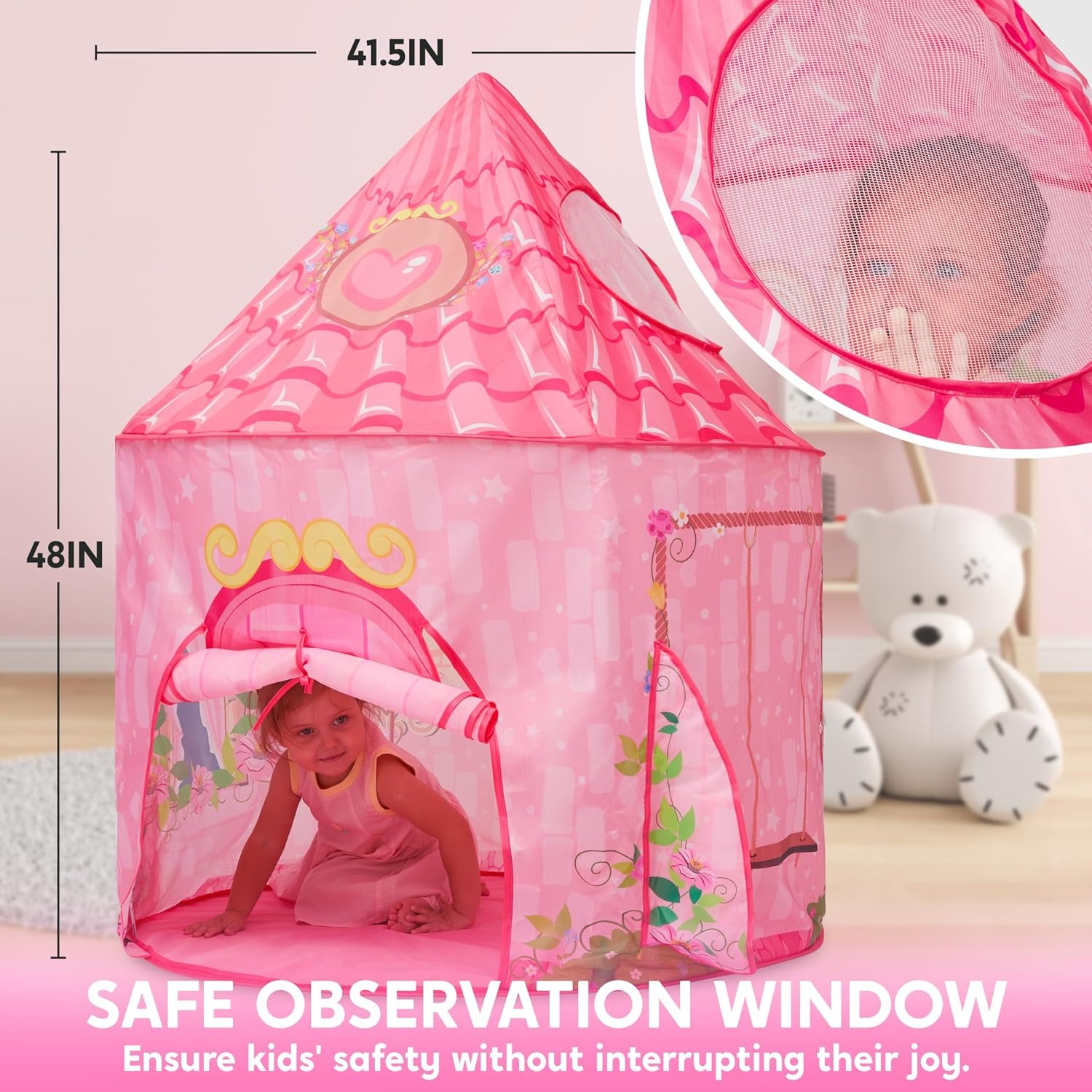
The listed dimensions are 105 cm deep by 105 cm wide by 120 cm high. Before buying any indoor playhouse tent, go and measure the spot where you plan to put it. People consistently underestimate how much floor a metre-square tent takes in a bedroom already holding a bed, a chest of drawers and a toy box.
Height matters just as much as footprint. At 120 cm, a young child can stand inside comfortably and an adult can kneel in the doorway to join a tea party. Tents under a metre tall force children to lie flat, and most children lose interest in lying flat fairly quickly.
One child has plenty of room in a 105 cm square. Two smaller children fit for a while, though they will be close together. If siblings will share it regularly, plan for the occasional negotiation.
Indoor, outdoor or both
The floor anchors mean this works as an outdoor castle tent for kids as well as an indoor one. On a calm, dry afternoon, peg it onto the lawn and it becomes a shaded base for garden play.
A few sensible limits apply. This is a play tent, not camping equipment. It is not built for rain, wind or being left out overnight. Polyester left in strong sun for weeks will dull, and damp fabric packed away wet will smell. Bring it in when you are done, let it dry fully, and it will last far longer.
Indoors, the same tent sits happily in a bedroom corner as a reading nook. Add a rug, two cushions and a small stack of books and you have created the best possible excuse for quiet time.
What to look for in materials
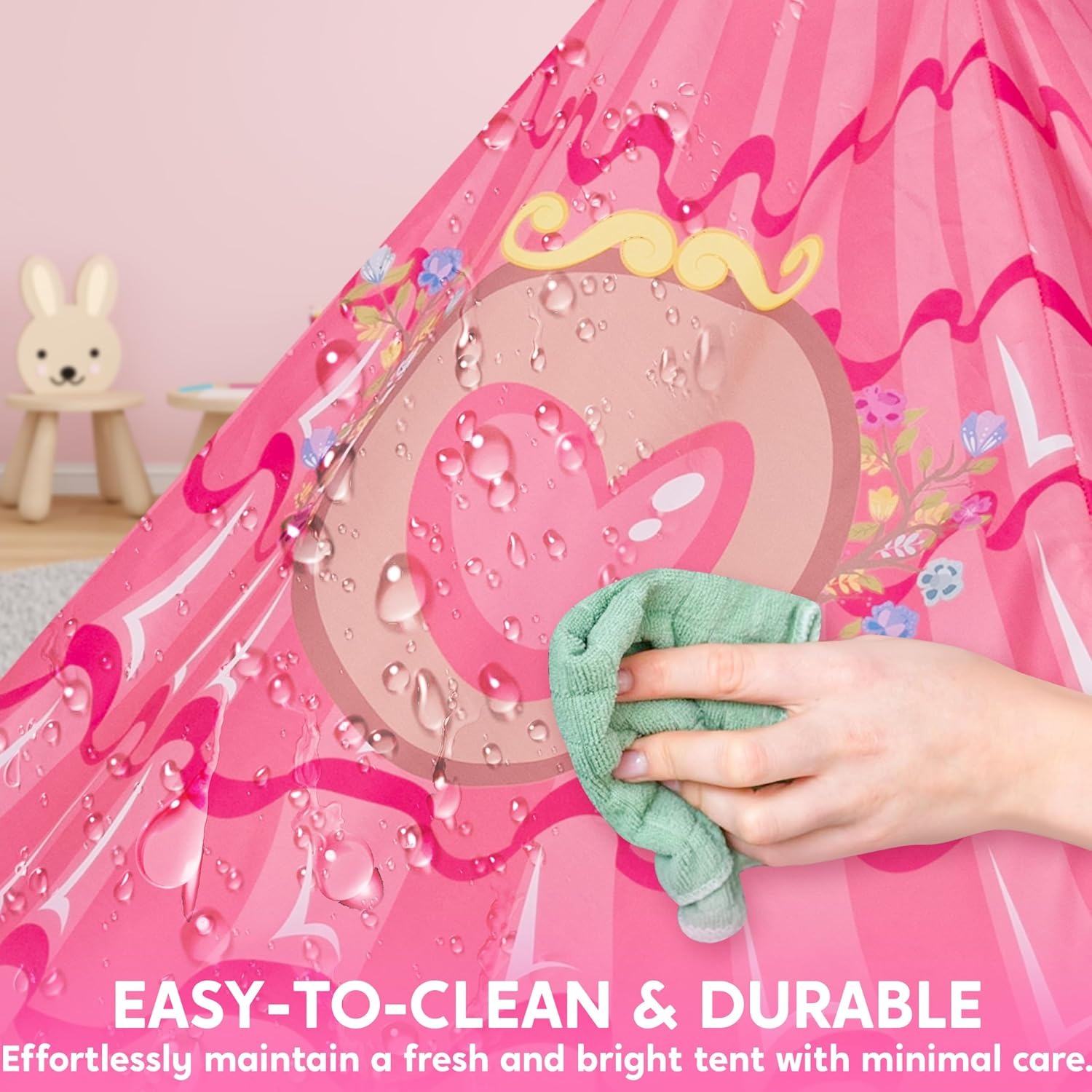
Polyester is the standard choice for play tents, and for good reason. It is light, it takes printed colour cleanly, and it wipes down with a damp cloth. Heavier canvas looks lovely but adds weight and cost, and it is harder to pack into a tote.
The frame here is plastic rather than metal. That keeps the total weight low enough for one adult to move the assembled tent between rooms. The trade-off is that plastic poles need a quick look over before each setup. A cracked or split pole should be taken out of service rather than pushed back into a sleeve.
Check the fit of the poles when you first assemble it. They should slide in without force. If something needs real pressure, stop and check you have the right pole in the right sleeve.
Keeping it in good shape
Care is simple. Spot clean marks with a damp cloth and a small amount of mild soap. Do not put it in the washing machine, do not bleach it, do not tumble dry it and do not iron the printed panels. Heat and agitation are what ruin printed fabric.
Let it dry completely before folding. This is the step people skip, and it is the one that causes musty smells and marks later. If it has been out on damp grass, stand it up indoors for an hour before packing down.
Store it in the carry tote, somewhere dry and out of direct sunlight. Keeping the poles in the same bag as the fabric is the single best habit for making sure the whole set survives to the next child.
A few practical extras
A play mat or small rug under the tent transforms it on hard floors. It makes the inside comfortable enough for a child to stay put for half an hour rather than two minutes.
Battery powered fairy lights draped over the roof work beautifully for evening play. Use low-heat battery lights only and never run mains cables near fabric or leave lights on unattended.
Supervision is worth mentioning plainly. Given the 0 to 3 age guidance, an adult should be around during setup and pack-down, when loose poles and anchors are out. Once the tent is assembled and the hardware is away, children can get on with it.
The short version
If you want a portable kids play tent for a young child, this one covers the basics well. You get the tent, four poles, roof anchors, floor anchors and a carry tote in one set, so there is nothing else to buy. The 105 x 105 x 120 cm size gives real sitting and standing room, the polyester wipes clean, and the plastic frame keeps it light enough to carry between the playroom and the garden.
Measure your space first, check the 0 to 3 age guidance against your child, and plan for a short assembly the first time. Do those three things and you will have a castle that gets used, not one that gets stored.