
The complete guide
Choosing a Castle Play Tent That Actually Gets Used
The problem with the floor
Children play on the floor. That is fine until the floor is also where you walk, where the dog sleeps and where the laundry basket lives. Toys spread, games get interrupted, and the moment a child settles into a long imaginative story, somebody steps over them and the whole thing collapses.
A play tent fixes a surprisingly specific problem. It gives a game a boundary. Inside the tent, the rules are the child's own. Outside, the room goes back to being a room. Parents often expect a tent to be about novelty, and for the first day it is, but the real value shows up in week three when the same child is still crawling inside to look at books after lunch.
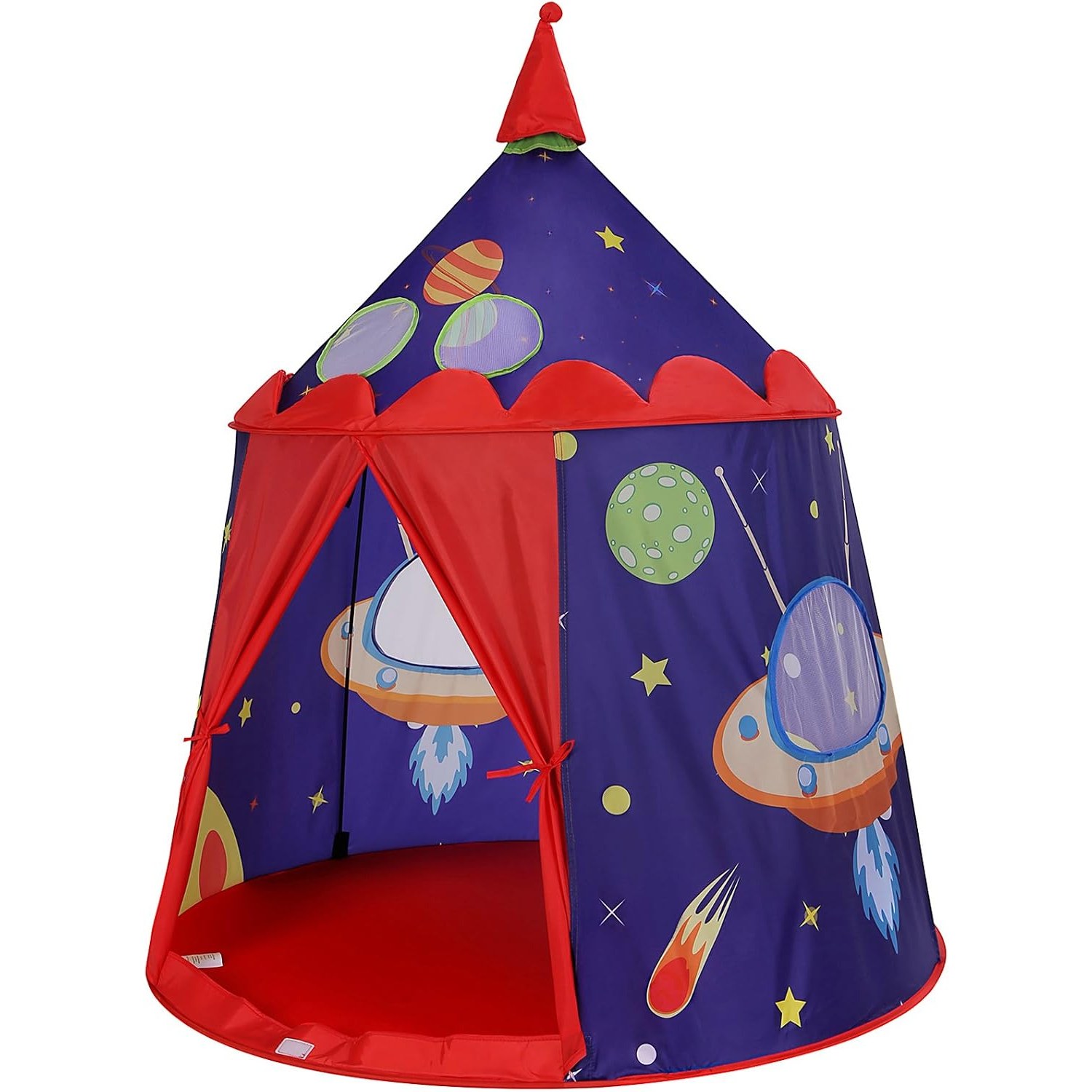
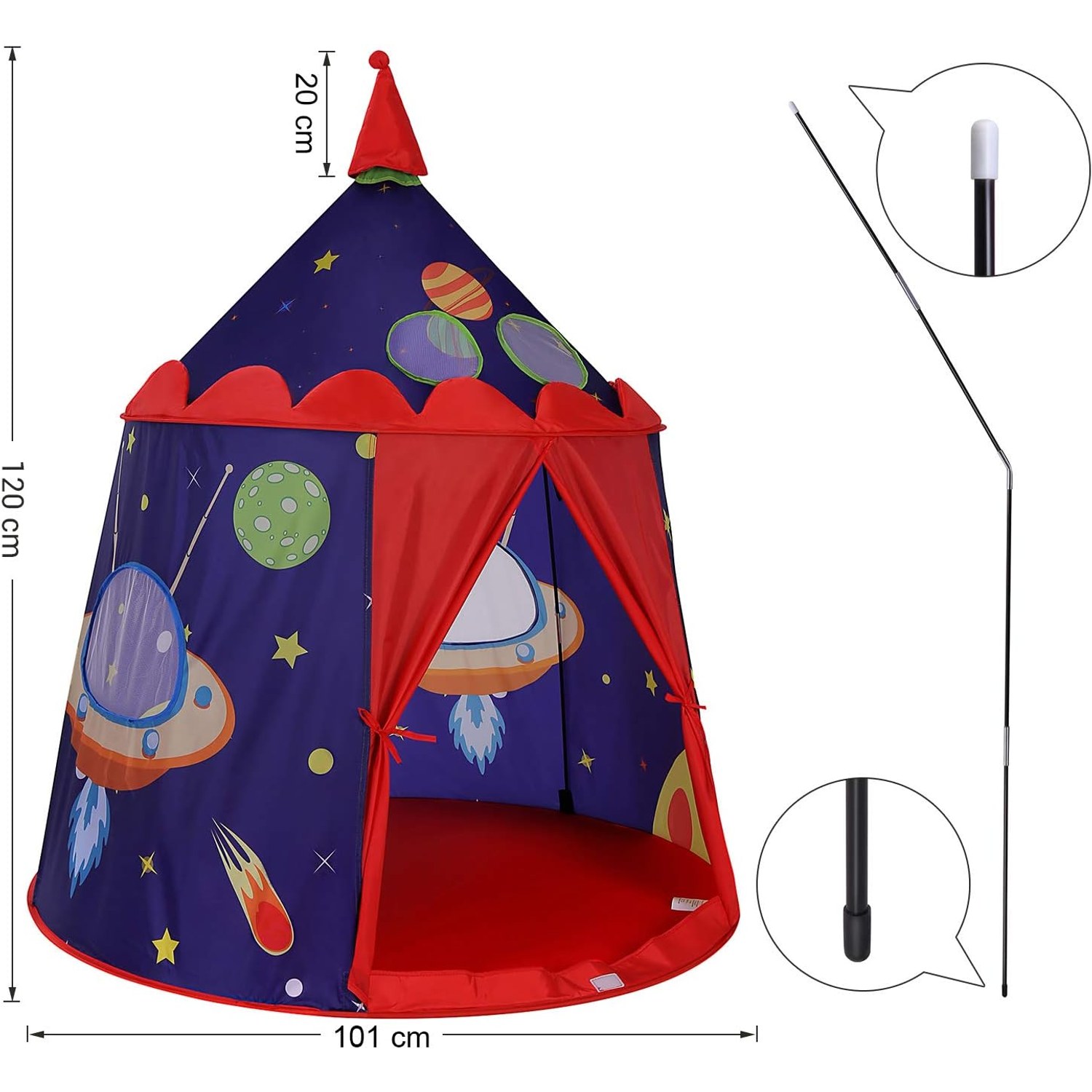
That is what the prince castle pop up play tent is for. It stands 120 cm tall, covers a circle 101 cm across, and holds up to three children. It is big enough to feel like somewhere, and small enough to tuck into a corner.
How a pop up play tent works
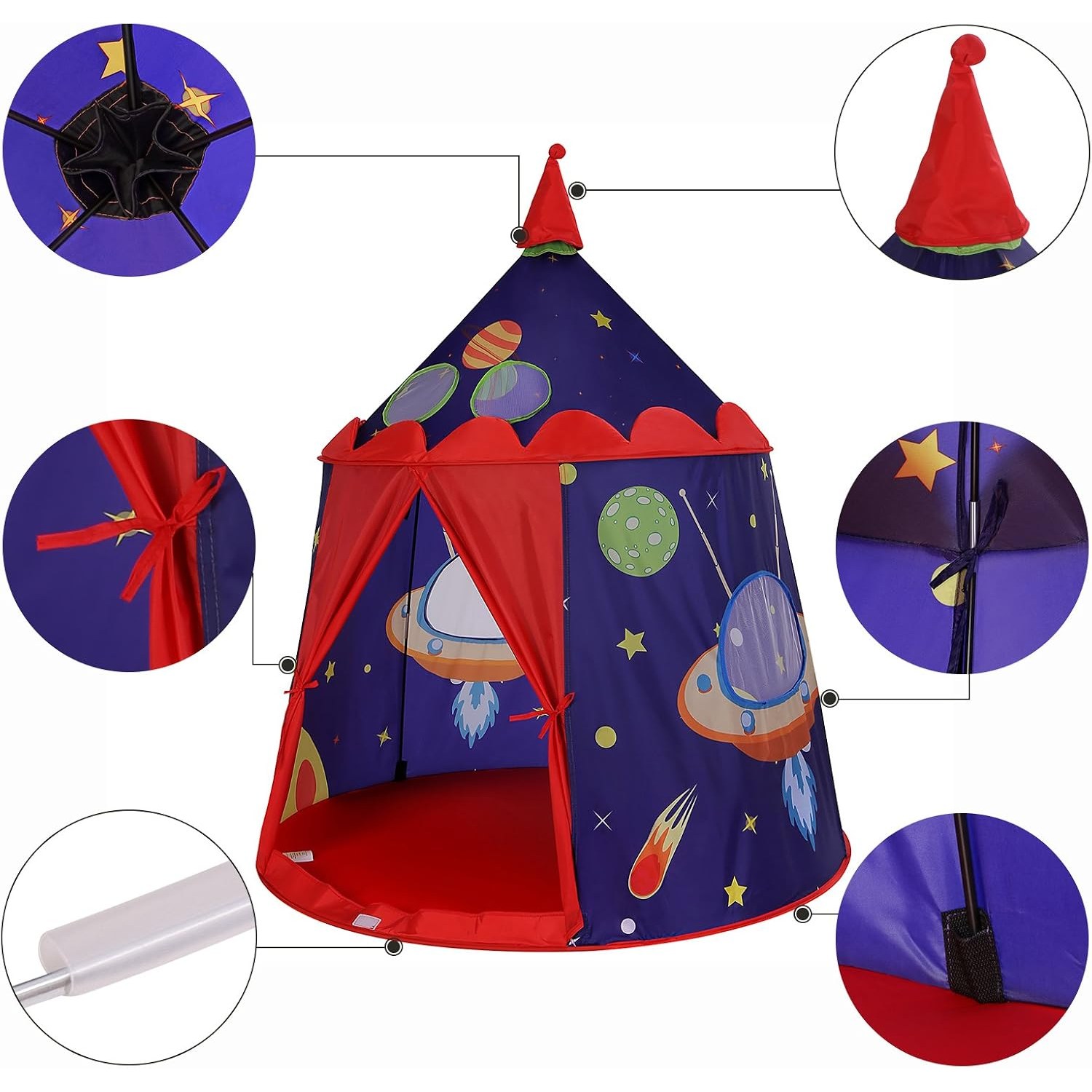
The frame is a loop of sprung metal wire sewn into the polyester shell. When you take it out of the bag and release the restraint, the frame wants to open, so the base of the tent forms itself. From there you add five fibreglass poles, which arch over the top and give the castle its turret shape and its height.
The poles matter. Without them a pop up tent is a low dome. With them, you get standing height for a young child and a proper roof line. Fibreglass is used because it bends without taking a permanent kink, which is also why the tent returns to the same shape each time.
Pack-down is the reverse, with one twist. You fold the structure down into a flat round shape and slide it into the carry bag. This is the part people find fiddly on the first attempt. Follow the motion in the instructions, do not force it, and by the third time it takes about twenty seconds.
Two small details make a difference in daily use. The metal wires are covered in rubber tubing where children climb in and out, so the entry point has no hard edge. And the mesh windows let air move, which stops the inside from feeling close on a warm day while giving you a line of sight from the sofa.
Who it suits
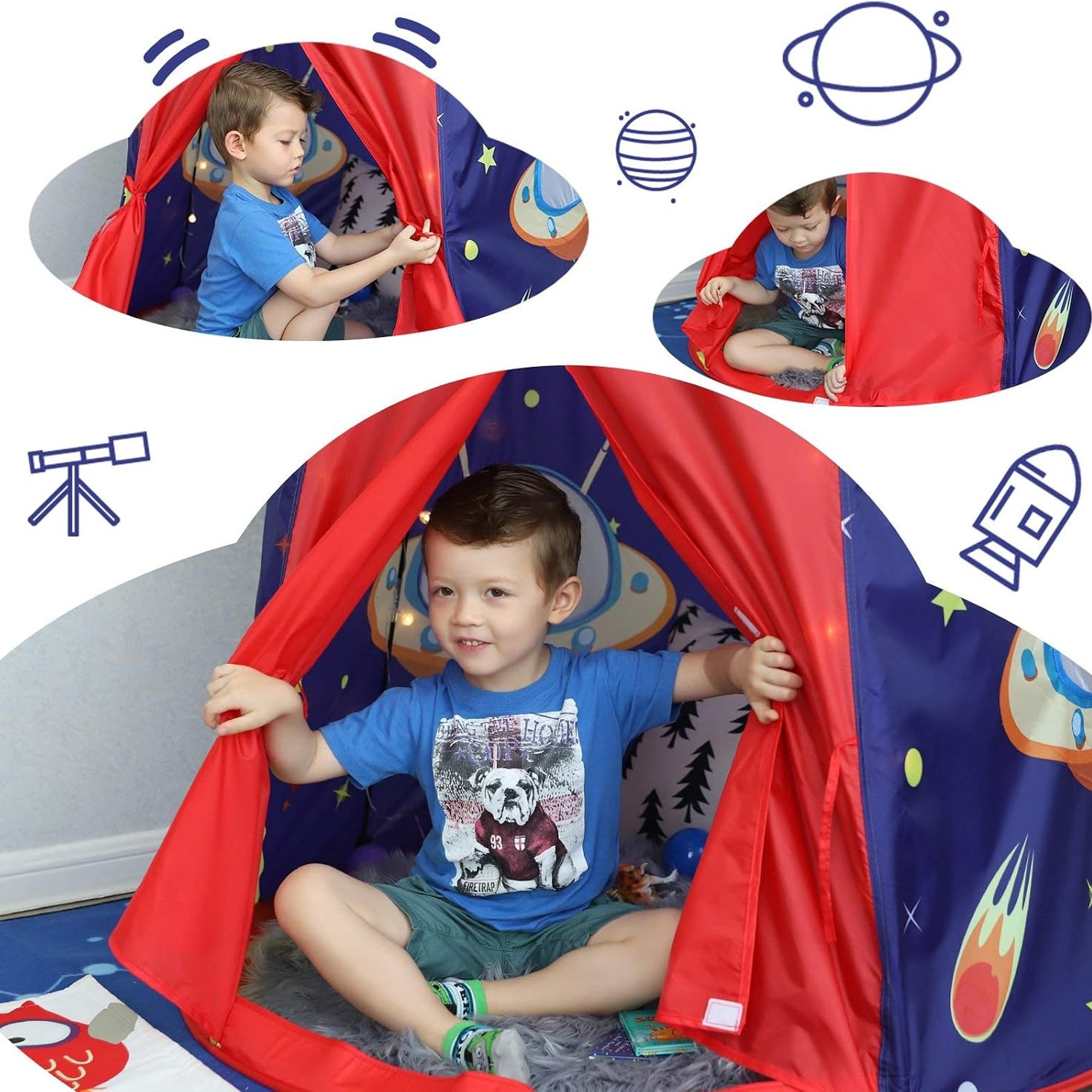
The recommended age starts at 36 months. In practice, the sweet spot runs from about three to seven. Younger children love the hiding, slightly older children love the ownership, and somewhere in between the tent stops being a toy and starts being a place.
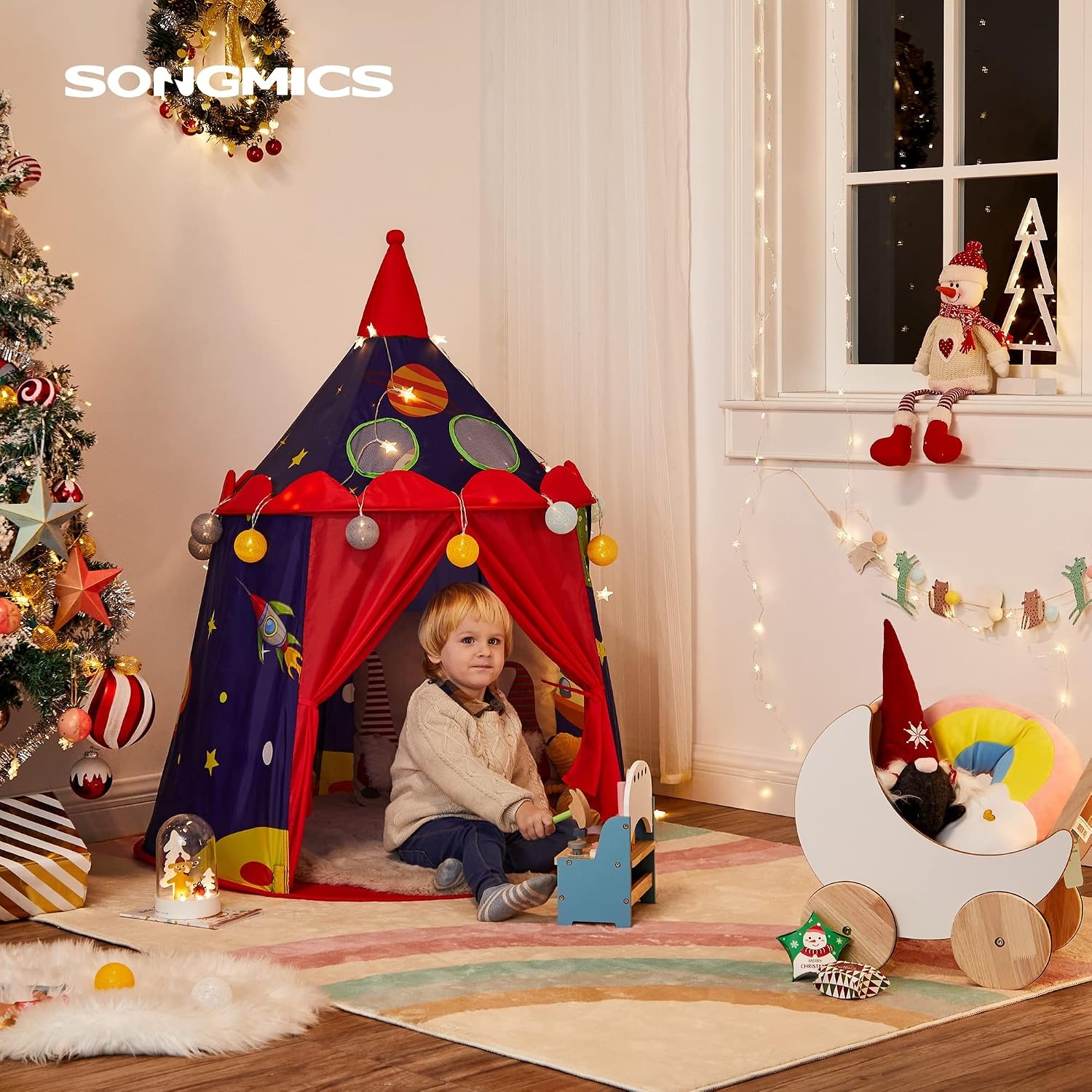
It suits families short on space, because it folds flat. It suits households with more than one child, because three can squeeze in at once and that tends to be where the best games happen. It also works well for a child who needs a quiet retreat, which is a real need in shared bedrooms and busy homes. A cushion, a blanket and a couple of books turn it into a reading corner without any extra furniture.
Think about who will use it outdoors too. On dry days it is lovely on the lawn, and it earns its place as a best outdoor play tent for young children when it is shaded and supervised. It is not a camping tent, though. No rain, no wind, no overnight use.
How to choose between play tents
A few things separate a tent that lasts from one that gets abandoned.
Size against your actual space. Measure the corner you have in mind. A 101 cm circle sounds small on paper and looks bigger in a bedroom. Check the height too, especially under a sloped ceiling or a high bunk.
Setup time. If a tent takes fifteen minutes to put together, it will go up once. If it pops open and takes five poles, it gets used. Anything in the best pop up play tent bracket should be ready before a child loses interest.
Pack-down and storage. This is the one most people underestimate. A tent that folds into its own bag can live in a wardrobe or a car boot. A tent that does not will sit permanently in the middle of the room, which is fine until it is not.
Ventilation. Mesh windows are not decoration. They keep the air moving and let you look in. A tent with no openings beyond the door gets warm fast.
Edges and materials. Look for covered wire at the entrance, smooth seams and fabric that wipes clean. Polyester is the usual choice for a best polyester play tent because it is light, it holds colour and it does not absorb spills the way cotton does.
Weight. At 0.92 kg, this tent is light enough for a child to drag around and an adult to carry alongside a bag of beach things. Weight is the quiet factor that decides whether something travels with you.
Setting it up well
Pick a flat spot with a bit of clearance on all sides. Keep it away from radiators, stairs, fireplaces and anything with a sharp corner. Indoors, a rug under the tent adds comfort and takes the chill off a hard floor, since no separate groundsheet is listed with this model.
Let the frame open before you unfold the fabric fully, then work the poles in one at a time rather than wrestling two at once. If a pole feels tight, check it has not caught in a sleeve seam.
Outdoors, choose grass or a clean patio and keep it out of the wind. A lightweight tent will move if the breeze picks up. Bring it in before dusk so it does not sit in dew overnight.
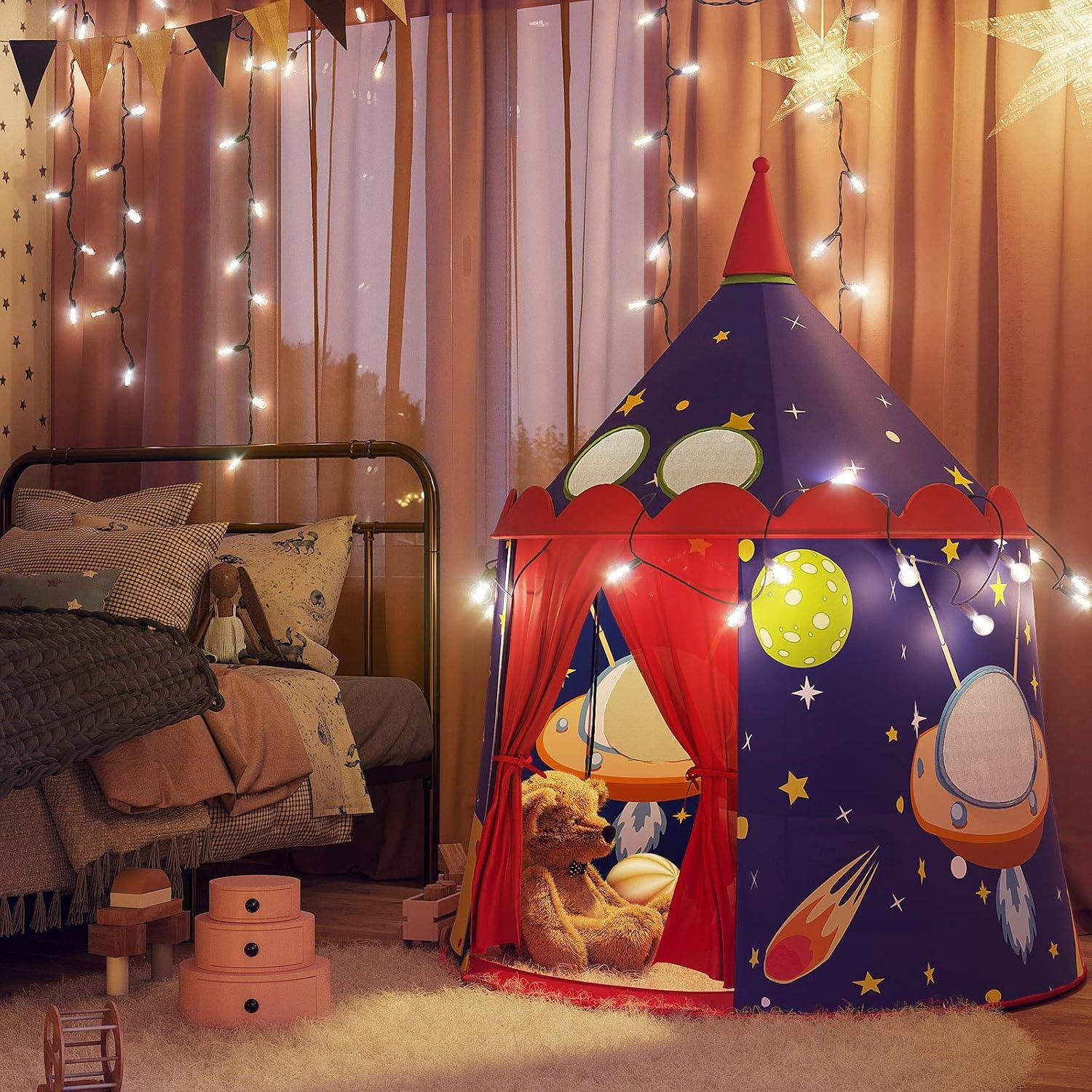
For lighting, battery fairy lights or a small LED lamp are the safe answer. Nothing hot, nothing with a mains cable running through the door.
Keeping it in good shape
Care is simple and it matters more than people think, because most play tents fail at the fabric rather than the frame.
Wipe marks off with a damp cloth and a little mild soap, then let the spot dry fully. Skip the washing machine, the tumble dryer, bleach and the iron. Heat and agitation will damage the shell and can distort the sewn-in wire.
Shake the tent out before packing. Crumbs, sand and grit work their way into seams and wear the stitching from the inside. If the tent has been outdoors on damp grass, stand it up indoors until it is completely dry before folding, since fabric packed away damp will smell within a week.
Store it in the carry bag, somewhere dry, and avoid stacking heavy boxes on top. The frame will take a bit of pressure, but it holds its shape better if it is not squashed for months at a time.
The short version
This is a 101 cm by 120 cm castle tent in blue polyester, built on a metal wire frame with five fibreglass poles, weighing 0.92 kg and coming with a carry bag. It fits up to three children, has mesh windows for air and visibility, and rubber tubing over the wire where little hands climb in. Assembly takes minutes and no tools.
It is best indoors, fine outdoors on dry days, and genuinely easy to pack away, which is the thing that keeps a play tent in service rather than in the loft. If you want a kids castle tent that a three year old can grow into and a seven year old still disappears inside with a book, this one does the job without fuss.