

The complete guide
Choosing a Kids Play Tent That Actually Gets Used
The toy that gets ignored, and the one that does not
Every family has a cupboard with a half-used toy in it. Something that looked brilliant in the picture and lasted two afternoons. Play tents can go either way. The ones that get ignored are usually too fiddly to put up, too big to leave out, or too plain to hold a child's attention past the novelty of climbing in.
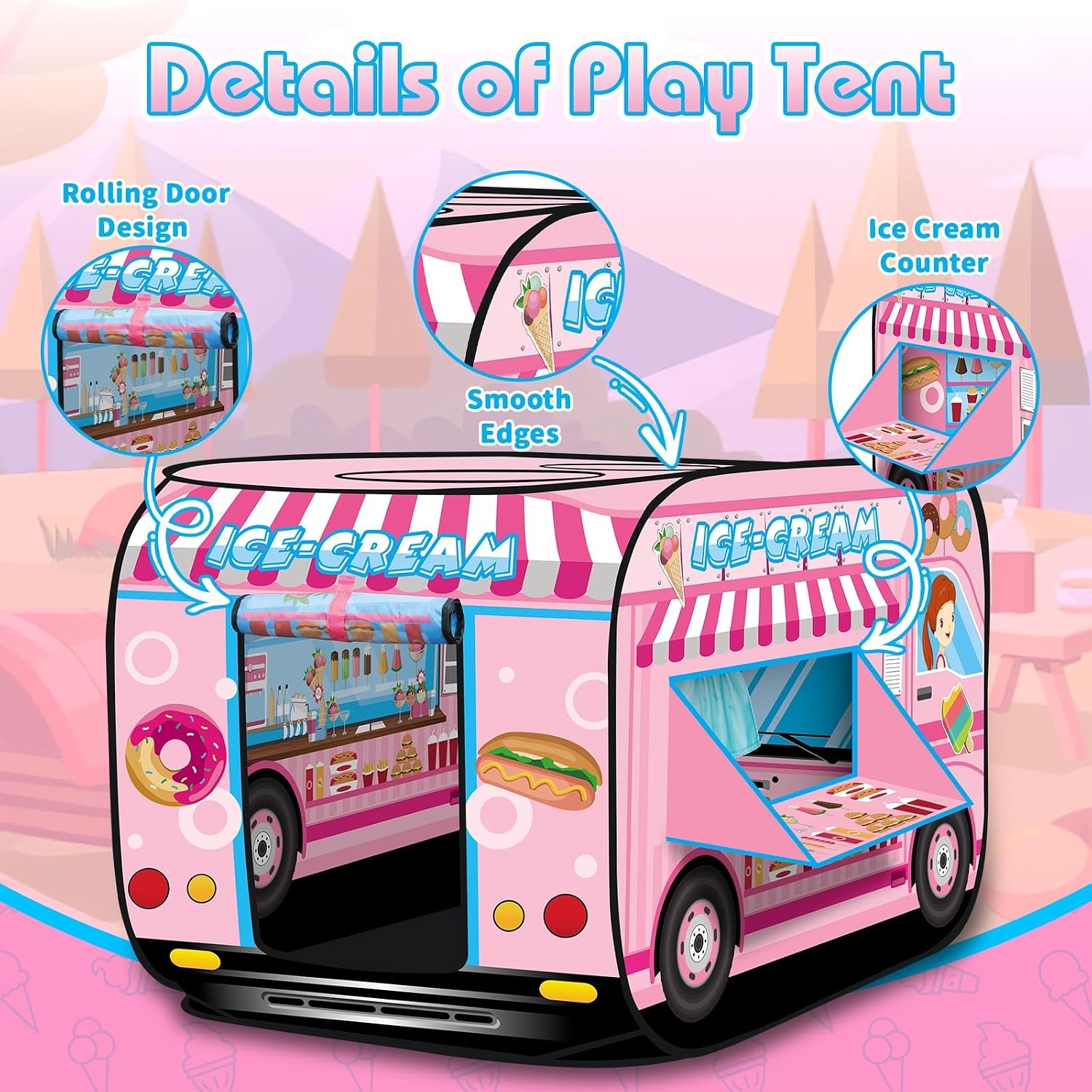
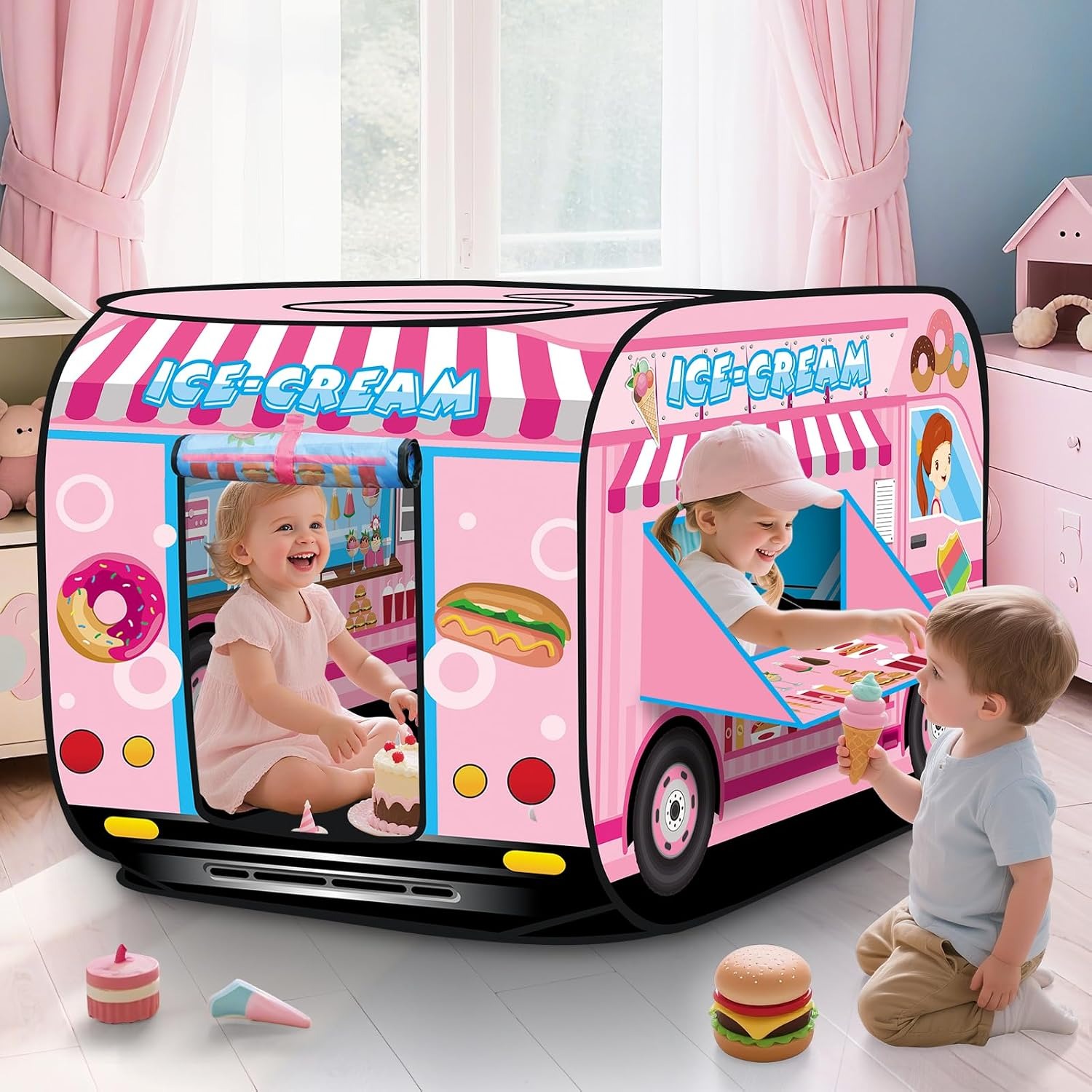
The ones that stick have three things going for them. They open fast, they fold away fast, and they give the child something to do inside rather than just somewhere to sit. An ice cream truck play tent leans hard on that third point. It is not a blank fabric box. It has a counter, a door that rolls up and down, and a theme that hands children a script the moment they crawl in.
That script matters more than it sounds. A child who sits in a plain tent has to invent everything from scratch. A child who sits behind a serving window already knows what the game is. Someone is the shopkeeper, someone is the customer, and there are cones to hand over. The game starts itself, which is exactly what you want at four in the afternoon on a wet Tuesday.
How a pop-up play tent works
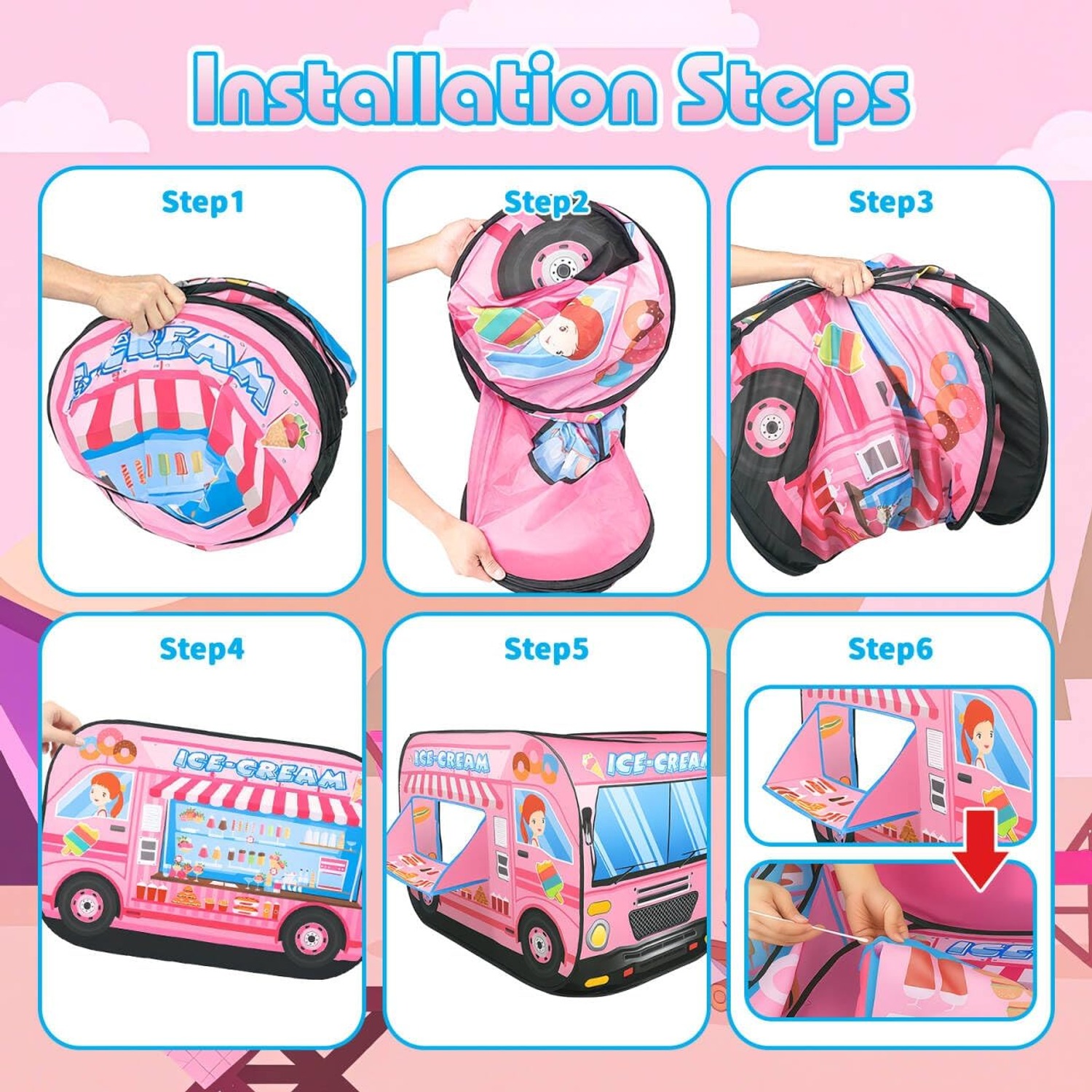
The frame is a loop of flexible plastic sewn into channels around the fabric. Under tension it wants to be a tent shape. Fold it down and it stores that tension, which is why it springs open when you let go. There is nothing to thread, clip or screw.
Taking it down is the bit that catches people out. You are not fighting it so much as persuading it. You bring the opposite sides together, twist in opposite directions and let the frame collapse into a flat ring. The first attempt usually takes a minute of fumbling. By the fourth or fifth time it takes seconds, and children often pick up the motion faster than adults do.
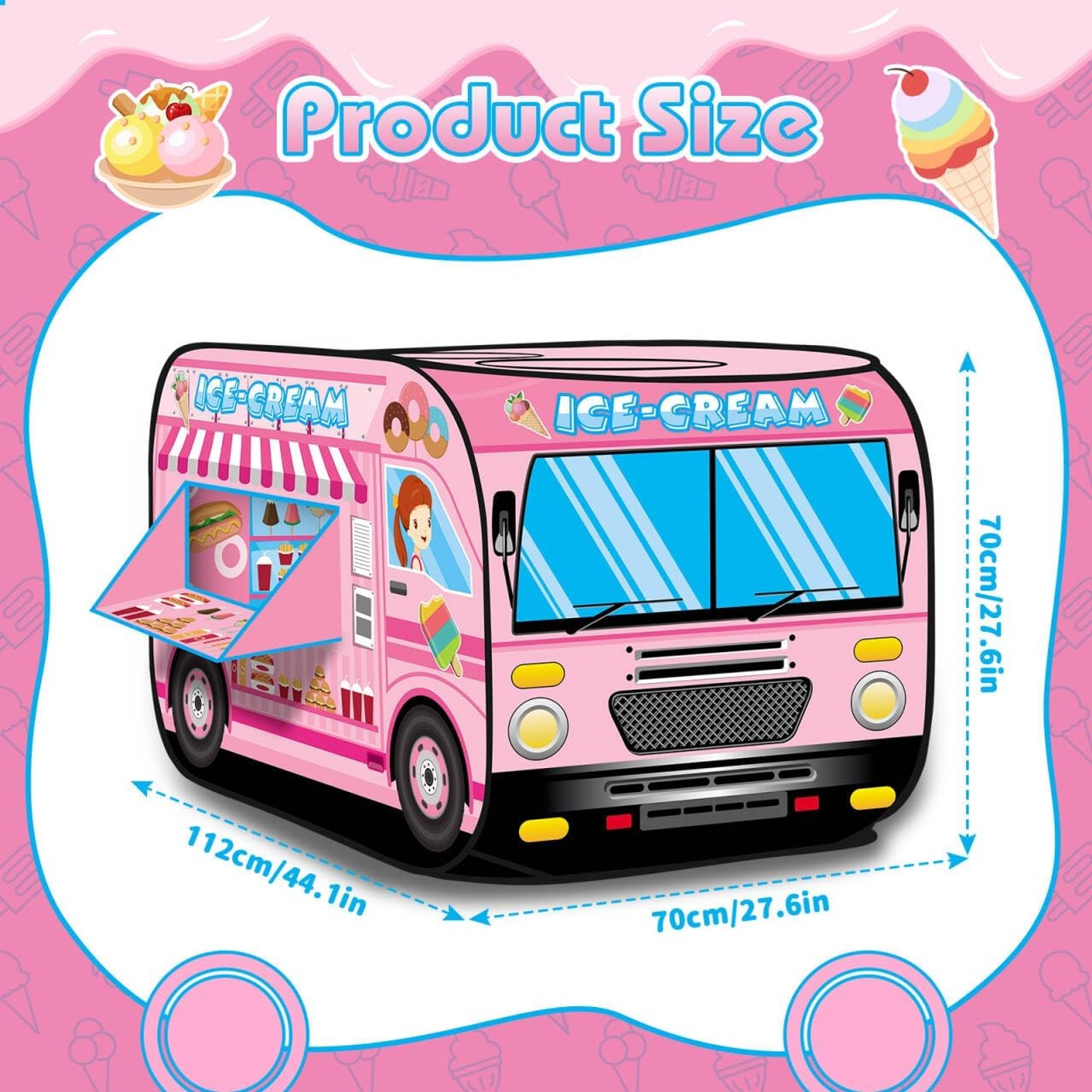
This tent measures 112 cm long by 70 cm wide, with 70 cm of height, and weighs 500 g. Those numbers tell you most of what you need to know. The footprint is about the width of a single bed plus a little, so it clears a corner of a bedroom or playroom without taking over. The height suits sitting, kneeling and crawling, not standing. And at half a kilo, a child can pick it up and move it themselves, which is the difference between a toy that lives in one spot and one that travels to the garden.
Who it suits
The recommended age range is 36 months to eight years. The sweet spot for a role play tent for children is somewhere around three to six, when pretend play is at its most enthusiastic and shops, cafes and kitchens dominate the imagination.
Younger children at the three-year mark will mostly enjoy the crawling in and out, the door that rolls, and the simple back and forth of handing things through a window. Older children build on it. They assign roles, invent prices, make menus out of paper and rope in siblings as staff. The same object serves two quite different kinds of play.
Beyond the shop game, this works as a quiet hideaway. Children at this age often want a small enclosed space of their own, and a young child hideaway tent gives them that without needing a den made of sofa cushions that has to come down before dinner. Add a cushion and it becomes a kids reading den. Leave soft toys in it and it becomes storage that tidies itself.
It also suits families who are short on space. A rigid plastic playhouse is a commitment. A foldable play tent is not. When the floor is needed for something else, it folds flat and goes behind a door.
Choosing between play tents
A few things are worth thinking about before you pick any children's playhouse tent.
Measure your space first. Not the room, the actual clear corner. Open size here is 112 x 70 x 70 cm. Mark it out on the floor with a tape measure and you will know instantly whether it works.
Check how it packs down. Some tents fold flat, some pack into a bag, some do neither and live in the hall forever. If storage is tight, flat-folding is the feature that decides whether the tent survives in your house.
Look for a reason to stay inside. A window, a counter, a door that opens and shuts. These small interactive bits are what separate a tent children use for weeks from one they use for a weekend. The roller door and flip-open counter here are doing that job.
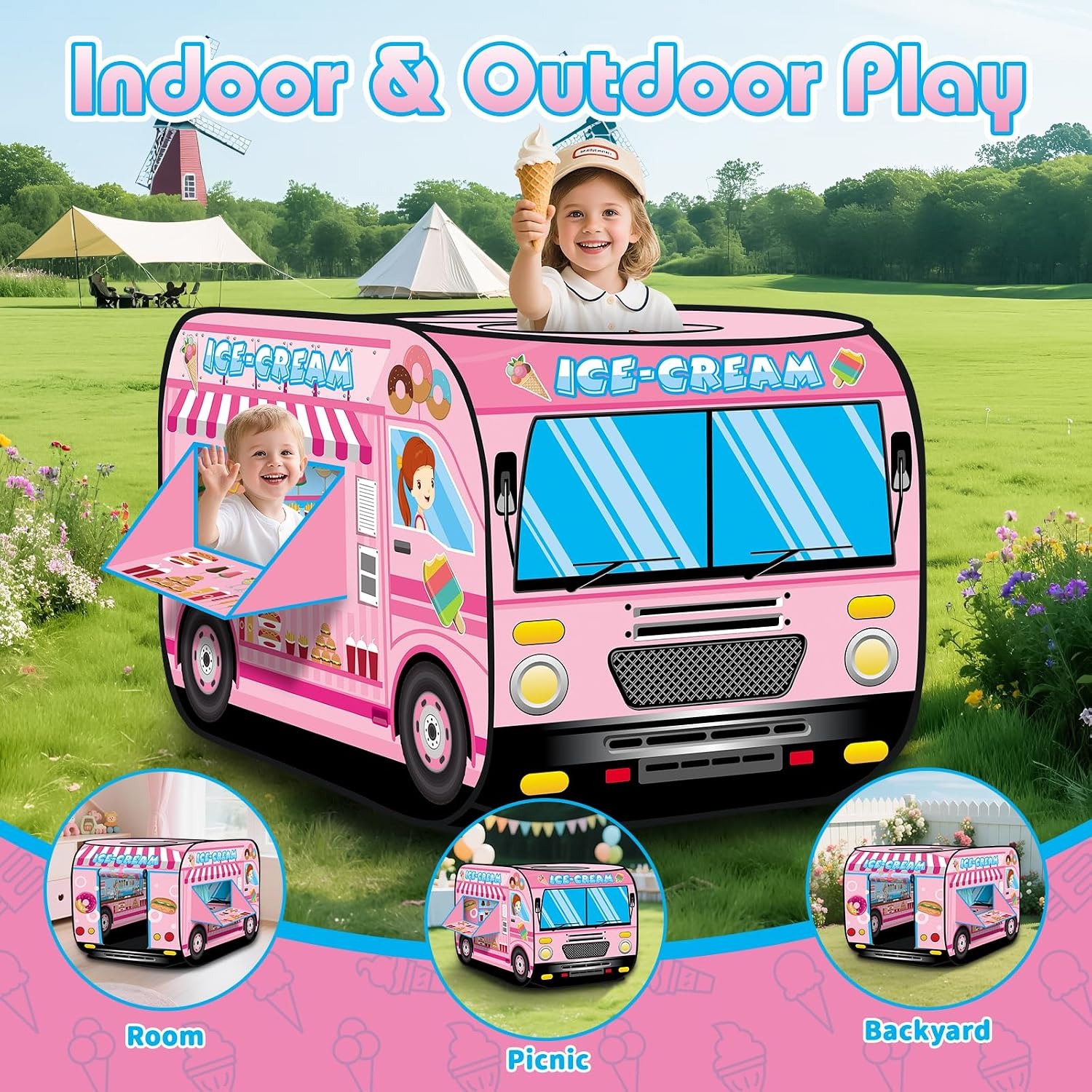
Think about where it will live. If you want a garden play tent as well as an indoor one, weight and fold time matter more. At 500 g this one travels easily, though it is a light fabric structure rather than a camping tent, so it belongs indoors in wind or rain.
Consider who else plays. If you have two or three children, you want a floor area that fits more than one body. This one comfortably takes two sitting inside, with a third usually ending up as the customer outside the window, which is often how the game naturally works anyway.
Looking after it
The materials are polyester fabric over a plastic frame, and both are easy to live with. A damp cloth with a little mild soap handles marks, sticky handprints and the general grime of a well-used playroom. Let it air dry fully before folding, because fabric stored damp picks up a smell that is hard to shift.
Keep it out of the washing machine and the tumble dryer. The frame is not built for that and the printed panels will not thank you. No bleach either.
Outdoors, bring it in at the end of the day. Prolonged sun fades printed fabric over time, and overnight damp does the frame no favours. If it does get caught in a shower, open it out somewhere warm and let it dry properly before it goes back in the cupboard.
One habit worth building: fold along the creases it already has rather than inventing new ones. The frame has a natural way it wants to collapse and following it keeps the plastic from being stressed in the same spot over and over.
Give the tent a quick visual check now and then, the same as you would any toy. Look at the seams and the frame channels. Catching a small split early is far easier than dealing with it later.
Using it well
A tent on its own is good. A tent with props is better. Toy ice creams, plastic coins, a notepad for orders, a tea towel for the counter. None of it costs much and all of it extends the game. Children who have something to sell play longer than children who are miming.
Rotate it. If the tent is up permanently it becomes furniture and gets ignored. Fold it away for a fortnight and bring it back out and it is interesting again. This is one of the quiet advantages of a collapsible kids tent over a fixed playhouse.
Move it around too. The same tent in the garden on a sunny afternoon feels like a different toy from the one in the bedroom corner. Taking it to a picnic or a grandparent's house makes it part of the day out rather than just a thing at home.
The short version
This is a pink pop-up ice cream truck playhouse measuring 112 x 70 x 70 cm, weighing 500 g, made from polyester over a plastic frame. It opens in seconds, folds flat for storage, and has a roll-up roller door plus a flip-open serving counter for pretend shop play. Recommended for ages three to eight, it fits two children sitting inside and works indoors or in the garden on a dry day. One tent is included, with a 30 day manufacturer warranty.
If you want something that gives a child an instant game rather than an empty space, and you need it gone from the floor by bedtime, this does both.