

The complete guide
How to Choose a Kids Play Tent That Actually Gets Used
The problem with "their own space"
Children ask for privacy long before a house can give it to them. Shared bedrooms, open-plan living rooms, a sibling who follows them everywhere. The request is usually not about being alone, it is about having somewhere that belongs to them and that they control. A corner of the sofa does not count. A space with walls and a roof does.
That is the whole job of a play tent. It draws a boundary. Inside the tent is theirs, outside is everyone else's, and that simple line does a lot of work for a four-year-old who needs ten minutes away from the noise.
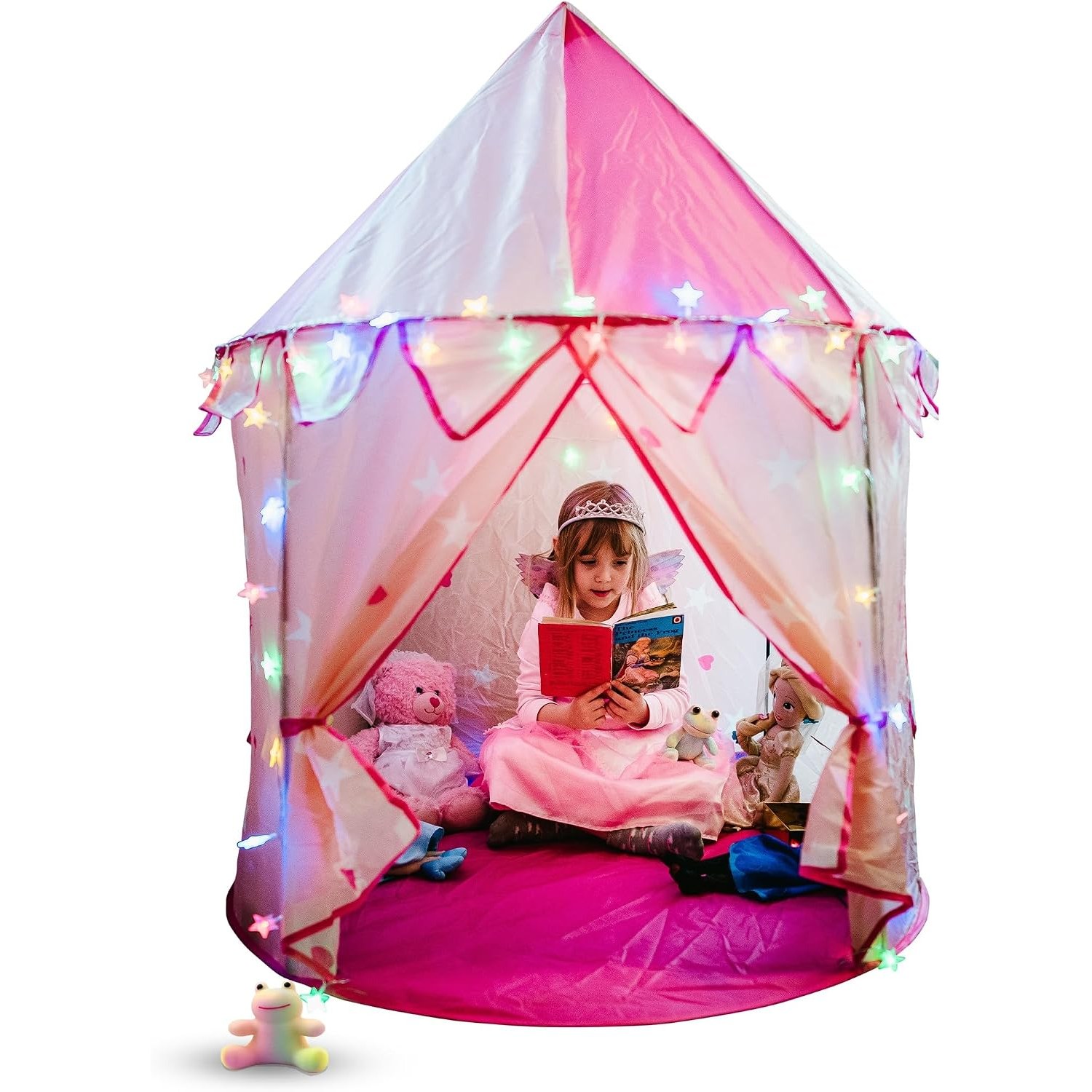
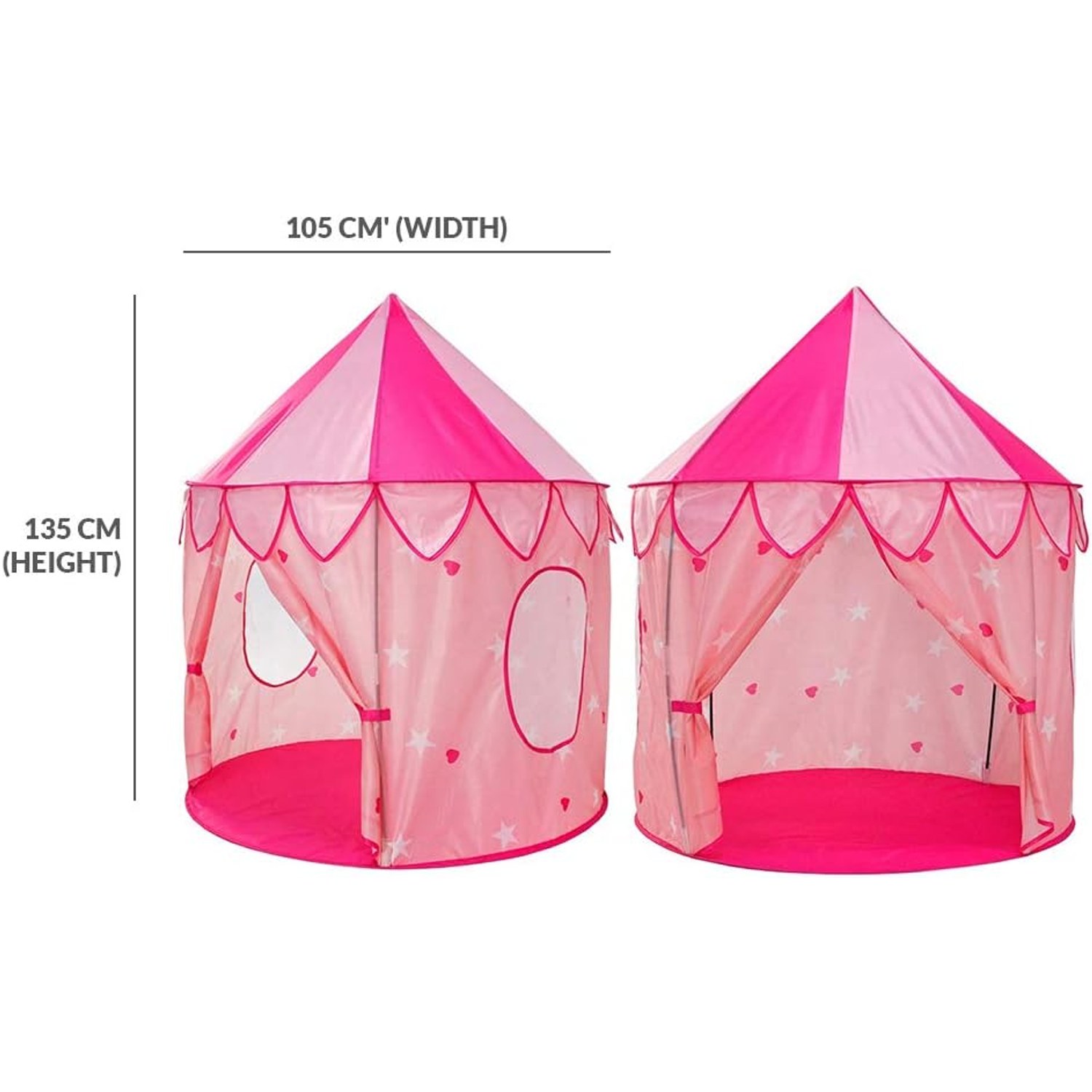
The Star Lights Play Tent for Girls is a 105 x 105 cm square tent that stands 135 cm high. In practical terms it takes about the floor space of an armchair and gives a young child enough headroom to stand up inside. Pink polyester canopy, aluminium frame, 1.12 kg all in.
How this one is built
The structure is straightforward. Aluminium poles slot together into a frame, and the polyester canopy goes over the top. Assembly is required, but it is the kind you do once with a cup of tea nearby and then repeat from memory.
Aluminium is the right choice at this size. Steel would be heavier than the fabric needs, and plastic poles tend to flex and split at the joints after a few dozen set-ups. Aluminium holds its shape, resists rust and keeps the finished weight down to 1.12 kg, which is why an adult can pick up the assembled tent and move it to a different room without taking it apart.
Polyester is the standard canopy fabric for a reason. It is light, it takes dye well so the colour stays bright, and it wipes clean when something gets spilled on it. It is not a heavy canvas and it is not meant to be. The trade-off is that it wants to live indoors.
The lights and the frog
Two things come in the box that lift this above a plain fabric shell.
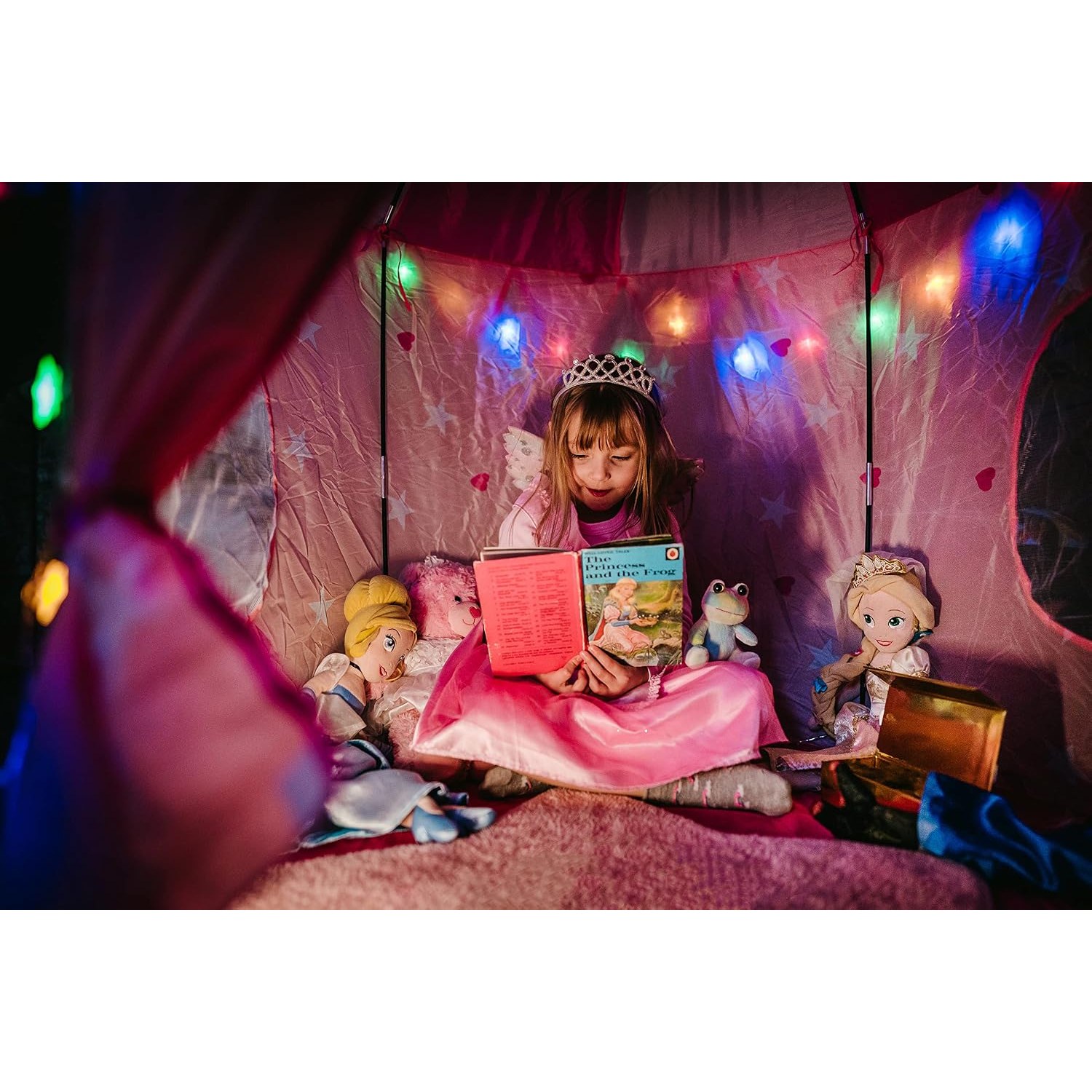
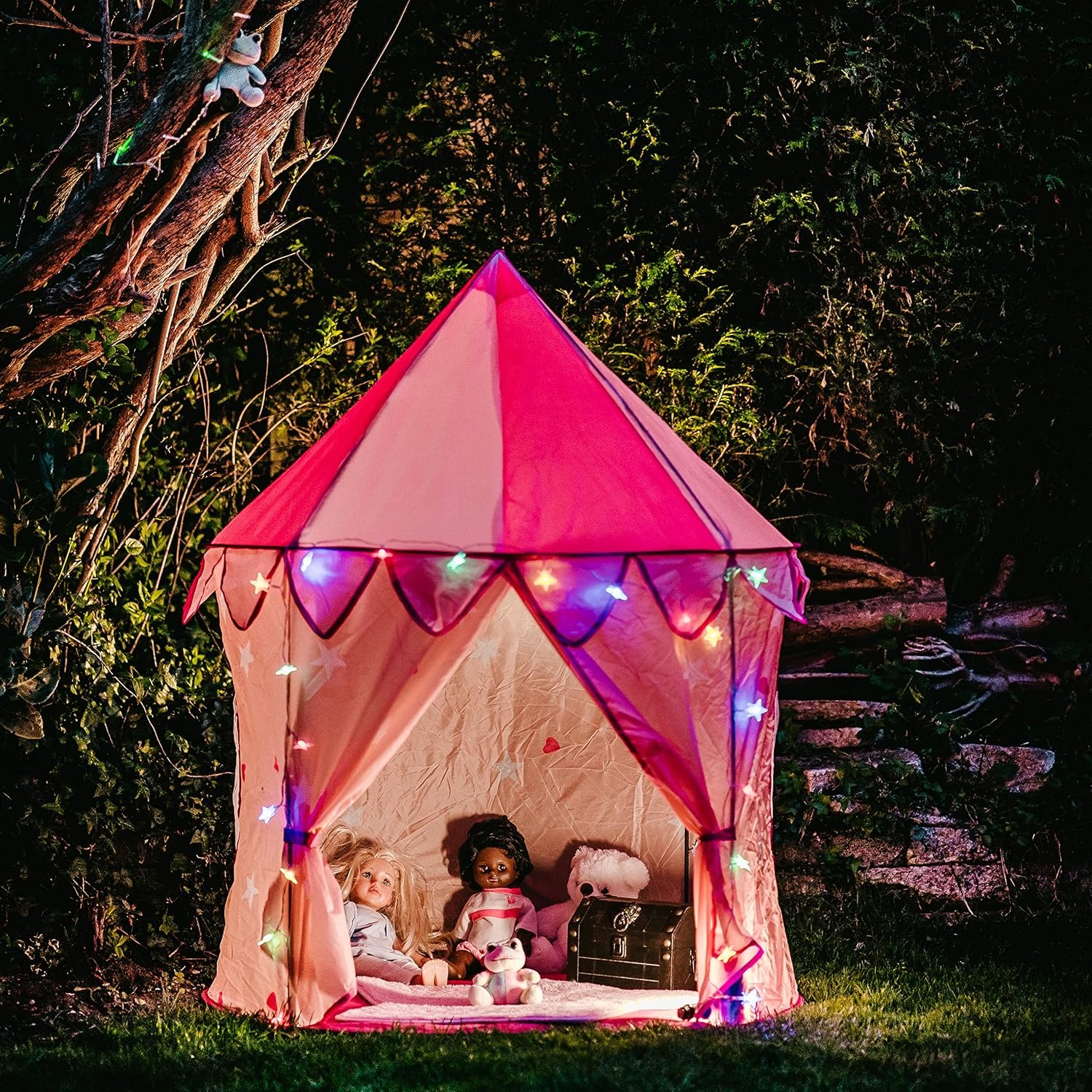
The first is three metres of multi-coloured star lights. You can wrap them around the outside of the frame, where they make the tent look like a deliberate feature in a bedroom rather than a toy that got left out. Or you can run them inside, where they throw a soft, low glow that is good for reading and good for the ten minutes before bed when everything needs to get calmer. Children generally have strong opinions on which is correct and will change those opinions regularly. The lights come off easily either way.
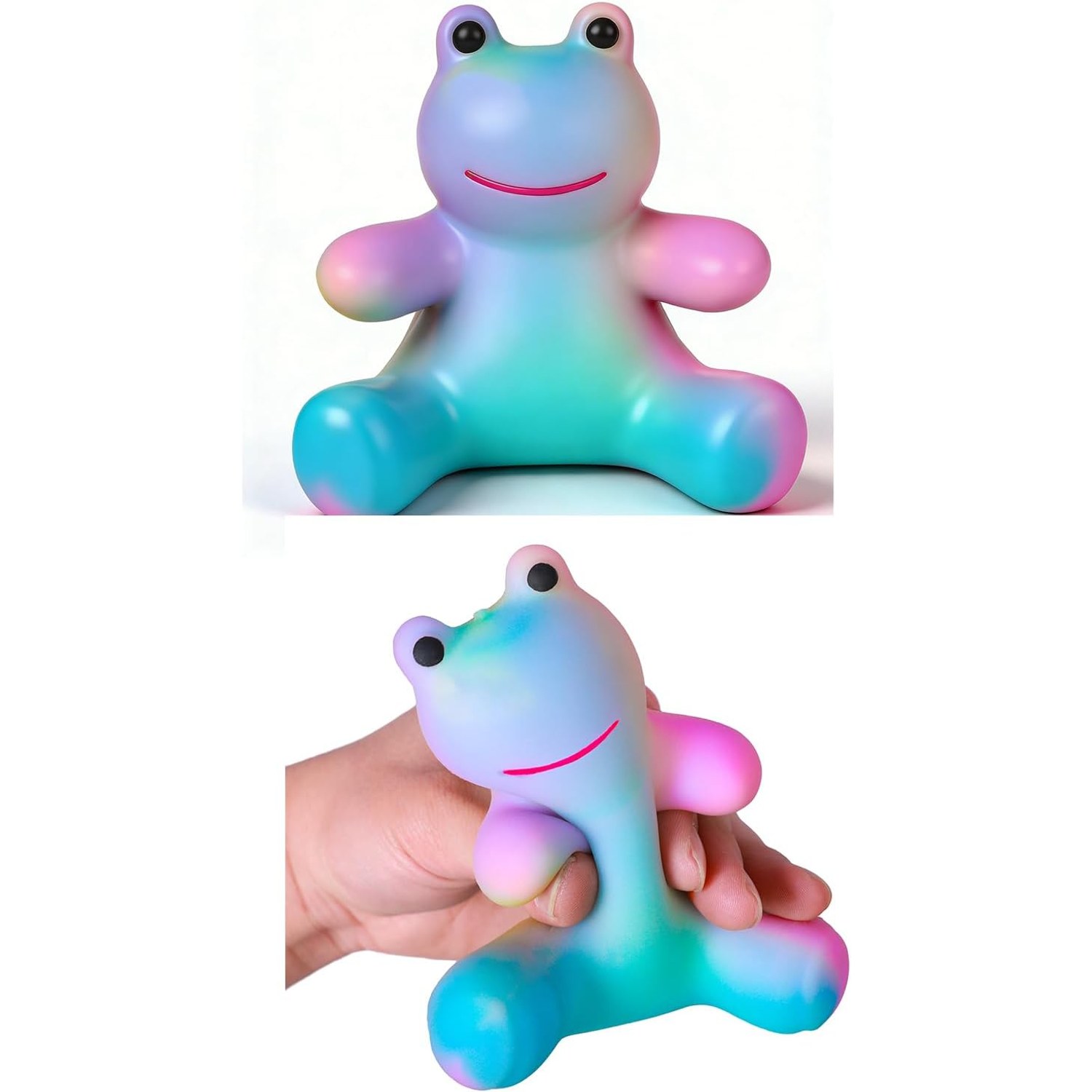
The second is a the maker soft toy. This sounds like a small thing. It is not. An empty tent is a fabric box, and children lose interest in fabric boxes. A tent with a resident has a story, and a story gives them a reason to come back tomorrow. The frog becomes the one who lives there, the one who needs tucking in, the one who guards the door.
The theme is princess and fairy tale, pink and soft, which suits dressing up, storytelling and pretend play. If your child is deep in a dragon phase, the frog usually gets recast as something fiercer within a week.
Who it suits
This works best for pre-school and early primary ages, which is the window where pretend play is at full strength and a child is small enough that 135 cm feels like a proper room. The supplier describes it as a kids item with a princess pretend-play theme. A precise manufacturer age band is not clearly stated in the maker's details we hold, so use your own judgement about your child and supervise younger ones around the light string.
It suits flats and smaller homes particularly well. A square metre in a corner is a manageable sacrifice, and because it packs into the supplied carry case, it does not have to be a permanent fixture. That makes it one of the more realistic options if you want the best indoor den for kids but cannot give up a room to it.
It also travels. Grandparents who want something to put out when the grandchildren visit, holiday cottages, a friend's house for a long weekend. A 1.12 kg parcel goes in a car boot without a thought.
Where it suits less well is outdoors as a regular habit. A dry patio on a still afternoon is fine. Leaving it on the lawn overnight is not. Rain, dew and wind are hard on lightweight frames and polyester, and the lights are not something you want sitting in a puddle.
Choosing between play tents
A few things actually matter when you compare options, and several things that get advertised do not.
Footprint against headroom. Some tents are wide and low, which is fine for crawling into but useless once a child wants to sit up properly with a book. A 105 cm square base with 135 cm of height gives a better balance. Check your corner with a tape measure before you order, including whether a nearby radiator or door swing will be in the way.
Frame material. This is the part that fails first on cheap tents. Aluminium poles outlast plastic ones by a wide margin, and they weigh less than steel. If a listing does not say what the frame is made of, assume the worst.
Whether it packs away. A carry case sounds like a throwaway detail until you own a toy that has no home. Tents that cannot be stored neatly end up either permanently in the way or permanently in the loft. The case is the difference between the best portable play tent and a one-season purchase.
What is actually included. Lights and a soft toy in the box mean nothing extra to buy before a child can use it. That matters most when it is a gift and the recipient is going to open it in front of people.
Cleaning. Anything a child uses daily gets sticky. Polyester you can spot clean beats anything that needs dismantling and dry cleaning.
Looking after it
Spot clean the canopy with a damp cloth and a little mild soap, working one patch at a time, then let it air dry completely before you fold it. Do not machine wash it, do not bleach it, do not tumble dry it and do not iron it. Heat and agitation will distort the fabric and can damage stitching.
Wipe the aluminium poles with a dry cloth and make sure they are properly dry before storage. Take the light string off before any cleaning and keep the power unit well away from water.
Keep the tent out of long spells of direct sunlight. Polyester holds colour better than most fabrics, but months of afternoon sun through a window will lighten any dye eventually. Moving it a metre back from the glass solves most of it.
When you pack it down, separate the poles, fold the canopy loosely rather than creasing it into hard lines, and put everything back in the carry case. Store it somewhere dry at normal room temperature.
Setting it up well
A tent in the middle of a room gets knocked over. A tent in a corner gets lived in. Pick a spot with a flat floor, away from stairs, radiators and furniture with hard edges.
Add a small rug or a folded blanket inside and two cushions. That one step does more for how much it gets used than anything else, because a bare floor is not somewhere a child wants to sit for twenty minutes. Put a couple of books in there and leave the frog on guard.
Then leave it alone. The quickest way to kill a den is to keep going in and checking on it.
The short version
This is a 105 x 105 x 135 cm pink play tent with a polyester canopy on an aluminium frame, weighing 1.12 kg. Assembly is required and it takes a few minutes. Three metres of multi-coloured star lights, a the maker soft toy and a carry case are included.
It is an indoor tent first, light enough to move between rooms, small enough for a flat, and complete enough out of the box to work as a gift with nothing else to buy. If you want to give a child a corner that is genuinely theirs without redecorating a room, this does the job.