
The complete guide
Choosing a Playhouse Tent That Actually Gets Used
The tent that sits unused in the cupboard
Most families have owned one. A play tent comes out of the box, gets ten minutes of excited attention, then spends the next two years folded behind the vacuum cleaner. It is rarely the child's fault. It is usually because the tent was too small to sit up in, too dark inside, too fiddly to put back together, or built around a single doorway that only one child could use at a time.
The tents that survive have a few things in common. They are tall enough for a child to kneel or sit without stooping. They let light and air through so the inside does not feel like a sauna. They have somewhere to put the books and torches that always end up in there. And if there is more than one child in the house, they have more than one way in.
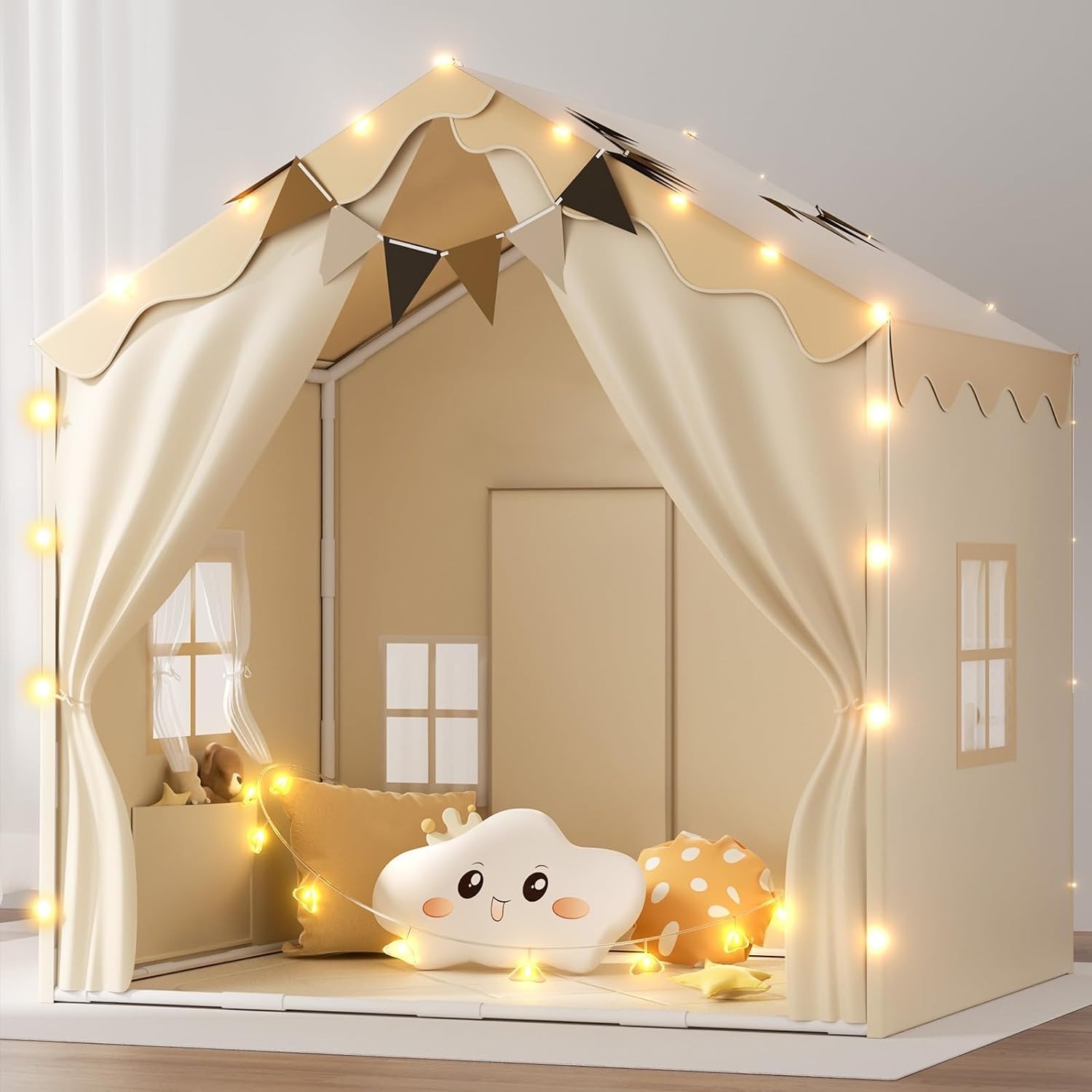
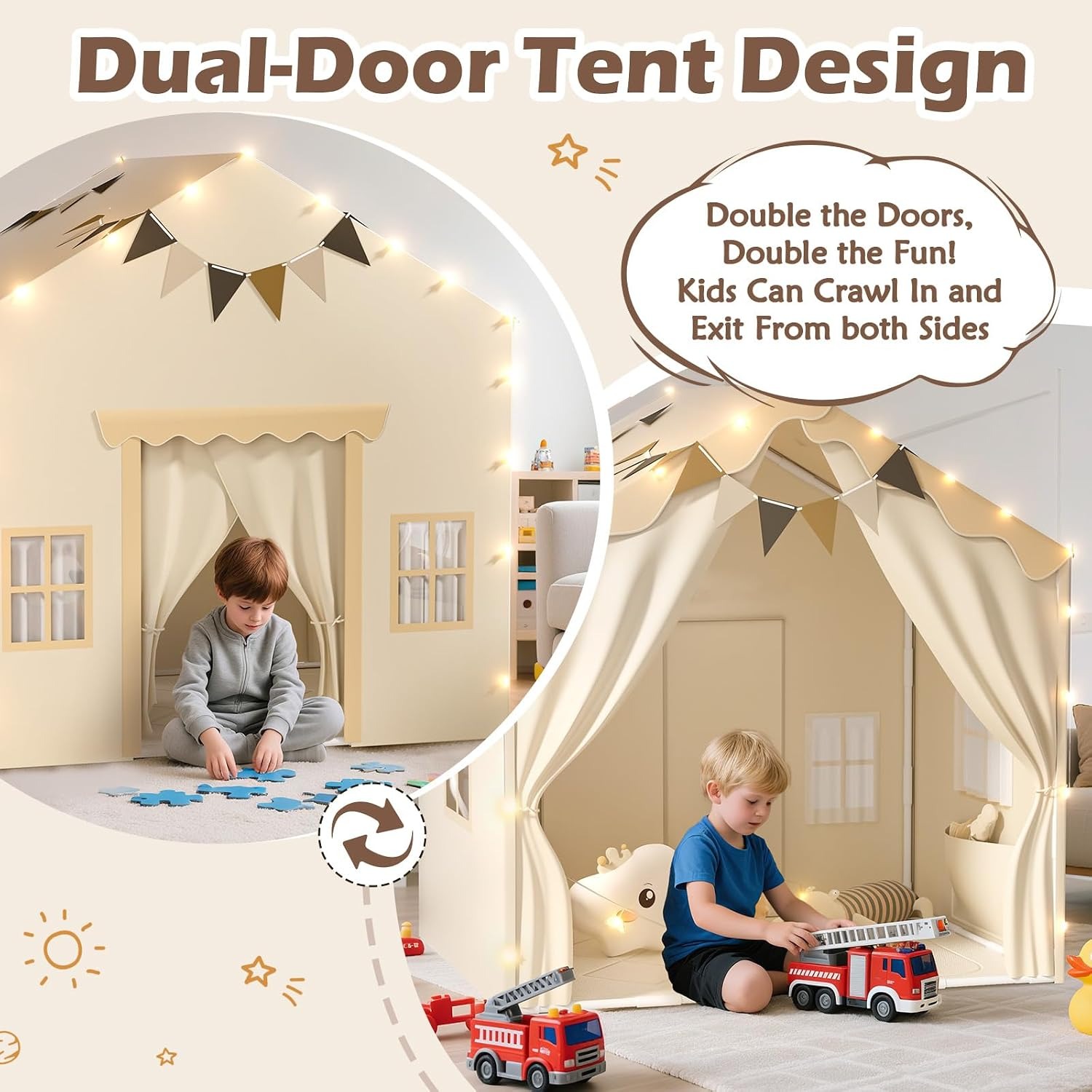
This double door playhouse tent is built around that last point, and the rest of the design follows from it.
How a two-door layout changes the play
Think about what children actually do with an enclosed space. Younger ones crawl in, settle, and want the option to see out. Older ones use it as a base, which means running in and out repeatedly, often with a friend or sibling in tow.
A single-door tent handles the first behaviour fine and the second badly. Two children at one doorway means one of them is waiting. With an entrance at the front and another at the back, there is no queue. One child goes in one side while another comes out the other, and the whole thing starts to feel like a route rather than a cul-de-sac.
That matters more than it sounds. The games get longer, which is really the only measure of whether a play tent was worth buying.
Space, height and why both matter
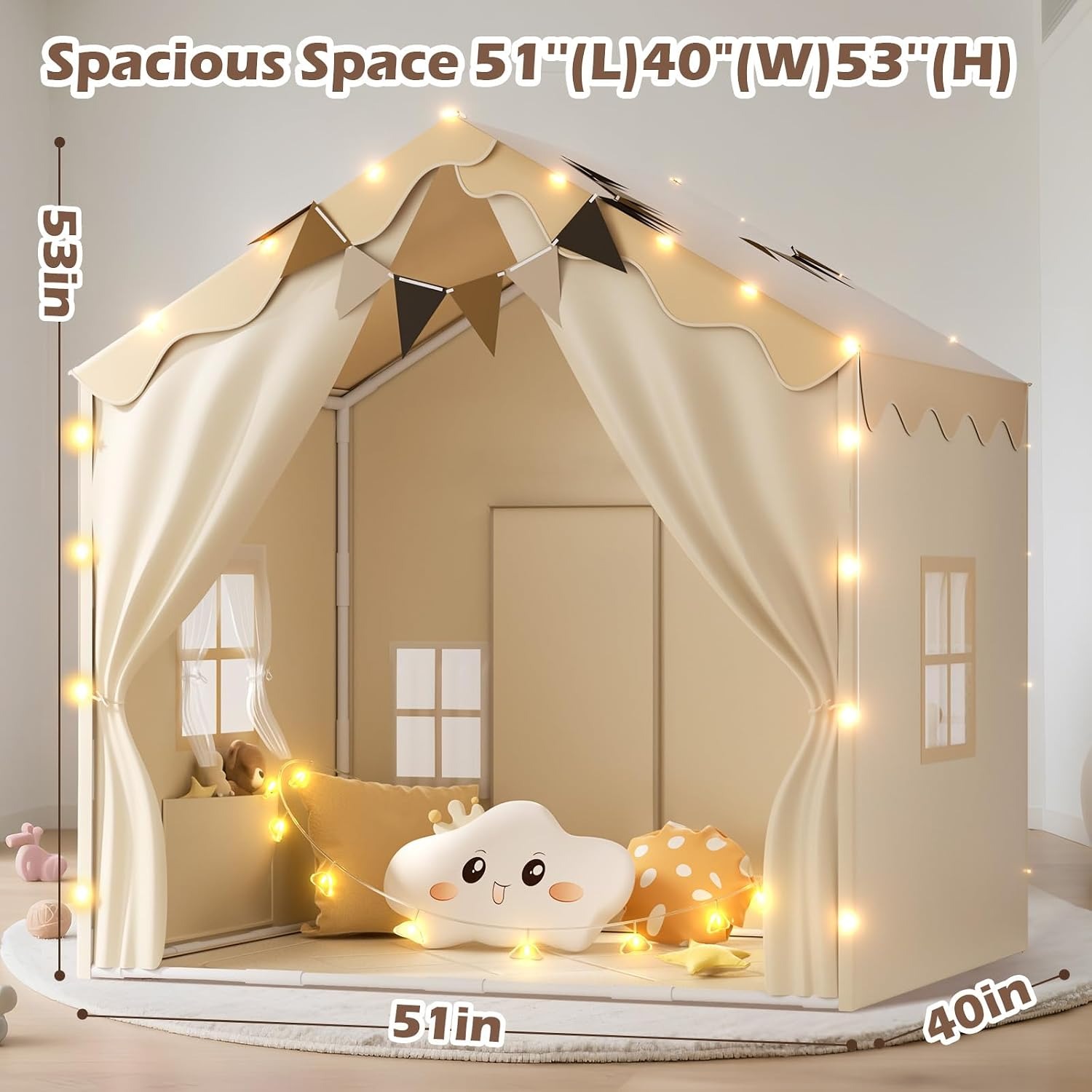
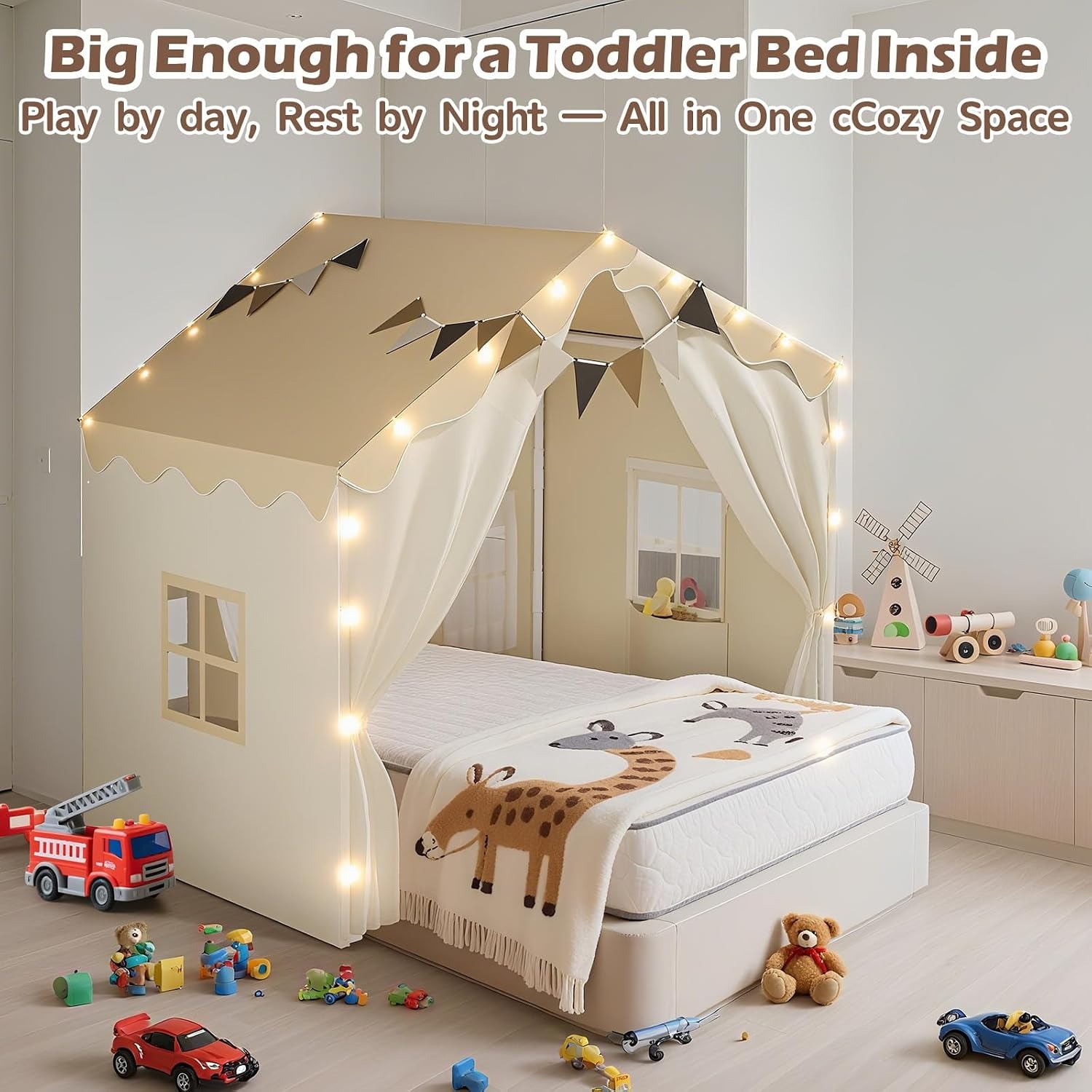
The listed size here is 53 inches long, 40 inches wide and 51 inches high. The width and length tell you how many children can sit inside. The height tells you whether they will want to.
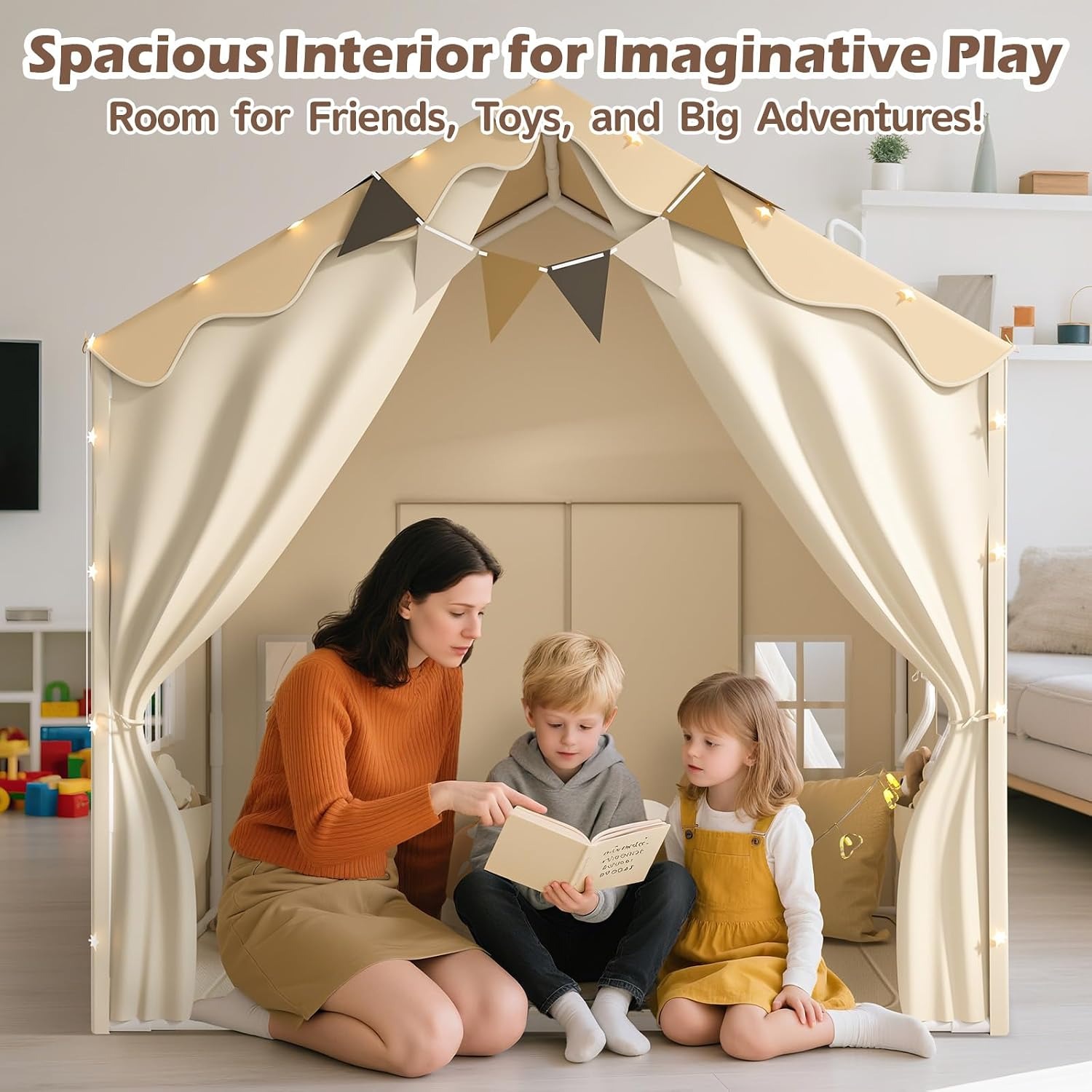
A tent a child has to crouch in gets used for a short burst and then abandoned. At 51 inches, most primary-age children can kneel upright inside, and younger ones can stand. An adult can get in for a bedtime story, though realistically you will be sitting cross-legged rather than lounging. Three or four children fit for a game, which is the number that usually turns up for a playdate.
Before you order, put a tape measure on the floor where you plan to put it. Mark out the footprint and leave a bit of clearance on each side so the fabric is not pressed against furniture. Tents look smaller in photographs than they do in a living room.
Air, light and being able to see in
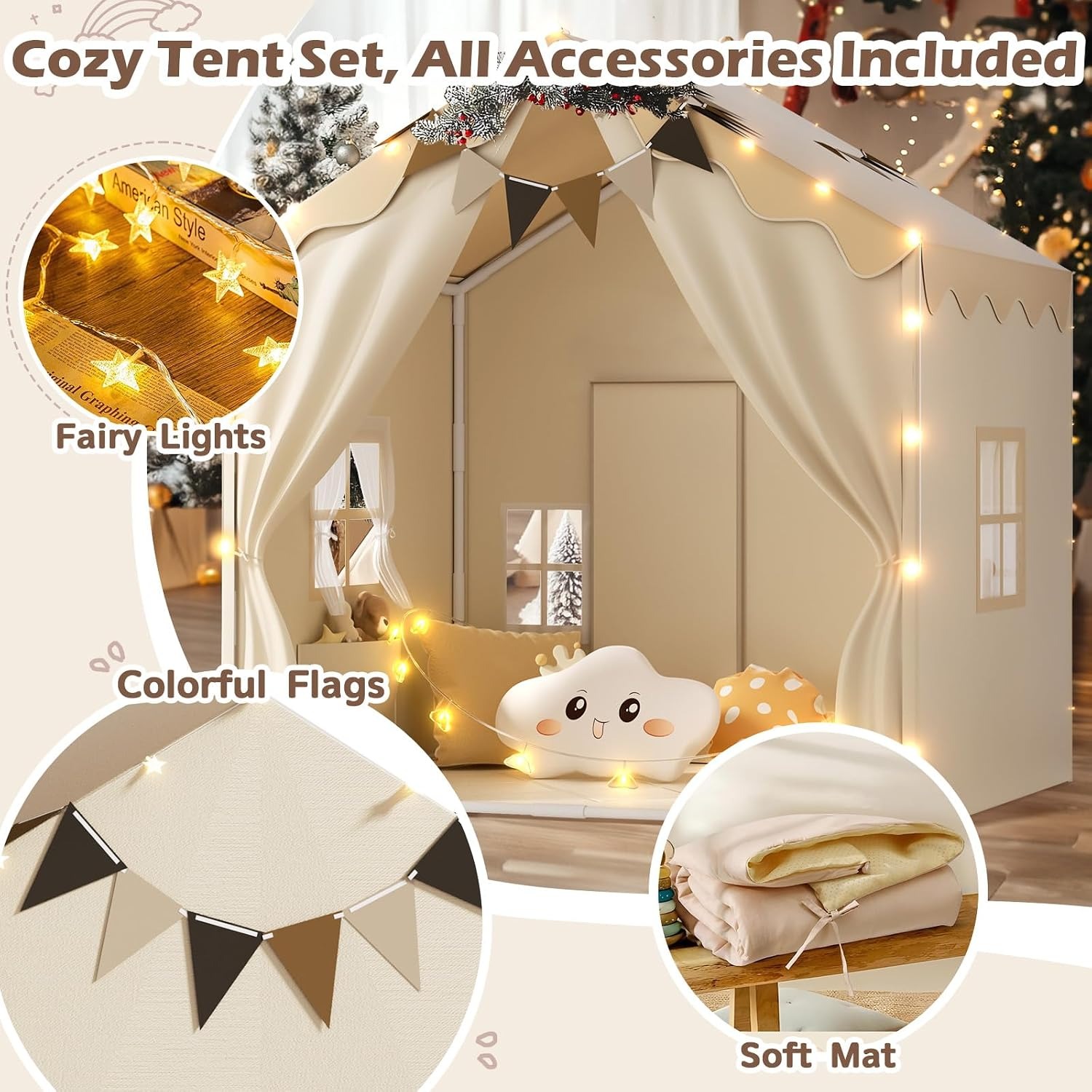
Four mesh windows run around this tent. They do two separate jobs, and both of them are the sort of thing you only notice when they are missing.
The first is airflow. A sealed fabric box with a child inside gets warm quickly, especially in summer or near a radiator. Mesh keeps air moving so the inside stays comfortable and the child stays in there longer.
The second is visibility. Parents of younger children want to glance across the room and see what is happening without lifting a flap and interrupting the game. Mesh panels give you that. If you are comparing options and you have a young child, a play tent with windows is worth prioritising over a solid-walled one for exactly this reason.
The lace curtains add the cottage look and give children a choice. Rolled up and tied, the tent is open and bright. Let down, it is enclosed and private. Some children want one, some want the other, and most want to switch depending on their mood.
The pockets are not a gimmick
Two large side pockets are stitched into the walls. This is the sort of feature that gets a single line in a product listing and then turns out to be one of the best parts.
Here is why. Anything a child brings into a tent stays in the tent. Books, torches, soft toys, a half-eaten biscuit. Without storage, all of it lands on the floor, and within a week the tent is a pile rather than a place. With pockets at arm's reach, children put things back because it is easier than not. It is a small bit of design that makes tidying up a habit instead of a battle, and it is one of the features that pushes this toward being a genuinely practical indoor den for children rather than a novelty.
Setting it up and putting it away
Assembly is required. The poles slot into fabric sleeves and the tent takes shape as you build it. The first time is the slowest because you are working out which pole goes where. After that it is quick.
A few things make it easier. Clear a flat space before you start and lay all the parts out so you can see them. Work on carpet or a rug if you can, because it stops the poles sliding around. Do not force anything that feels stuck, as plastic poles will flex but they do not like being bent hard against resistance.
Taking it down is the reverse, and because the poles come out cleanly, the whole thing folds flat for storage. That makes it realistic to put the tent up at the weekend and clear the floor on Monday, which is how a lot of families with small living rooms actually use one.
Keeping it clean
The fabric is machine washable, which is the feature that justifies itself the first time a drink gets knocked over inside.
For day-to-day marks, a damp cloth with a little mild soap handles most things. For a proper clean, take the poles out first, then wash the fabric on a gentle cool cycle with a mild detergent. Skip the bleach and skip high heat in the dryer. Air drying is slower but it keeps the panels in shape and stops the stitching loosening.
The important part is making sure it is completely dry before you fold it. Fabric packed away even slightly damp develops a musty smell that is very hard to shift. Hang it over an airer overnight and check the seams before storing.
Who it suits, and who it does not
This works well for families with more than one child, for anyone setting up a reading corner, and for parents who want something that looks reasonable in a shared living space rather than screaming toy at full volume. The khaki colour and cottage styling help with that.
It is less suited to rough outdoor use. There is no waterproof rating given, so treat it as an indoor product that can go outside on a dry day. It is also a fabric structure, not play equipment, so children should be inside it rather than climbing on it.
If your child is at the very young end of the young child range, supervision is sensible, as it is with any tent.
The short version
Two doors instead of one solves the problem that ruins most play tents, which is that children get in each other's way. Add a height a child can sit up in, four mesh windows for air and visibility, curtains that give them a choice between open and private, and two pockets that stop the floor disappearing under books, and you have a tent that keeps being used rather than one that gets packed away.
Measure your space, build it once properly, and wash the fabric when it needs it. That is more or less all it asks of you.