
The complete guide
Choosing a Princess Castle Play Tent, A Parent's Buying Guide
The problem with a bedroom that is just a bedroom
Most children's rooms are set up by adults, for adults. There is a bed, a wardrobe, a chest of drawers and maybe a desk. Everything in there belongs to the house. Nothing in there belongs to the child in the way a den does.
That matters more than it sounds. Give a child an enclosed space with a doorway and a roof and something changes in how they use the room. They crawl in with books. They drag in a torch. They invite a sibling in and then make up rules about who is allowed. It is the same instinct that produces sofa cushion forts and sheets draped over the dining table, and it is one of the most reliable forms of independent play there is.
A princess castle play tent is just a tidier version of that sheet over the table. The difference is that it stands up on its own, it looks like something rather than nothing, and you can put it away when you are tired of looking at it.
How this one is built
The construction here is deliberately simple. Lightweight PVC poles push into plastic joints to form a frame, and a pink nylon cover slides over the top. There are no screws, no bolts and nothing to tighten. You lay the parts out, work out which pole goes where, and the castle takes shape.
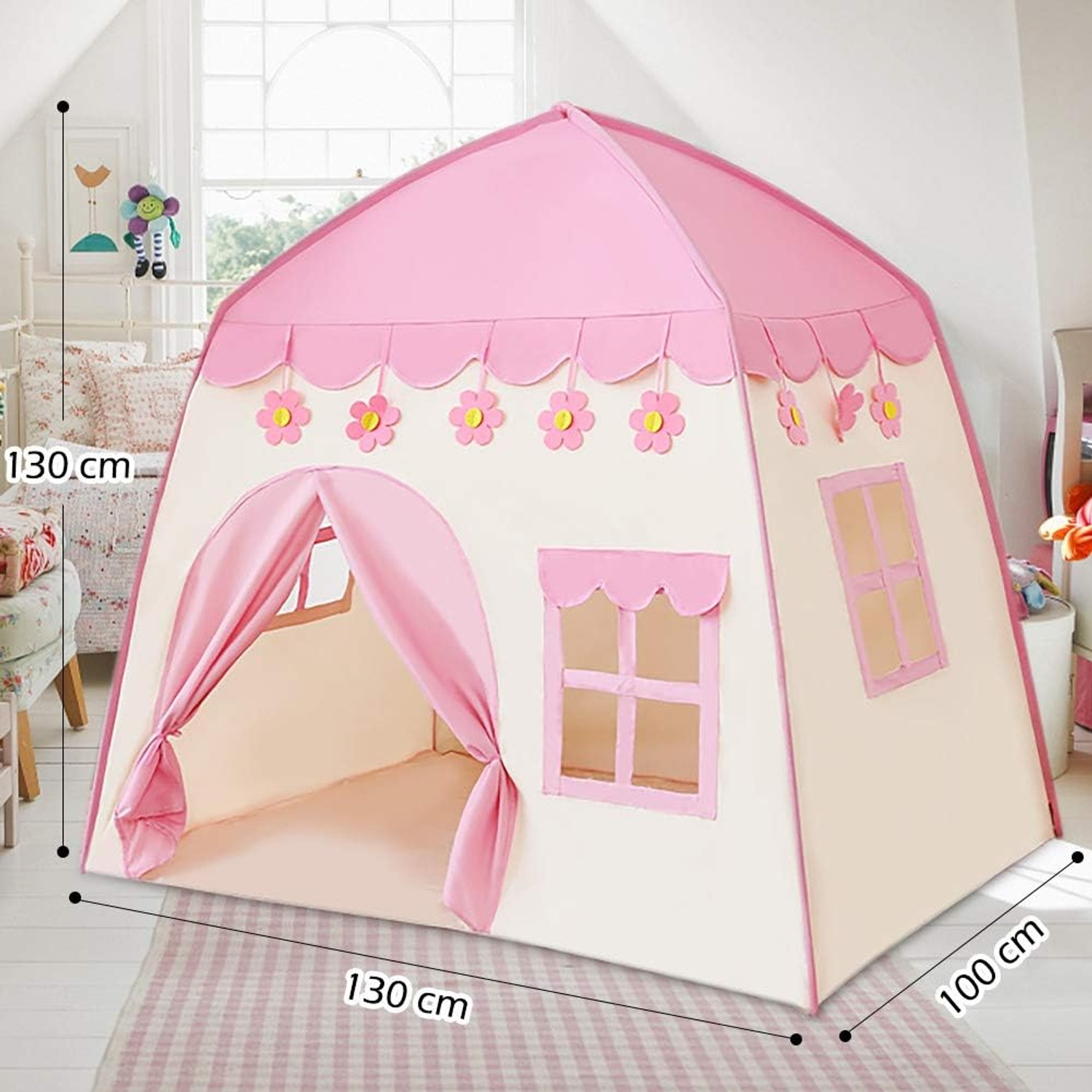
The finished size is 100cm deep by 130cm wide by 130cm tall. That is a useful middle ground. Small enough to sit in a bedroom corner without eating the whole floor, big enough that a young child can stand up inside and a couple of friends can get in together.
Total weight is 1.02 kg. That number tells you a lot. It means an adult can pick the whole assembled frame up and shuffle it across a room to vacuum underneath. It means a seven year old can carry the packed bag out to the car. It also means this is a play structure and not a piece of furniture, so it should not be climbed on or sat against.
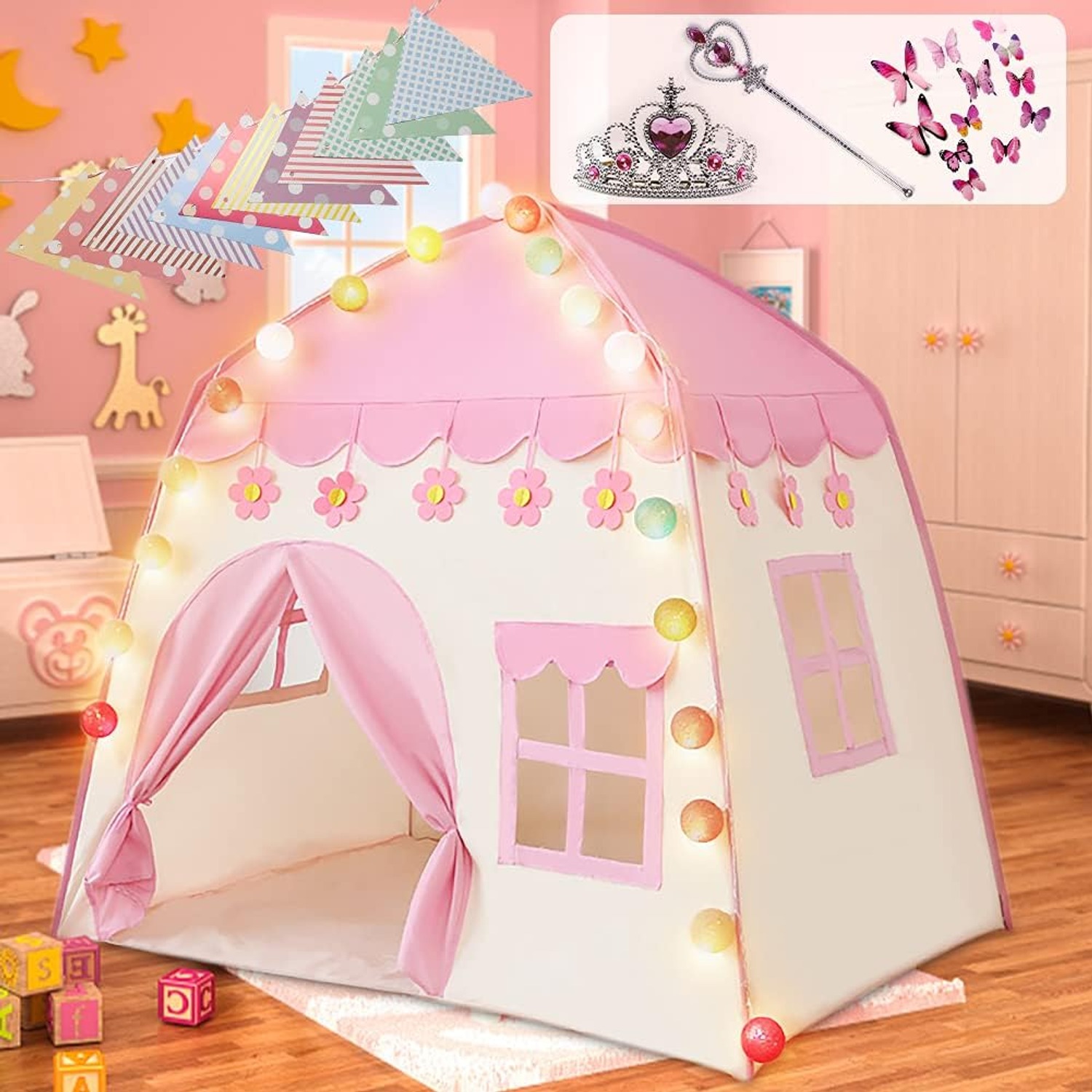
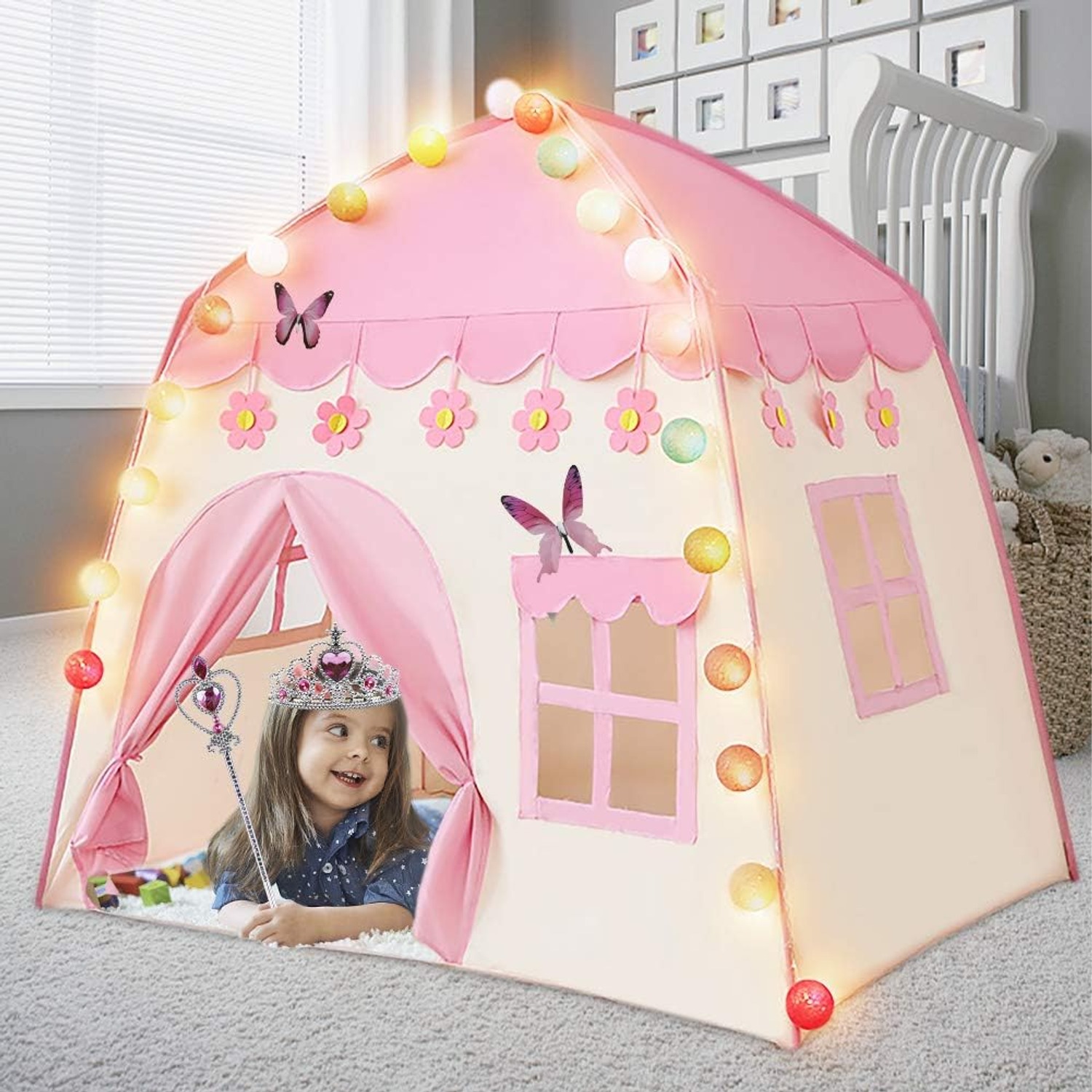
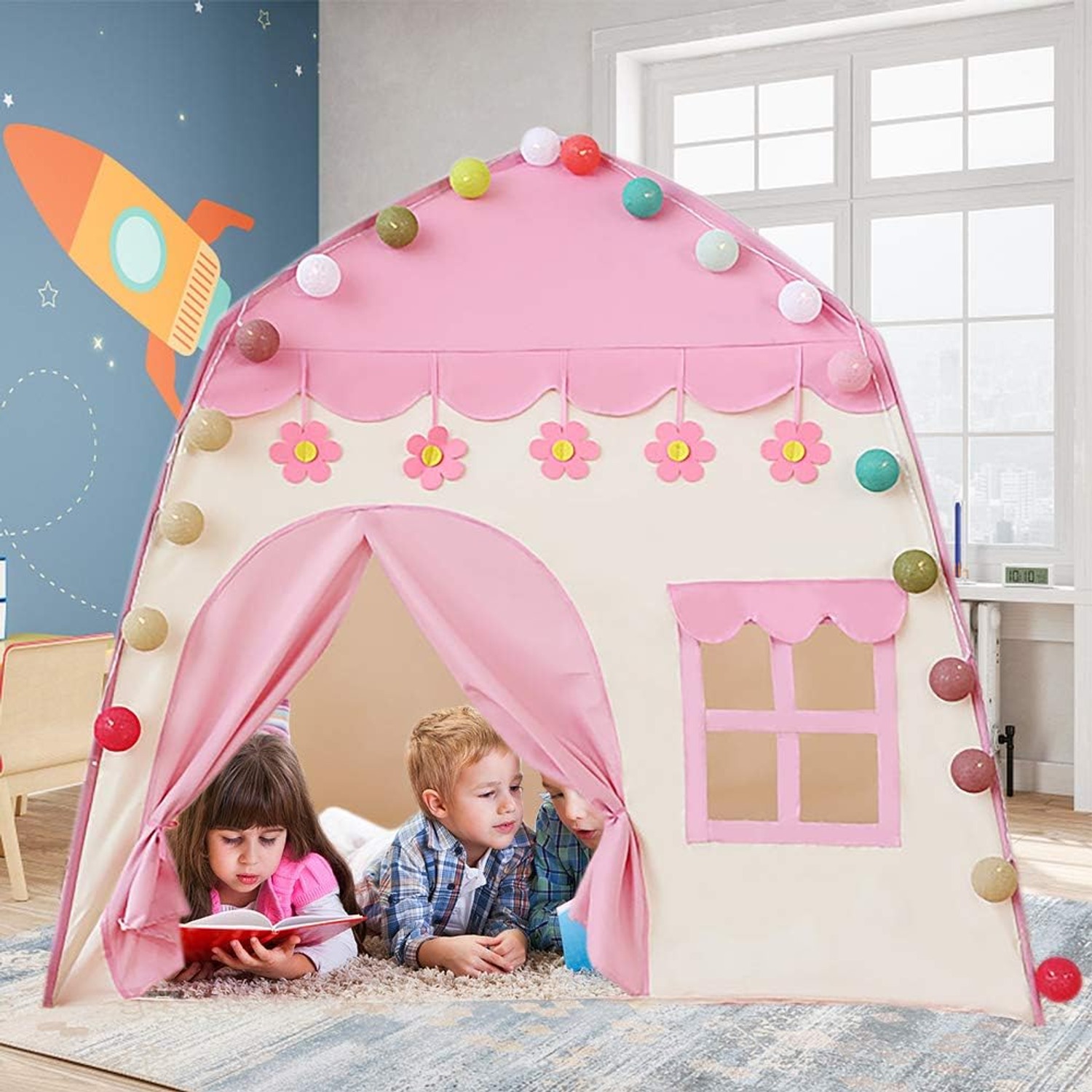
The canopy carries a flower and butterfly pattern with castle turrets at the top. Colour is pink and the style is listed as Style A.
The bits that make it feel like a present
Plenty of play tents are just fabric and poles. This one adds three things that change how it feels when a child opens the box.
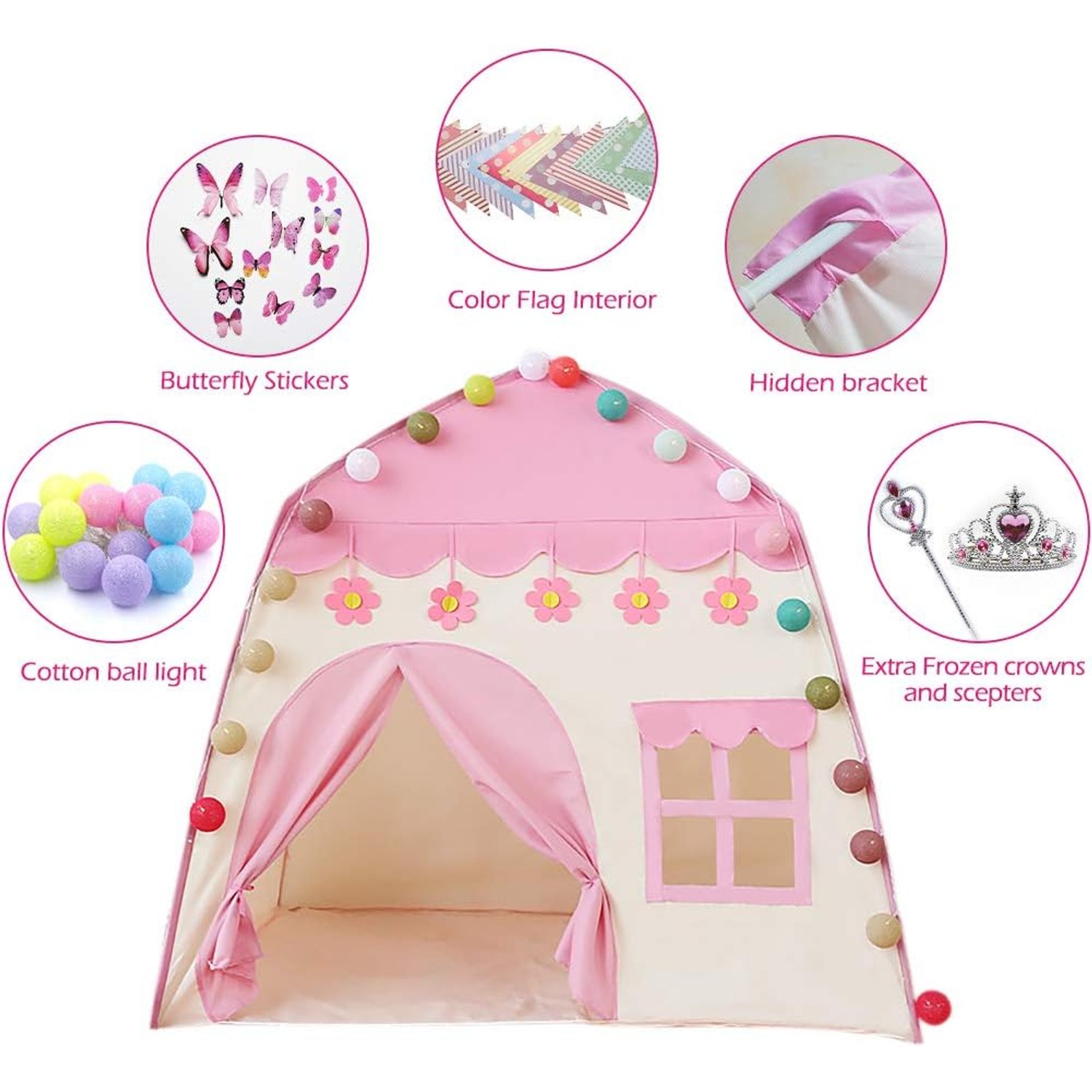
First, a string of cotton ball lights. These hang inside and give the castle a soft glow after dark. If you have ever watched a child sit in a lit den at bedtime, you will know how much this adds. It turns the tent from a daytime toy into an evening reading spot, which is where a lot of the real value sits.
Second, a princess crown. Third, a wand. Small items, but they mean the dress-up half of the play is ready immediately. A child does not need to go hunting for props. They put the crown on and the game starts.
For gifting, that completeness matters. A best dress up gift for girls tends to be one that works straight out of the wrapping, without a trip to another shop for the missing piece.
Who it suits
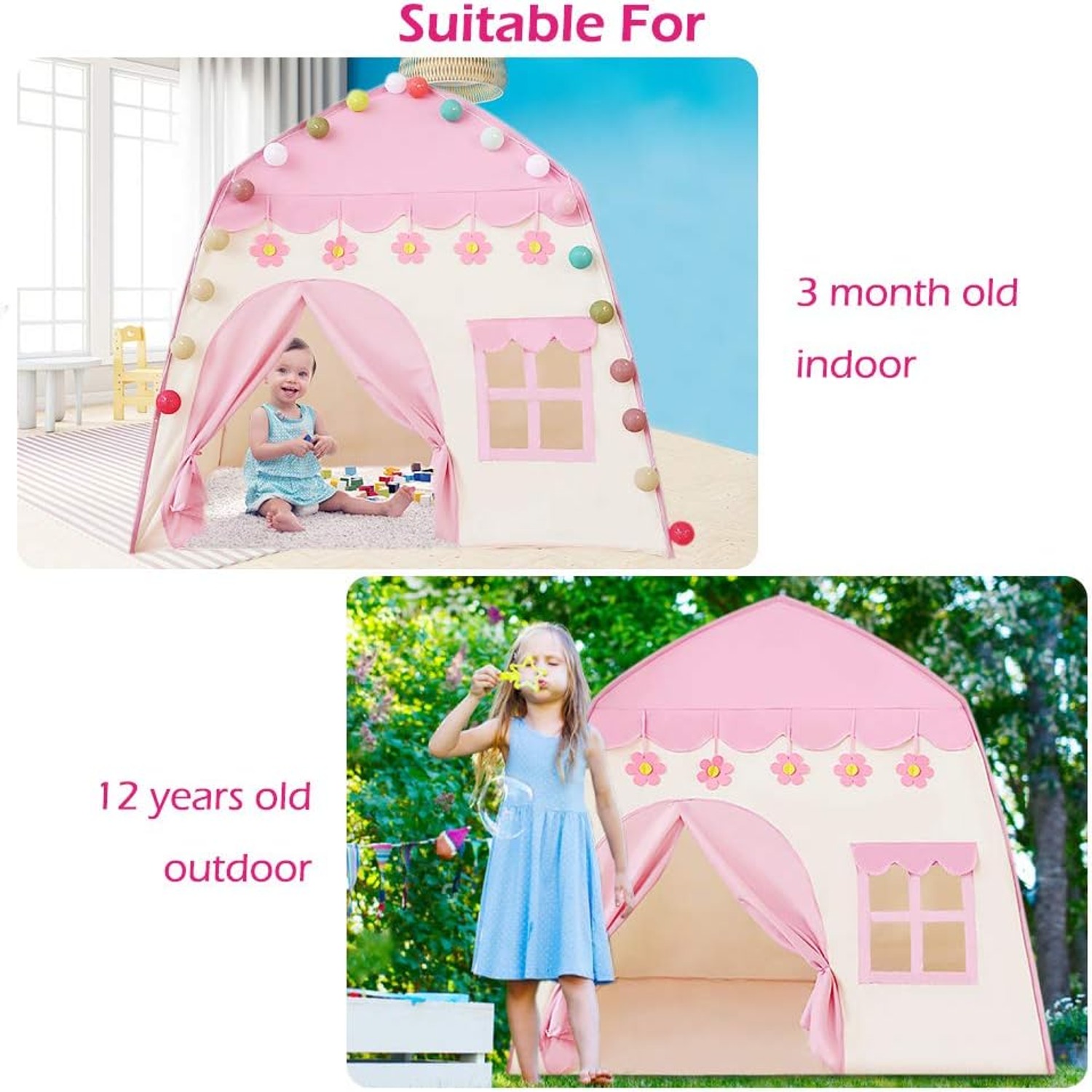
The manufacturer gives a broad recommended age range of 0 to 18 years. That is wider than most families will use it. In real homes, the sweet spot for a kids castle tent is roughly three to eight.
Under three, it works as a crawl-through space with an adult nearby. Young children adore going in and out of openings and they are not fussy about the theme. Keep the light string and any cord well out of reach at this age.
From about three to six is where it earns its keep. This is peak imaginative play, when a child will spend forty minutes being a queen holding a meeting with three stuffed rabbits. The crown and wand slot straight into that.
From six to eight it shifts. Older children treat it less as a stage and more as a retreat, somewhere to read, listen to an audiobook or hide from a younger sibling. That is a perfectly good second life for it.
Beyond that, most children outgrow a 130cm tent, though some keep it as a quiet corner for longer than you would expect.
How to choose between play tents
A few practical questions sort the field quickly.
Where will it live? Measure the corner. A 130cm square footprint needs clearance for the doorway too, so allow a bit more than the raw dimensions. If space is tight, prioritise something that packs down, which is why this one works as a best small play tent for apartments.
Will it stay up or go away? If it is coming down regularly, weight and pack size matter most. If it is permanent, you care more about how it looks in the room every day.
How much assembly are you willing to do? Pop-up tents are faster but harder to fold. Pole-frame tents like this one take a few minutes to build and come apart cleanly, which is a better trade if you plan to store it seasonally.
Does it need extras? A plain tent is cheaper. A tent with lights and dress-up pieces costs more but saves you buying them separately, and it gives a better unboxing moment.
Is it going to travel? At just over a kilogram with a carry bag, this one goes in a car boot without a thought. Grandparents' houses, caravans and holiday lets are all fair game.
Setting it up well
Lay every pole and joint out on the floor before you start. Sort the poles by length. Most frustration with frame tents comes from building three quarters of the structure and then realising a pole is in the wrong place.
Push each joint together firmly. A half-seated joint will pop out later, usually when a child leans on it. Once the frame stands, slide the cover over from the top and work it down evenly rather than yanking one corner.
Put something soft on the floor inside. A folded quilt, a small rug or two cushions. the maker's details does not list a floor mat, and a bare carpet is noticeably less inviting than a padded one. This is also the easiest way to make it function as a reading nook rather than just a tent.
Hang the lights last, once everything else is in place.
Looking after it
Wipe the nylon with a damp cloth and a little mild soap when it needs it. Let it dry completely in the air before folding, because packing damp fabric into a bag is how you get a musty smell.
Skip the washing machine. Nylon play tent covers are cut to fit a specific frame, and a wash cycle can stretch seams enough that the cover no longer sits properly. Spot cleaning handles crumbs, felt tip and the usual mishaps.
Keep the poles dry. PVC does not rust, but water trapped inside a hollow pole is not helping anything. Store them in the bag with the fabric.
Every month or so, give the joints a push to make sure they are still fully seated. It takes ten seconds and keeps the frame rigid.
The short version
This is a pink nylon castle on PVC poles, 130cm wide and 130cm tall, weighing just over a kilogram. It builds by hand with no tools, folds into a carry bag and comes with cotton ball lights, a crown and a wand.
It suits a child roughly three to eight who wants somewhere that belongs to them. It suits a parent who needs that somewhere to disappear when guests arrive. And because the dress-up pieces and lights are included, it works as a gift that is ready the moment the box opens.
If you want a castle tent that earns its corner of the room and then packs away without a fuss, this is a sensible choice.