
The complete guide
How to Choose a Princess Castle Play Tent That Actually Gets Used
Every child wants a door they can close
Most of a child's day happens in rooms designed around adults. The table is too tall, the sofa is too deep, the kitchen is off limits. A play tent fixes that in the simplest way possible. It makes one small patch of floor theirs.
That is the real reason a pink princess castle play tent earns its space. It is not just a toy. It is a boundary a child can set for themselves, which is a surprisingly big deal when you are four. They go in with a book and a torch and come out twenty minutes later having reorganised their entire soft toy collection.
Parents notice something else. A corner that used to be a pile of clutter becomes a defined zone. Toys drift into the tent instead of across the hallway. It is not magic, but it helps.
What this tent actually is
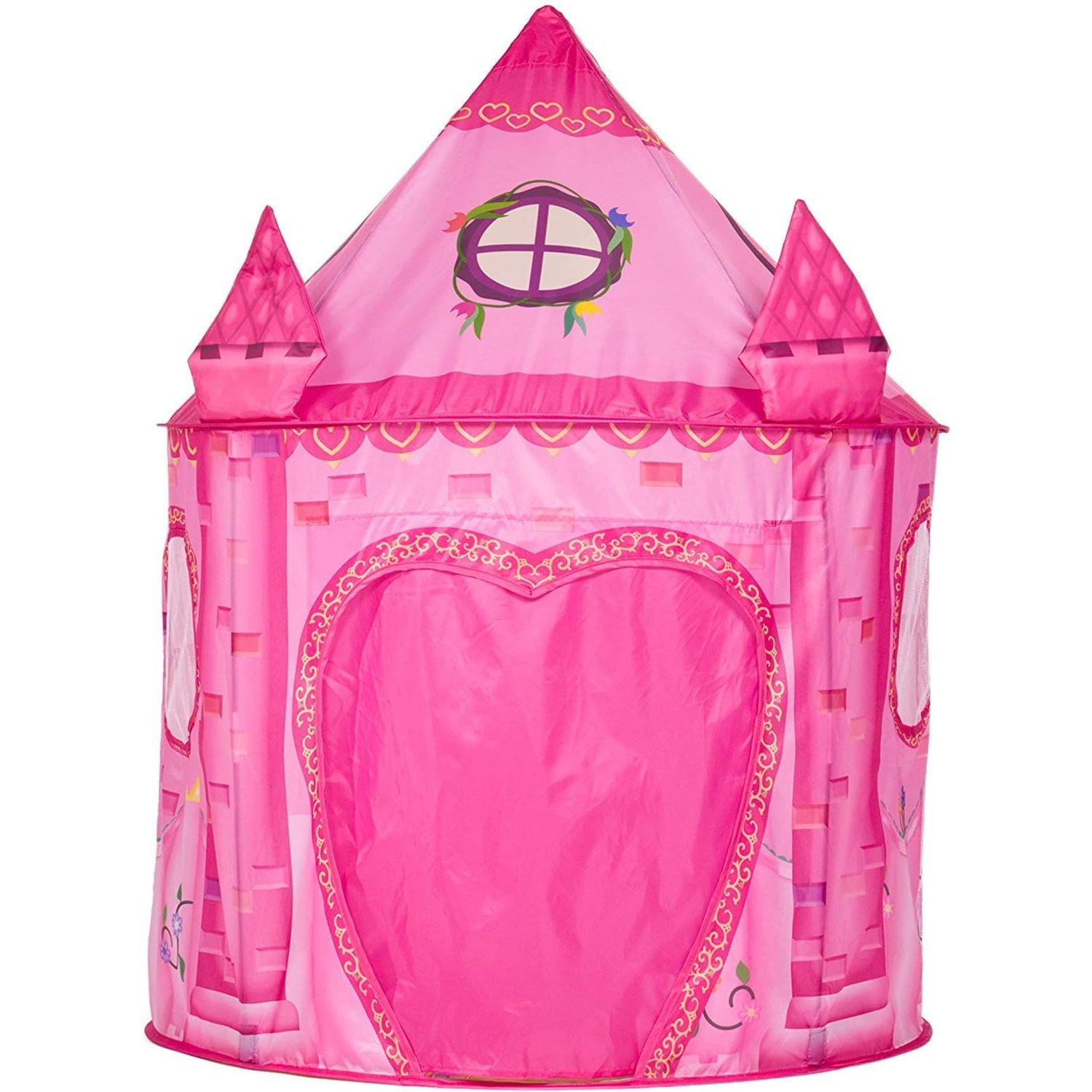
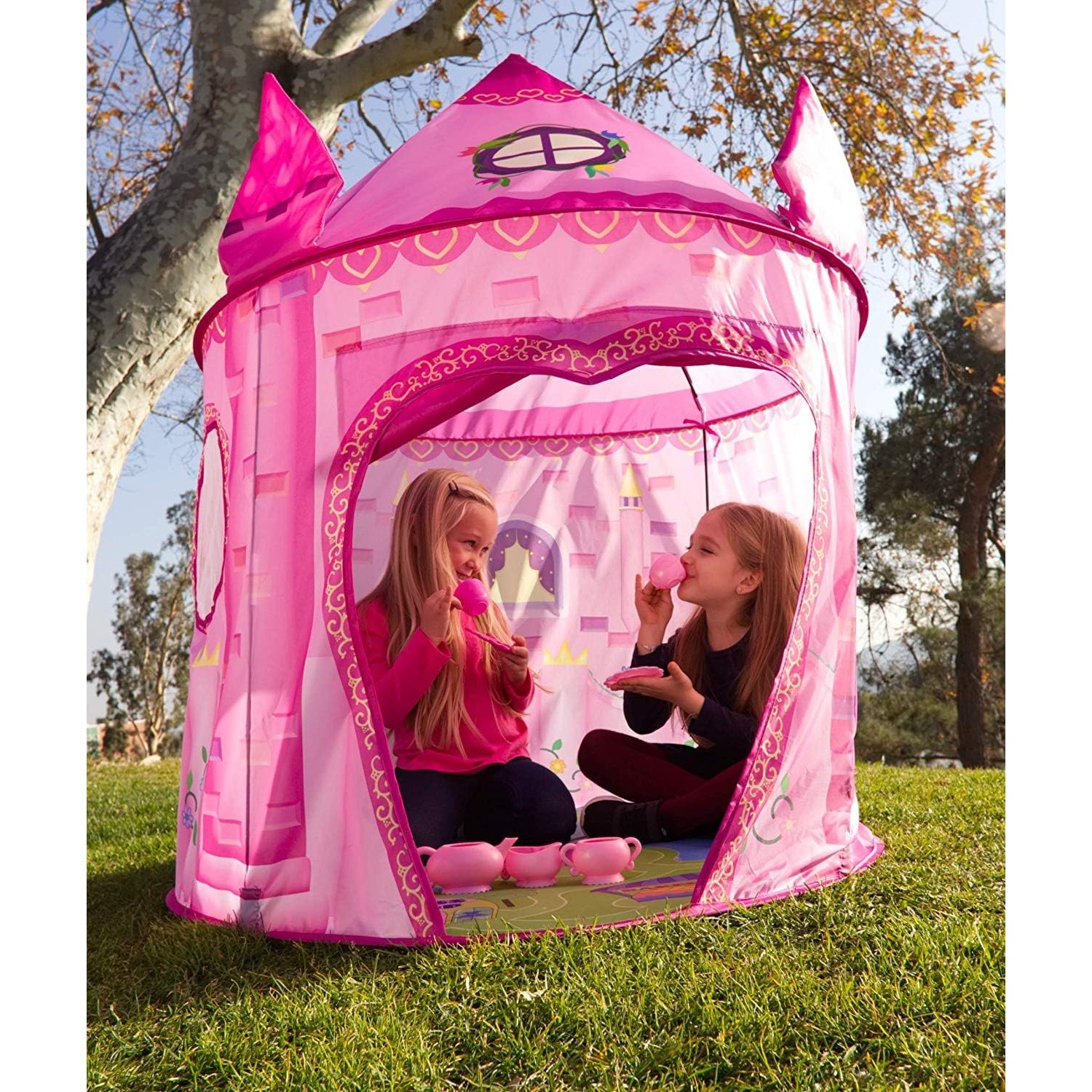
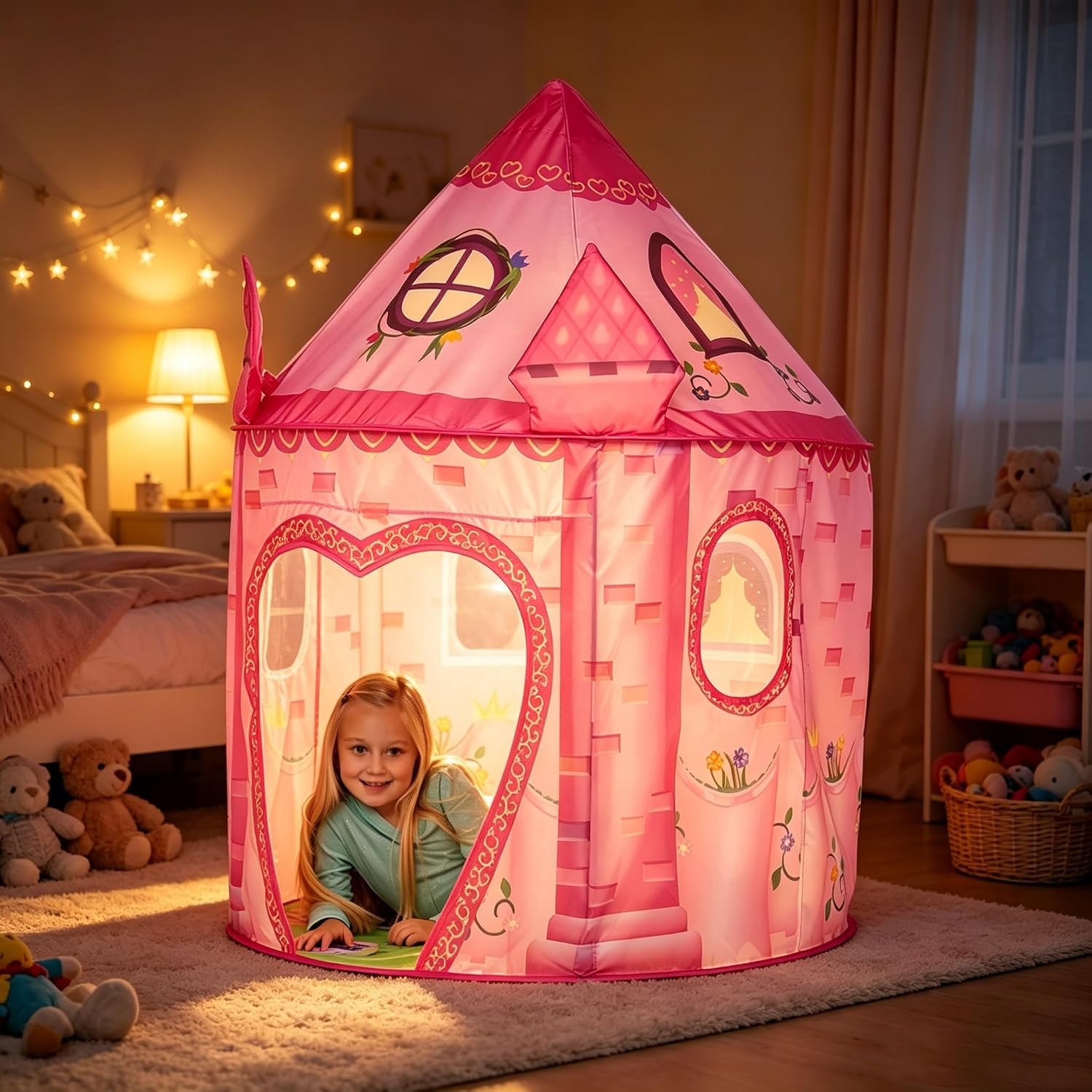
The open size is 100 x 100 x 135cm. That is a one-metre square base with a peak of 135cm, which puts it at the roomier end of children's play tents. A child can kneel comfortably, sit upright with space overhead, and most young children can stand under the middle.
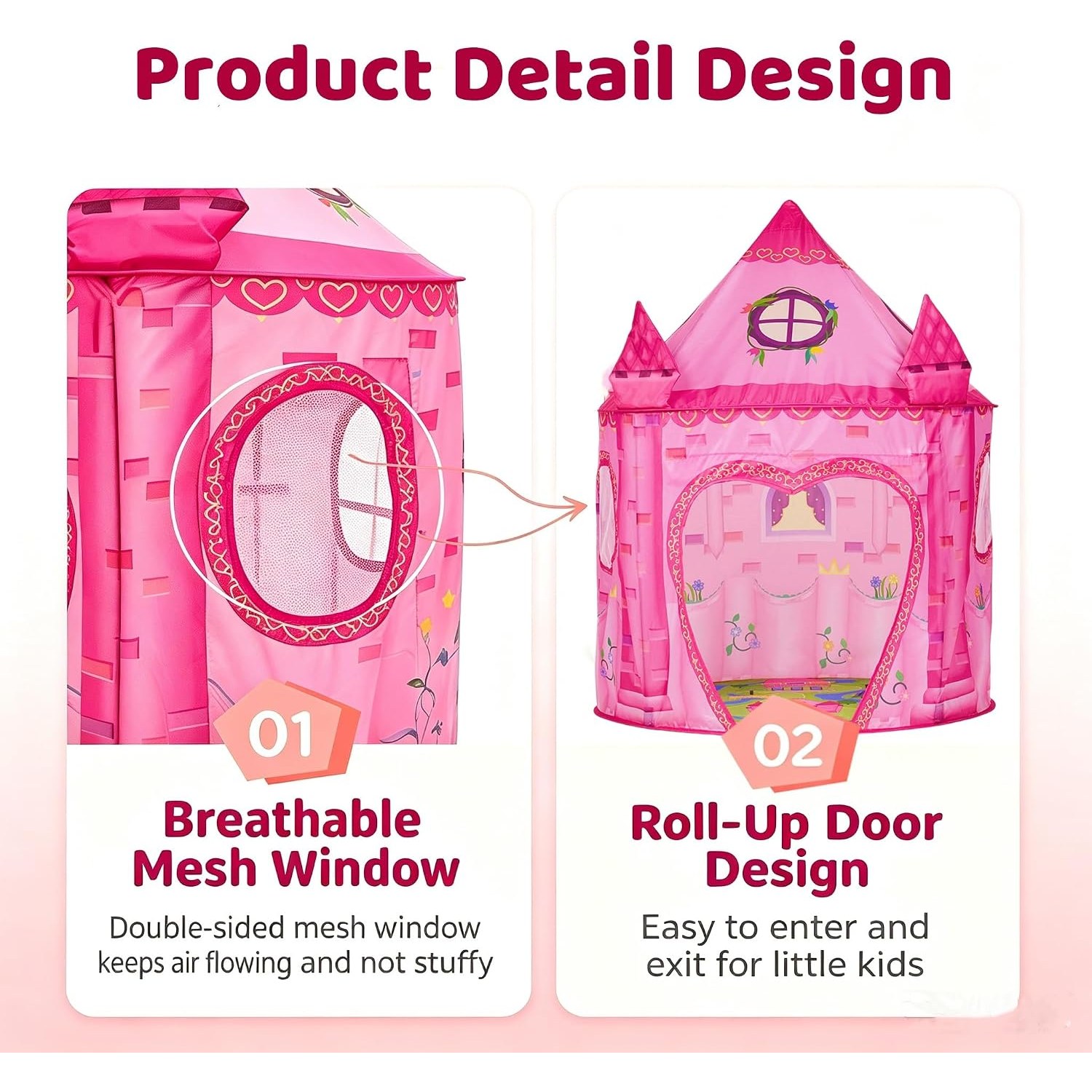
The canopy is 190T polyester with a flame-retardant finish. The frame is fibreglass and polyvinyl chloride, which means the poles flex instead of snapping when a child leans on a wall. The finished tent has no sharp or rough edges, which is the detail that matters most when a small person is diving in head first.
Total weight is 0.75kg. You can pick the whole thing up with one hand. Assembly is required, but no tools are involved, and instructions come with it.
How a play tent actually gets used
In our experience the use changes as the child grows, and that is worth knowing before you buy.
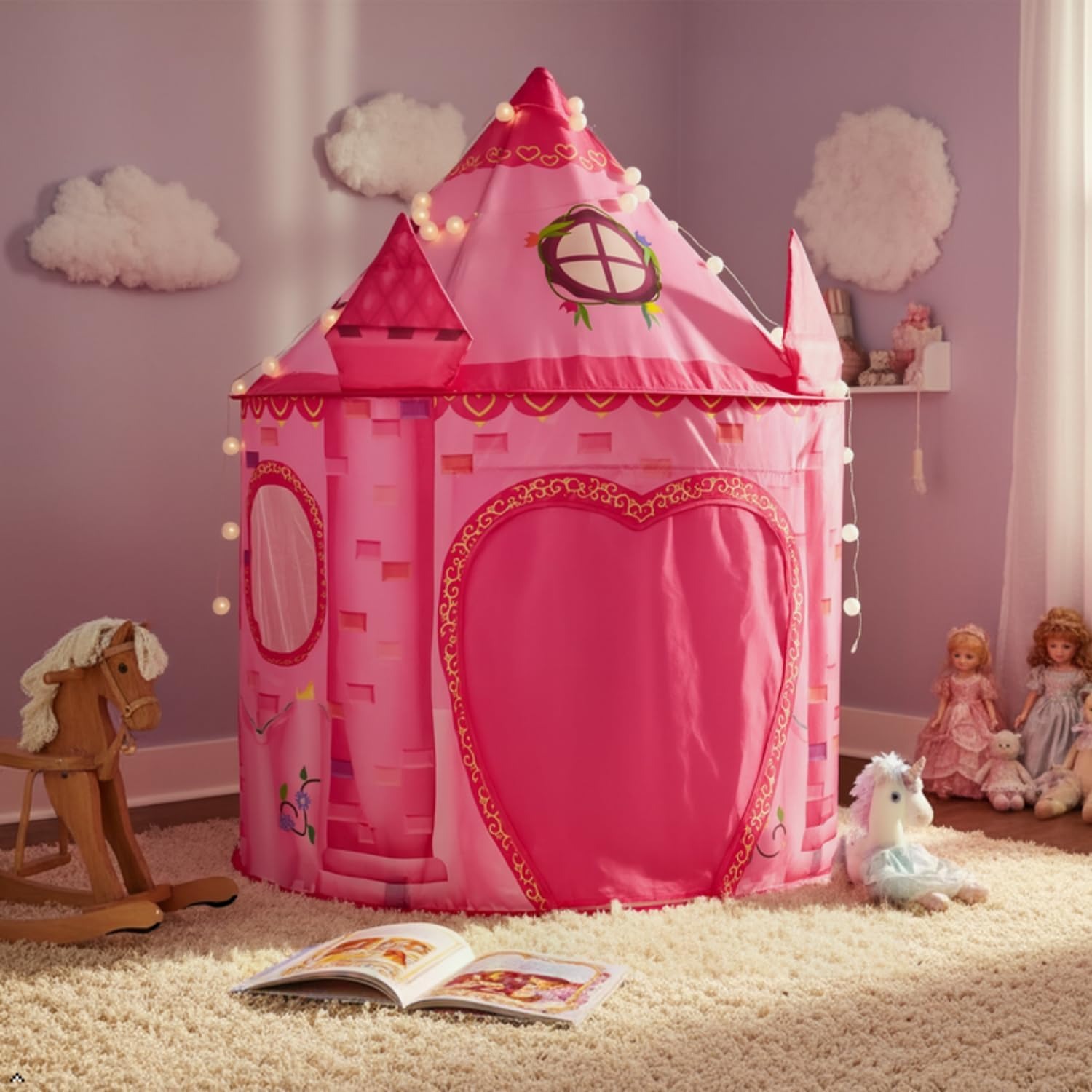
At two or three, it is a hiding place and a ball pit. Add a hundred or so plastic balls and the tent becomes a mini ball pool for a fraction of the price of a dedicated one. At four or five, it turns into a den for pretend play. Castles, shops, hospitals, spaceships, whatever the week calls for. By six or seven, it is often a reading nook. Throw a cushion and a blanket inside, clip on a small battery lantern, and it becomes the quietest spot in the house.
That is a long run for one item. Toys with batteries and sound effects rarely hold attention past the first month. An indoor castle tent for kids keeps working because the child supplies the story, not the product.
Picking the right size for your room
Measure before you order. One square metre sounds small on paper and looks bigger on your floor. Corners are usually the best home for it, since two walls do some of the visual work and the tent does not block a walkway.
Check your ceiling too if the tent is going under a sloped roof or a loft bed. You want a little clearance above the 135cm peak so the canopy is not pressed flat. Pressing it flat distorts the frame over time.
If you live in a flat or share a room, the folding feature is the deciding factor. Being able to pack it away in a minute means you do not have to give up a permanent metre of floor. That is what separates a foldable play tent that survives in a small home from one that gets quietly moved to the garage.
Safety points worth knowing
The flame-retardant polyester is a genuine plus, but treat it as one layer of protection rather than a licence to be relaxed. Keep the tent clear of radiators, heaters, candles, and plug sockets. Fabric plus heat is never a good mix.
Position matters as much as materials. Do not place the tent at the top of stairs, under hanging blind cords, near a window with a drop, or close to furniture that could topple. Keep the doorway unobstructed so a child can get out quickly if they want to.
With children under three, stay nearby. They are the age group most likely to pull on a pole or try to climb the frame. Showing them early that the tent is for crawling into, not climbing on, usually settles the issue.
Assembly, honestly
The first set-up is the slow one. You will unfold the fabric, work out which pole belongs in which sleeve, and consult the instructions at least twice. Give yourself ten quiet minutes without an excited child standing on the panels.
After that it is fast. Once you know the sequence, going from bag to standing castle is a few minutes of work. Packing down follows the same order in reverse. A good trick is to photograph the folded shape the first time, because remembering how it was folded in the factory is the fiddly part.
Store the poles with the fabric so nothing goes missing. A single lost pole makes the whole tent unusable, and spares are not included.
Keeping it clean and lasting
Spot cleaning is the whole routine. A damp cloth, a little mild soap, then let it dry in the open air before folding. Skip the washing machine, the tumble dryer, bleach, and the iron. Printed polyester does not react well to any of them.
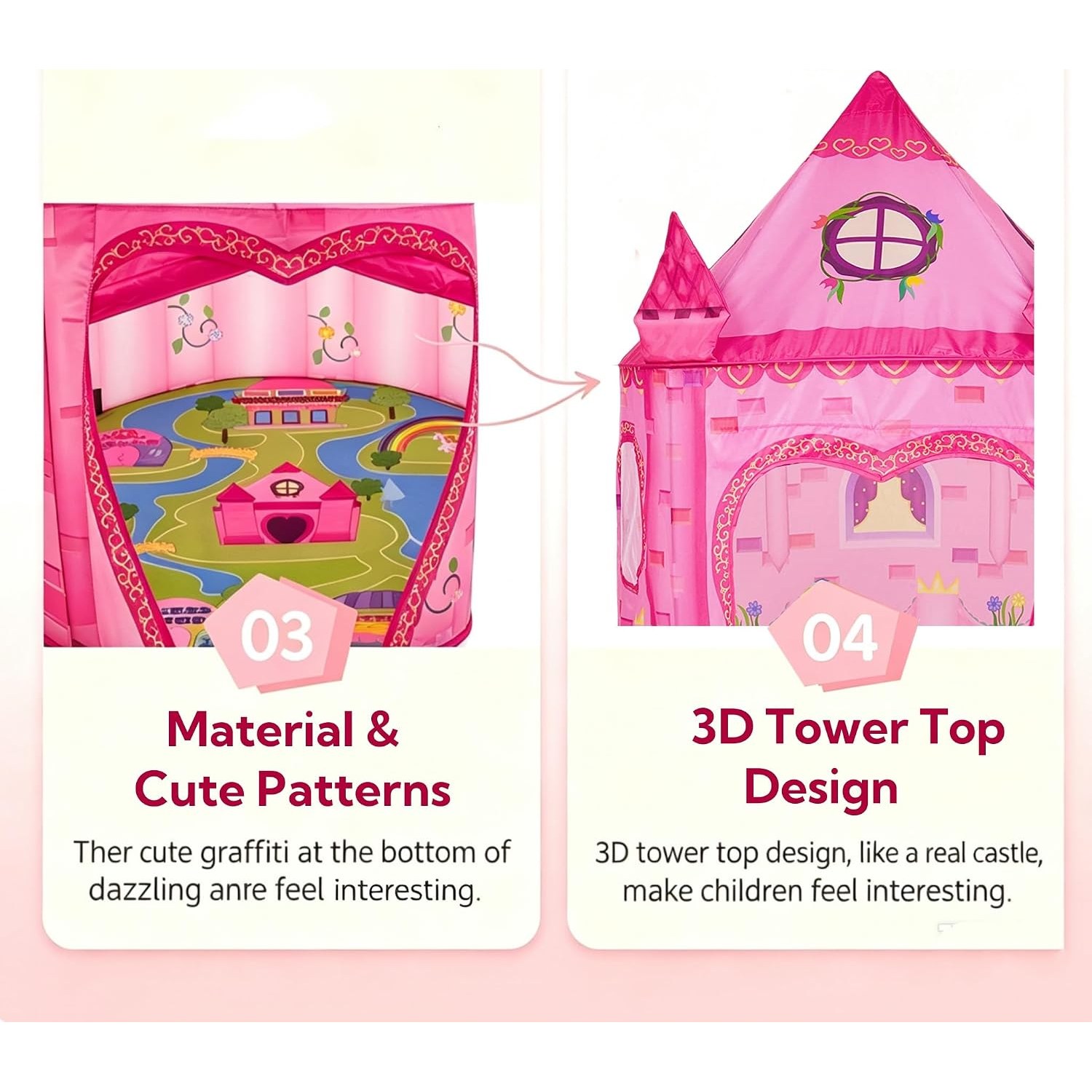
A rug or play mat inside does more for cleanliness than anything else, because most of the grubbiness comes from shoes and socks on the base. It also makes the tent far more comfortable, which means more time spent in it.
Strong direct sunlight will fade the pink over months. If the tent sits by a south-facing window, consider moving it or closing the curtains during the brightest part of the day. Store it somewhere dry. Damp sheds and garages cause musty smells that are hard to shift.
Before each set-up, run your hand down each pole. Hairline cracks in fibreglass are easier to spot early than to deal with mid-collapse.
Is it a good gift?
Yes, and for a practical reason. It presents well. A castle tent set up in the corner of a room on a birthday morning has real impact, and it does not need charging, pairing, or an app.
It also ships and stores flat, which makes it easier to hide than most large gifts. If you are buying for a child whose bedroom is already full, the fact that it folds is a selling point for the parents as much as the child.
For grandparents, a second tent at their house is a quiet winner. It gives a visiting grandchild somewhere familiar to retreat to, and at 0.75kg it is easy to shift between rooms.
The short version
This is a one-metre square, 135cm tall pink castle in polyester, with a flexible fibreglass and PVC frame, a flame-retardant fabric finish, and no sharp edges. It weighs under a kilo, needs assembly but no tools, and folds away when you want your floor back.
Buy it if you want to hand a child a space that is genuinely their own, and you want that space to disappear on demand. Measure your corner, keep it away from heat, add a rug, and it will see a lot of use.